

Afghanistan is facing one of the worst hunger crises in its modern history. More than 17.4 million people one in three Afghans are projected to face acute food insecurity, with millions of children at risk of severe malnutrition and death.
Background: A Crisis Years in the Making
The Afghanistan hunger crisis did not begin overnight. For decades, the country has been trapped in cycles of conflict, poverty, and natural disaster. Since 2021, when the Taliban returned to power, Afghanistan has faced international sanctions and the freezing of government assets, sending unemployment soaring, the Afghan currency into freefall, and food prices rising sharply.
The Afghanistan food situation deteriorated significantly after 2020, as COVID-19, drought, and economic collapse combined to create a perfect storm. What began as a food insecurity emergency has now deepened into a full humanitarian catastrophe that aid agencies describe as one of the most severe in the world.
The Scale of the Afghanistan Food Crisis in 2025
The numbers coming out of Afghanistan are staggering. One-third of the population 17.4 million people are projected to face acute food insecurity, including 4.7 million at emergency levels of hunger. Malnutrition among women and children is projected to reach nearly 4.9 million in 2026, a new high, as access to treatment becomes increasingly limited.
Child malnutrition has reached alarming levels across the country. Child malnutrition is already at its highest level in decades, and with agencies experiencing unprecedented reductions in funding, access to treatment is increasingly scarce. Left untreated, malnutrition in children is life-threatening, and child deaths are likely to rise during the harsh winter months when food is scarcest.
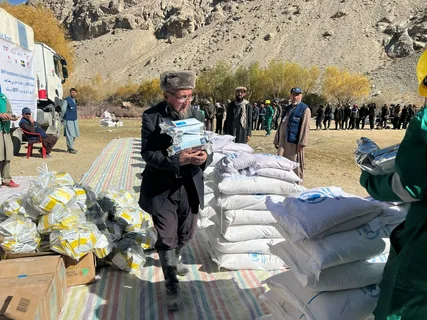
According to the WFP Afghanistan situation report, the crisis is accelerating. With current resources, WFP can only reach 2 million people per month far from covering all those at emergency-level hunger. This is down from the 6 million Afghans WFP supported last winter.
What Is Driving the Afghanistan Famine 2025?
Several overlapping crises are driving the Afghanistan food situation to the breaking point.
Drought and Climate Shocks The 2025 drought one of the worst in a decade has affected over half the country, causing widespread crop failures. Climate-driven disasters including floods and irregular rainfall have destroyed harvests and forced farming families off their land.
Mass Returns from Iran and Pakistan Over the past two years, some five million people have returned to Afghanistan from neighboring countries, including 2.78 million in 2025 alone from Iran and Pakistan, placing further pressure on communities and essential services. Many returnees arrive with no income, no shelter, and no food.
Economic Collapse Unemployment is very high, the Afghan currency has lost its value, and food prices have risen sharply, leaving families unable to afford basic products.
Border Conflict and Displacement Since February 2026, violence has escalated across the Durand Line, triggering displacement of approximately 20,000 families across the Eastern, Southeastern, and Southern regions. The affected districts were already facing severe food insecurity, with more than half at emergency levels of hunger.
WFP Afghanistan Situation Report: Funding Crisis Worsens Everything
The World Food Programme Afghanistan is sounding the loudest alarm. WFP needs $650 million to sustain operations from June to December 2025, including $25 million for returnees from Pakistan and Iran, and $10.5 million to keep the UN Humanitarian Air Service flying to more than 20 destinations.
The funding shortfall is having devastating real-world consequences. In May 2025, 280,000 people were dropped from WFP’s malnutrition treatment programme. Assistance to 1.1 million pregnant and breastfeeding women and under-five children was cut entirely.In Afghanistan, dramatic funding reductions mean food assistance is reaching less than 10 per cent of those who need it, despite soaring malnutrition rates. Aid workers describe clinics turning away malnourished mothers and children daily simply because funds have run out.
Quotes: What Officials Are Saying
WFP’s country director in Afghanistan, John Aylieff, did not mince words in his December 2025 briefing. “Our teams are seeing families skipping meals for days on end and taking extreme measures to survive. Child deaths are rising, and they risk becoming worse in the months ahead,” he warned.
WFP’s Harald Mannhardt described the gap between need and response: “Without the support of WFP and its partners, around 15 million people face severe hunger in Afghanistan today. Already, WFP can reach only a third of those in need and that number is shrinking.”
UN Secretary-General António Guterres also addressed the global crisis: “Conflict remains the primary driver of acute food insecurity and malnutrition for millions around the world. This report is a call to action urging global leaders to summon the political will to rapidly scale up investment in lifesaving aid.”
Women and Children Bear the Greatest Burden
The Afghanistan hunger crisis 2020–2025 has disproportionately harmed women and girls. Women and girls in Afghanistan face increasingly harsh restrictions barred from most work, education, and public life which compounds their economic vulnerability. Two-thirds of female-headed households cannot afford a basic diet, nearly 20 percent higher than their male-headed counterparts.
Despite restrictions, women continue to fight for survival. Despite the restrictions they face, 98 percent of women in families eligible for WFP assistance collect food in person, including widows. This shows extraordinary resilience in the face of a system that increasingly excludes them.
Solutions to Food Insecurity in Afghanistan: What Is Being Done?
Humanitarian organizations are pursuing multiple solutions to food insecurity in Afghanistan, though all face severe funding constraints.
The World Food Programme Afghanistan continues emergency food distributions, nutrition clinics for children, and school meals. World Food Program USA granted $3.9 million from its Emergency Hunger Relief Fund to supply fortified biscuits for 590,000 students through the end of 2025, with three factories across Afghanistan producing the biscuits using locally sourced ingredients.
On the development side, in January 2026, the UN and the Asian Development Bank launched a two-year, $100 million programme to support more than 151,000 families in Afghanistan.
The UN has also launched an ambitious appeal for 2026. The UN and partners need $1.7 billion to help 17.5 million people in 2026, with the response prioritizing food assistance, emergency shelter, healthcare, nutrition, safe drinking water, and hygiene items.
Who Is the Largest Donor to Afghanistan?
Historically, the United States was the single largest donor to Afghanistan’s humanitarian response. However, that changed dramatically in early 2025. Following the suspension of nearly all foreign aid by the United States in January 2025, the funding landscape shifted suddenly. In 2024 alone, the United States had contributed $735.7 million, covering 47 percent of the total requirements for that year’s humanitarian response plan.
With the US withdrawal, the European Union has stepped up. The EU has been funding humanitarian operations in Afghanistan since 1994, providing some €2 billion in total humanitarian funding, and allocated over €161 million in humanitarian aid to Afghanistan in 2025 alone.
Other donors including the United Kingdom, Germany, and Sweden continue to contribute, but available funding remains far below what is needed to address the scale of the Afghanistan food crisis.
Global Impact: Afghanistan Among the World’s Worst Crises
Afghanistan’s hunger crisis is not isolated. Ten countries Afghanistan, Bangladesh, the Democratic Republic of the Congo, Myanmar, Nigeria, Pakistan, South Sudan, Sudan, Syria, and Yemen accounted for two-thirds of all people facing high levels of acute hunger globally in 2025.
Only Sudan and Yemen exceed Afghanistan in the scale of humanitarian need. The Afghanistan famine 2025 is now recognized as one of the defining humanitarian emergencies of this decade.
Conclusion: A Crisis That Demands Urgent Action
The Afghanistan hunger crisis continues to worsen with each passing month. Drought, displacement, economic collapse, and shrinking international aid have pushed millions of Afghans especially children and women to the edge of survival.Afghanistan remains one of the world’s most severe hunger crises, with one in three Afghans
17.4 million people in urgent need of food assistance. Without a dramatic surge in international funding and political will, humanitarian agencies warn that the coming months could push the country toward famine on an unprecedented scale.
The world cannot look away. The solutions to food insecurity in Afghanistan exist what is urgently missing is the funding and commitment to deliver them.
Frequently Asked Questions (FAQs)
Why is Afghanistan suffering from hunger?
Afghanistan is suffering from hunger due to a combination of factors including decades of conflict, the Taliban takeover in 2021 and resulting international sanctions, severe drought, mass displacement, economic collapse, rising food prices, and a sharp decline in international aid funding. The 2025 drought alone affected over half the country and destroyed widespread crops, pushing millions into acute food insecurity.
Which country has the worst hunger problem?
According to the latest global reports, Sudan, Yemen, and Afghanistan consistently rank among the countries with the worst hunger problems in the world. In terms of absolute numbers, Afghanistan’s 17.4 million food-insecure people make it one of the largest food crises on earth. Sudan and Yemen are comparable in severity, and all three are driven primarily by conflict and humanitarian funding shortfalls.
Who is the largest donor to Afghanistan?
The United States was historically the largest single donor to Afghanistan’s humanitarian response, contributing $735.7 million in 2024 alone nearly half of that year’s total requirements. However, after the US suspended almost all foreign aid in January 2025, the European Union has become the leading active donor, allocating over €161 million in humanitarian aid to Afghanistan in 2025.