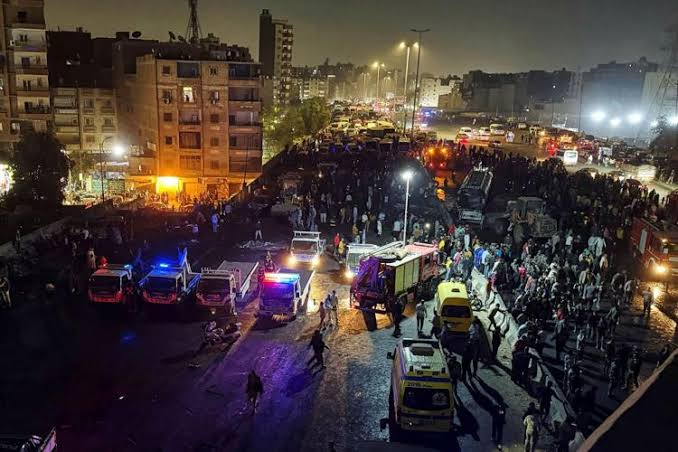
At least 31 people have been killed and 21 others injured after a massive fire erupted on a major highway near Cairo, Egypt. The deadly incident occurred on Wednesday, November 25, when a vehicle carrying petroleum products reportedly overturned and caught fire.
The blaze spread rapidly across the busy Ring Road in the Al-Warraq district of Giza, engulfing several nearby vehicles. Emergency teams rushed to the location as thick black smoke covered parts of the surrounding area. Egyptian authorities have launched an investigation to determine the exact circumstances behind the disaster.
Background of the Cairo Highway Accident
The accident happened on Cairo’s Ring Road, an important transportation route connecting different parts of Greater Cairo. The highway carries large numbers of private vehicles, commercial transport and public transportation every day.
According to initial reports, the incident began when a truck transporting petroleum products lost control and overturned. The vehicle subsequently caught fire, causing flames to spread to other vehicles travelling along the road.
The Al-Warraq neighbourhood is part of the densely populated Giza Governorate, where busy roads and nearby residential communities make major transportation accidents particularly dangerous.
The incident has raised renewed concerns about the safety of transporting highly flammable materials through heavily populated urban areas.
How the Fire Spread Across Cairo’s Ring Road
Fuel Truck Accident Triggered Massive Flames
According to Egyptian media reports, the petroleum transport vehicle overturned on the highway before catching fire. The resulting blaze quickly spread to surrounding traffic, leaving several motorists trapped in burning vehicles.
Witnesses described scenes of panic as drivers attempted to escape the area. Huge flames and thick smoke were visible from nearby locations, while emergency responders worked to reach people caught inside damaged vehicles.
Preliminary findings reported by authorities indicated that approximately 27 vehicles, including cars and motorcycles, were affected by the fire. The full extent of the damage remained under assessment.
Emergency Services Responded to the Disaster
Egypt’s Health Ministry confirmed that 39 ambulances were dispatched to the accident location to assist victims and transport injured people to hospitals.
Medical facilities in the surrounding area were placed on increased alert to provide emergency treatment. Health Minister Khaled Abdel Ghaffar also travelled to the scene and nearby hospitals to monitor the response.
At least 21 people were reported injured in the disaster, although the condition of some victims required further medical attention.
Firefighters eventually brought the blaze under control and began clearing the damaged vehicles and wreckage from the highway.
Egyptian Authorities Launch Investigation
DNA Testing Ordered to Identify Victims
The Egyptian Public Prosecution has opened an investigation into the deadly highway incident. Authorities are examining the circumstances surrounding the overturned vehicle and the fire that followed.
Forensic specialists have also been instructed to conduct DNA testing to identify victims whose bodies were severely burned. This process is important for providing accurate identification and helping families receive confirmed information.
Investigators are expected to examine the vehicle, accident location and available evidence to establish how the incident happened.
The final investigation may also determine whether mechanical problems, driving conditions, road infrastructure or other factors contributed to the tragedy.
Government Reviews Petroleum Transport Safety
Prime Minister Mostafa Madbouly has ordered an investigation and requested information from relevant government departments.
Officials are also expected to review safety arrangements for transporting petroleum products. The government has indicated that further measures will be considered after investigators establish the causes of the incident.
The investigation could lead to additional attention on vehicle inspections, transportation procedures and emergency safety requirements for fuel carriers.
Pakistan Expresses Condolences Over Egypt Tragedy
Pakistan has expressed deep sorrow over the loss of lives in the Cairo highway disaster.
Prime Minister Shehbaz Sharif extended condolences to Egyptian President Abdel Fattah El-Sisi, the bereaved families and the people of Egypt.
In his message, the prime minister said he was deeply grieved by the tragic loss of precious lives. He also reaffirmed Pakistan’s solidarity with Egypt during this difficult period.
Deputy Prime Minister and Foreign Minister Ishaq Dar also expressed condolences, describing the incident as a deeply saddening tragedy.
Pakistan’s response reflects the close diplomatic relationship between the two countries and their longstanding cooperation.
Impact of the Cairo Fire on Road Safety
The deadly incident has once again highlighted the risks associated with transporting flammable materials through crowded urban highways.
Fuel tankers and other petroleum transport vehicles require regular maintenance, trained drivers and strict safety procedures. Even a single accident involving such vehicles can create serious risks for other motorists and nearby communities.
Importance of Better Emergency Preparedness
Rapid emergency response can help reduce casualties during major transportation disasters. Ambulances, firefighting equipment, trained rescue personnel and accessible emergency routes are essential during large-scale accidents.
Authorities also need effective systems to manage traffic and prevent additional vehicles from entering dangerous areas.
Pakistan Chronicle has previously covered road safety initiatives, including the Road Safety Awareness Seminar in Faisalabad, which highlighted the importance of responsible driving and traffic regulations.
Other relevant coverage includes the helmet distribution campaign promoting safer roads.
Industrial and Transportation Fire Prevention
The Cairo incident also brings attention to fire prevention standards in industrial and transportation environments.
Proper storage, vehicle inspections, emergency exits and firefighting arrangements can help reduce the consequences of serious accidents.
Pakistan has also experienced major industrial fire incidents, including the Landhi factory fire in Karachi, highlighting the importance of stronger safety arrangements.
Readers can explore more international developments through the Pakistan Chronicle International News section.
What Happens Next?
Egyptian authorities are expected to continue investigating the cause of the accident and confirming the identities of victims.
The government will also assess whether existing petroleum transportation regulations require additional safety measures. Any official recommendations will depend on the findings of the investigation.
Meanwhile, medical teams will continue providing treatment to injured survivors, while affected families await further information.
The tragedy has created renewed discussion about highway safety, emergency preparedness and the transportation of hazardous materials through densely populated areas.
Frequently Asked Questions (FAQs)
1. How many people were killed in the Cairo fuel tanker fire?
At least 31 people were reported killed in the incident on November 25, 2026, according to Egyptian authorities. The fire erupted after a vehicle carrying petroleum products reportedly overturned on Cairo’s Ring Road. The disaster also injured 21 people and damaged numerous nearby vehicles.
2. Where did the deadly fire occur in Egypt?
The fire occurred on Cairo’s Ring Road in the Al-Warraq neighbourhood of the Giza Governorate, near the Egyptian capital. The highway is an important transportation route connecting different areas of Greater Cairo and regularly carries heavy traffic.
3. What caused the massive fire on Cairo’s highway?
Initial reports indicated that a vehicle carrying petroleum products overturned and subsequently caught fire. The flames spread to nearby cars and motorcycles. However, Egyptian authorities have launched a formal investigation to establish the precise cause and determine whether other factors contributed to the accident.
4. How did Egyptian emergency services respond to the accident?
Egypt’s Health Ministry deployed 39 ambulances to the scene to assist victims and transport injured people to nearby hospitals. Firefighters worked to extinguish the flames, while medical authorities increased hospital preparedness. Investigators and forensic specialists were also assigned to examine the accident and identify victims.
5. What safety measures could prevent similar fuel tanker accidents?
Preventing similar incidents requires regular vehicle inspections, properly trained drivers, safe transportation routes and strict enforcement of petroleum transport regulations. Emergency response planning, accessible firefighting equipment and effective traffic management are also important. Authorities can use investigation findings to identify weaknesses and introduce measures that reduce the risk of future disasters.
6. Has the Egyptian government launched an investigation?
Yes, Egyptian authorities have launched an investigation into the incident. The Public Prosecution is examining the circumstances surrounding the overturned petroleum transport vehicle and has ordered forensic procedures to identify victims.
7. Did Pakistan express condolences over the Cairo fire tragedy?
Yes, Pakistan expressed condolences to Egypt following the disaster. Prime Minister Shehbaz Sharif conveyed sympathy to Egyptian President Abdel Fattah El-Sisi, the affected families and the Egyptian people.
8. What measures can prevent similar fuel tanker accidents?
Regular vehicle inspections, trained drivers, proper fuel transportation procedures and strict road safety regulations can reduce the risk of similar disasters. Better emergency response systems and firefighting facilities can also help limit casualties when accidents occur.
Conclusion
The Cairo fuel tanker fire is a tragic reminder of the dangers associated with transporting petroleum products through busy urban areas. With at least 31 people dead and 21 injured, the incident has left families grieving and raised serious questions about transportation safety.
Egypt’s investigation will be important in establishing the exact cause and identifying possible safety failures. Stronger vehicle inspections, effective emergency response systems and improved transport regulations could help prevent similar disasters in the future.