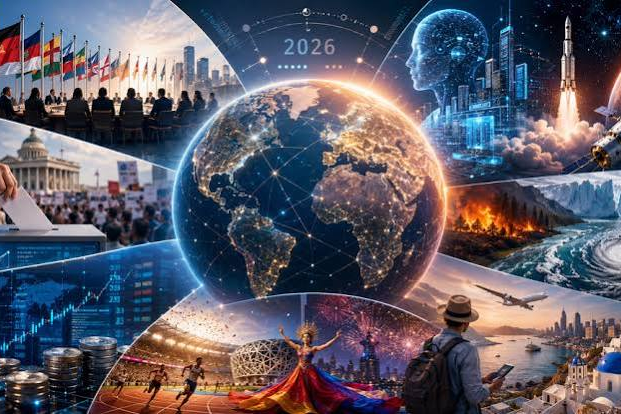
The year 2026 has witnessed extraordinary changes in international politics, security, technology, climate and public life. From military confrontations and political upheaval to scientific achievements and youth movements, several developments have influenced countries across different regions.
As November approaches its end, the impact of these events remains visible in international relations, economic markets and public debates. The developments also highlight how closely connected the modern world has become, with events in one country often creating consequences far beyond its borders.
Background: A Year of Political and Global Uncertainty
At the beginning of 2026, international observers were already concerned about rising geopolitical tensions, economic instability and growing competition between major powers. However, several unexpected developments made the situation even more complicated.
Military operations, humanitarian emergencies and political disagreements placed additional pressure on international institutions. At the same time, artificial intelligence, space exploration and climate-related challenges continued to reshape global priorities.
According to an international year-in-review report published by AFP on November 26, these developments included major conflicts, natural disasters, technological changes and political movements. Together, they provide an important picture of the challenges and opportunities that shaped 2026.
Ten Major Global Events That Defined 2026
1. US Operation to Capture Venezuela’s Nicolás Maduro
One of the most dramatic international developments occurred in January when United States forces carried out an operation in Caracas and captured Venezuelan President Nicolás Maduro.
According to AFP, Maduro and his wife were transported to New York to face drug-related and terrorism charges. The operation generated international debate about national sovereignty, military intervention and the limits of American power.
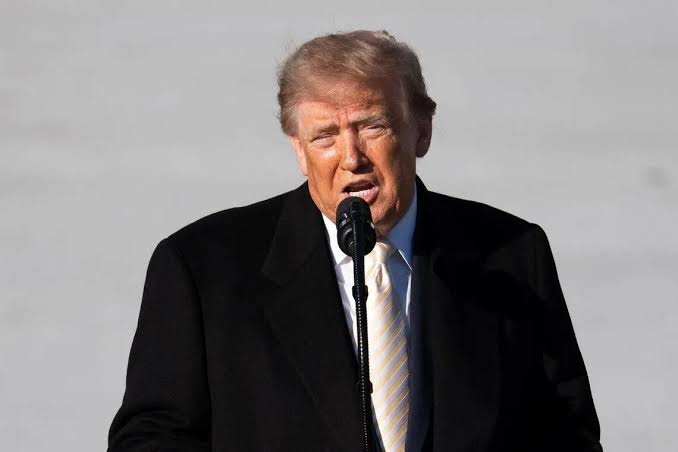
US President Donald Trump defended the operation, presenting it as a demonstration of American influence in the Western Hemisphere. However, critics questioned its legality and raised concerns about its wider implications for international relations.
The incident became an important example of how military decisions by powerful countries can influence diplomatic relations and regional security.
2. Middle East Conflict Increased International Tensions
The Middle East experienced one of its most serious security crises in 2026. Military confrontation involving the United States, Israel and Iran increased regional instability and raised fears of a wider international conflict.
The fighting also affected neighbouring countries and created serious humanitarian concerns. Attacks, security threats and disruptions to important transportation routes placed additional pressure on regional governments.
One particularly significant development involved the Strait of Hormuz, a strategic waterway through which a substantial share of international energy shipments travels. Disruptions in this area increased concerns about oil supplies, shipping costs and global economic stability.
For countries such as Pakistan, these developments were especially important because international energy prices can directly influence transportation, electricity generation and household expenses.
Pakistan Chronicle has also examined these regional challenges in its coverage of Middle East conflict and Pakistan’s economic situation.
3. Artemis II Mission Opened a New Chapter in Space Exploration
Space exploration achieved another important milestone when NASA launched its Artemis II mission in April 2026.
The mission carried four astronauts on a crewed journey around the Moon, marking the first human lunar flyby in more than half a century. It also represented an important step towards future missions involving human exploration of the lunar surface.
The astronauts travelled farther from Earth than previous human spaceflight missions, surpassing the distance record established during Apollo 13.
The mission attracted international attention because it demonstrated advances in spacecraft technology, scientific research and human spaceflight capabilities.
Artemis II also highlighted growing competition and cooperation in space exploration, particularly as the United States and China continue developing ambitious lunar programmes.
4. Ebola Outbreak Created a Serious Health Emergency
Another major international concern emerged in May when authorities reported a new outbreak of the Bundibugyo strain of Ebola in the Democratic Republic of Congo.
The outbreak created significant pressure on healthcare facilities, particularly in remote areas where medical resources and emergency transportation were limited.
According to the AFP report, the disease spread across several provinces, with cases also reported in neighbouring countries. By November, reported cases had exceeded 11,500, while deaths had surpassed 5,500.
The situation demonstrated the importance of international health cooperation, disease monitoring and rapid medical responses.
Healthcare authorities also faced difficulties because insecurity and armed conflict complicated access to affected communities.
The outbreak served as another reminder that infectious diseases can quickly become regional and international challenges when effective prevention and treatment systems are unavailable.
5. FIFA World Cup 2026 Transformed International Football
The 2026 FIFA World Cup became another major international event, bringing together football supporters from around the world.
Hosted by the United States, Mexico and Canada, the tournament introduced an expanded format featuring 48 national teams for the first time.
The competition attracted significant attention because of its larger participation, international audience and matches across multiple host cities.
The tournament also highlighted the growing commercial and cultural importance of international football. Broadcasting, tourism, sponsorships and hospitality businesses benefited from the worldwide interest.
For football fans, the competition provided opportunities to follow emerging players and national teams while celebrating the sport’s ability to connect different cultures.
6. Extreme Heatwaves and Wildfires Raised Climate Concerns
Climate-related disasters became another defining feature of 2026. Several European countries experienced severe heatwaves, prolonged drought conditions and devastating wildfires.
Extreme temperatures affected public health, agriculture, transportation and economic activity. In some areas, reduced water levels also disrupted important shipping routes.
France and Spain experienced destructive wildfires, while Indonesia faced extensive forest fires that created dangerous air pollution.
The environmental consequences extended beyond national borders as smoke and toxic haze affected neighbouring countries.
These developments strengthened concerns about climate change and the need for stronger environmental protection policies.
Pakistan also faces serious environmental challenges, making international developments in climate resilience particularly relevant to the country.
7. Nepal-Tibet Flood Disaster Caused Widespread Destruction
A devastating natural disaster occurred on August 26 when a glacier-related collapse near the Nepal-China border triggered powerful floodwaters carrying mud, rocks and other debris.
The disaster caused extensive destruction in affected communities and created a major humanitarian emergency.
According to AFP, more than 1,400 people were killed, while over 5,500 were reported missing in the initial figures. Rescue teams faced difficult conditions while searching damaged settlements and clearing debris.
The financial cost of reconstruction also created significant pressure on Nepal’s government.
The disaster highlighted the vulnerability of mountain communities to extreme environmental events and the importance of improved early-warning systems.
International cooperation became essential for emergency assistance, rebuilding infrastructure and restoring basic public services.
Pakistan Chronicle has also covered regional recovery efforts in its report on India’s reconstruction assistance for flood-hit Nepal.
8. Artificial Intelligence Raised New Questions About the Future
Artificial intelligence continued to develop rapidly throughout 2026, becoming one of the most influential technology stories of the year.
AI systems increasingly attracted attention across business, education, healthcare, research and government services. Companies invested heavily in advanced models and automation technologies to improve productivity and develop new products.
However, technological progress also created concerns about cybersecurity, misinformation, employment disruption and the responsible use of autonomous systems.
Technology leaders and researchers called for stronger safety measures and greater cooperation between companies and governments.
The international debate increasingly focused on how to balance innovation with public protection.
The growing competition between the United States and China also demonstrated that AI development is closely connected to national security and economic influence.
Pakistan Chronicle has explored this subject in its coverage of US-China artificial intelligence cooperation and technology rivalry.
9. Gen Z Protests Challenged Governments Across Different Countries
Youth-led demonstrations became another important political development during 2026. Young people in several countries organised protests over education, unemployment, corruption and rising living costs.
France experienced major demonstrations, while student movements in Serbia and other European countries increased pressure on political leadership.
Similar youth-driven movements also attracted attention in Asia, where younger generations demanded greater accountability and improved public services.
These demonstrations reflected growing frustration among people who believe that traditional political institutions are not responding adequately to their concerns.
Social media platforms played an important role in communication, organising and sharing information about demonstrations.
The protests showed that young citizens are increasingly willing to participate directly in political debates and demand changes from their governments.
10. Political Changes Reshaped International Leadership
Political developments in 2026 also affected the balance of power in several countries.
In the United States, November’s midterm elections changed the political situation in Congress, with Democrats gaining control of both chambers, according to the AFP year-in-review report.
Other countries also experienced important electoral developments and political pressure. These changes reflected public concerns about economic conditions, government accountability and international policies.
Political transitions can influence foreign relations, trade agreements and diplomatic priorities.
They may also create uncertainty for businesses and international partners as new governments introduce different policies.
The developments of 2026 demonstrated that political leadership remains closely connected to economic stability and public confidence.
Global Impact of These Developments
The events of 2026 have demonstrated how political, economic and environmental challenges can influence one another. Conflicts in strategically important regions affected energy markets, international trade and diplomatic relationships.
For developing countries, these developments created additional economic challenges. Higher energy costs, supply chain disruptions and uncertainty in international markets can affect inflation, investment and employment.
Pakistan is particularly exposed to changes in global energy prices and regional security conditions. Developments around the Strait of Hormuz and the Middle East can influence the country’s economic outlook.
The importance of strategic waterways and international trade routes is also discussed in Pakistan Chronicle’s analysis, Why the World’s Power Is Trapped in a Few Narrow Gateways.
Meanwhile, technological progress is creating new economic opportunities, but governments must address cybersecurity, employment and digital safety concerns.
Climate disasters have also demonstrated the need for stronger emergency planning and international environmental cooperation.
International Statements and Expert Concerns
Political leaders and international experts have expressed concerns about the consequences of growing geopolitical tensions and technological developments.
US President Donald Trump defended the operation against Venezuela, describing it as evidence that American dominance in the Western Hemisphere would not be questioned.
Meanwhile, technology industry leaders and researchers have continued raising questions about the potential risks associated with increasingly powerful artificial intelligence systems.
International climate discussions have also highlighted disagreements over environmental commitments, energy policies and financial assistance for vulnerable countries.
These concerns demonstrate the importance of diplomatic communication, international cooperation and responsible decision-making.
What Could Happen Next?
As 2026 approaches its final weeks, international attention is likely to remain focused on regional security, economic stability and political developments.
Governments will face pressure to manage the consequences of ongoing conflicts while protecting their economies from international uncertainty.
Technological companies will also need to demonstrate that innovation can progress alongside appropriate safety standards and public accountability.
Climate resilience and humanitarian assistance are expected to remain important international priorities.
For Pakistan and other developing countries, maintaining diplomatic relationships, strengthening economic resilience and monitoring international developments will remain essential.
Conclusion
The major global events of 2026 have demonstrated how quickly international circumstances can change. Military confrontations, political movements, technological breakthroughs and environmental disasters have all influenced the direction of world affairs.
These developments have affected millions of people and created new challenges for governments, businesses and international institutions.
The events also underline the importance of peaceful diplomacy, responsible technological development and stronger cooperation between nations.
As the year moves towards its conclusion, the decisions made by international leaders will play an important role in determining whether the world moves towards greater stability or faces further uncertainty.
Frequently Asked Questions
1. What were the major global events of 2026?
Some of the most significant developments included the US operation to capture Venezuela’s Nicolás Maduro, the Middle East conflict, NASA’s Artemis II mission, the Ebola outbreak in the Democratic Republic of Congo, the FIFA World Cup, extreme heatwaves, devastating floods in Nepal, artificial intelligence developments and youth-led political protests. These events influenced international politics, security, technology, public health and economic conditions.
2. How did the Middle East conflict affect the global economy in 2026?
The Middle East conflict increased concerns about international energy supplies, particularly because of the strategic importance of the Strait of Hormuz. Disruptions to shipping and energy transportation created pressure on oil markets and raised concerns about inflation. Countries dependent on imported fuel, including Pakistan, remained particularly vulnerable to changes in international energy prices.
3. Why was NASA’s Artemis II mission important in 2026?
Artemis II was important because it marked the first crewed journey around the Moon in more than 50 years. The mission carried four astronauts and provided valuable information for future lunar exploration. It also demonstrated advances in spacecraft technology and supported NASA’s longer-term plans for human exploration of the Moon.
4. Why did Gen Z protests become an important international issue?
Gen Z protests attracted international attention because young people in different countries raised concerns about unemployment, education, corruption and increasing living costs. These demonstrations showed growing demand for political accountability and better economic opportunities. Social media also helped young protesters communicate, organise activities and bring local concerns to international attention.