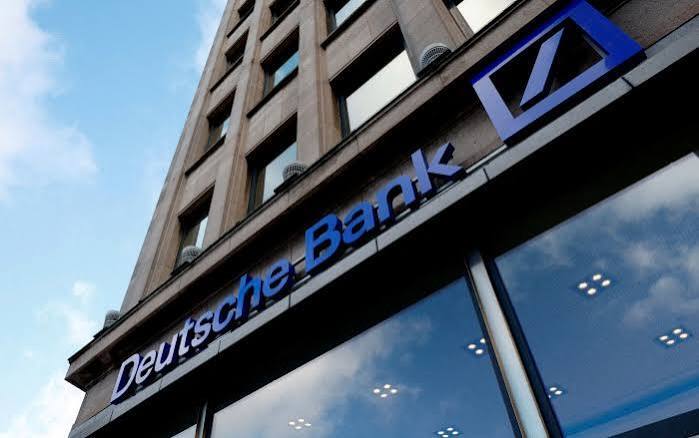
Deutsche Bank Gaza links have come under fresh scrutiny after an international investigation reported that the German lender approved financing tied to defence companies whose equipment has been used by Israeli forces. The findings, published by Dawn on November 18, 2026, draw on internal bank documents and interviews with experts. The bank did not comment on some of the specific cases raised by reporters.
Background: A Committee Meeting in Frankfurt
In January 2022, a reputational review committee at Deutsche Bank headquarters in Frankfurt met to consider an advance payment guarantee of 11.4 million euros for German defence manufacturer Renk GmbH. The money was linked to a contract with the Israeli Ministry of Defence, running until 2027, for gearboxes used in Merkava 4 tanks.
The report grew out of a wider look at leaked internal files from the bank. It was coordinated by Barracuda Media in South Africa, with technical support from the Data and Research Center in Germany. The Barracuda Media investigation examines how the bank weighed reputational risk against commercial and political considerations when dealing with defence clients linked to Israel.
Details: What the Documents Reportedly Show
The Renk Merkava gearbox deal
According to the documents cited, a bank lawyer described the deal as a standard trade finance product that carried no remarkable reputational risk. He also judged it very unlikely to become public. Every department consulted reportedly agreed that, on balance, the deal should go ahead. The gearboxes were not classed as weapons under German law, and export licences were still required.
A December 2021 internal memo acknowledged rising tensions between Israel and its neighbours. It also warned that refusing the deal could invite criticism, given the historic relationship between Germany and Israel. The memo said the bank “could face criticism from media/government” if it were seen to deny support. In February 2024, Deutsche Bank later acted as one of the coordinators of Renk’s initial public offering in Frankfurt.
The first batch of gearboxes was scheduled for delivery in September 2024. Dawn’s report notes that Merkava tanks were involved in several high profile incidents in Gaza, including the siege of Al Shifa Hospital in November 2023, an attack near the Al Tahliya roundabout in June 2025, and shelling at Nasser Medical Complex in August 2025. The Israeli military has offered its own explanations for some of these events. The reporters said that, according to their information, the incidents did not affect the Deutsche Bank and Renk arrangement. Renk declined to comment.
Other defence clients in the spotlight
The report also looks at Italian manufacturer Leonardo, which the bank described internally as a platinum client. Deutsche Bank was involved in a multi million euro deal with the company from 2018. Leonardo produced naval gun mounts for Israel’s Sa’ar 6 corvettes, which the report says have been used to shell Gaza from the sea since 2023.
Leonardo told reporters it has always operated in strict compliance with export regulations and relevant authorisations. It also noted that Italian authorities have suspended new export licences for Israel. The company faces a separate lawsuit in Italy brought by a Palestinian citizen and advocacy groups, who allege that its supplies breached the Italian Constitution.
A 2024 BankTrack report, backed by 18 other civil society groups, found that Deutsche Bank extended about 4 billion euros in loans and underwriting to Boeing, Leonardo, Lockheed Martin, Rolls Royce, RTX and General Dynamics between January 2021 and August 2023. The report stressed that not all of their products were used in Gaza. Lockheed Martin said it follows US government oversight and policy, while Boeing, RTX and General Dynamics did not respond.
Controversial weapons and policy questions
Deutsche Bank expanded its defence policy in March 2019, saying it would avoid relationships with entities that have clear, direct links to controversial weapons. Its human rights statement also says it will not engage in business where substantiated, unavoidable harm to human rights has been found. The new investigation asks whether those commitments were applied consistently.
As of June 30, 2026, the bank held 0.14 percent of ICL Group, a white phosphorus supplier, in shares worth 8.98 million US dollars, according to the report. Published US Army contracts show ICL subsidiaries supplied white phosphorus to an Arkansas plant that fills artillery shells. Internal correspondence also suggested the bank may have treated parent companies and wholly owned subsidiaries differently when defining direct links. ICL, Bayer, the Israeli military and Deutsche Bank did not respond on white phosphorus.
In a separate case from 2021, a relationship manager pushed for Israel Aerospace Industries to get a second chance as a client, citing about 1.5 million euros in annual revenue. Two reputation risk specialists declined, and a trade finance colleague later advised passing on the deal given public allegations. The bank did not comment on this case.
Expert Voices
Ryan Brightwell, human rights lead at BankTrack, told reporters that financial institutions have clear human rights responsibilities. He said banks are expected to use their influence over clients, and should consider ending relationships if a client does not change its behaviour.
Andrew Feinstein of Shadow World Investigations offered a sharper view. After two decades of researching global arms procurement, he argued that banks are mainly motivated by profit and reputation, and that bonus structures can pressure compliance officers when large deals are at stake. These are his opinions, not findings of wrongdoing by any court.
Impact: Reputation, Regulation and Public Opinion
The report lands as scrutiny of arms financing banks is growing across Europe. Germany suspended some arms exports to Israel in August 2025 and lifted that suspension in November 2025, citing the ceasefire. A UN inquiry reported in October 2026 that Israel continued committing genocidal acts after the truce, a characterisation Israel rejects. The UN has also recorded more than 1,600 Palestinian deaths since the ceasefire announcement.
For investors and regulators, the central question is how banks apply their own human rights and defence policies in practice. For readers across South Asia, the story adds to wider debate about who profits from the war. You can follow related coverage in our international news section, including public reaction to the Gaza war and wider Middle East tensions.
Conclusion
The Deutsche Bank Gaza story is still developing, and many questions remain open, including how the bank will answer for the cases raised. Campaigners are likely to keep pressing for fuller disclosure of arms related financing, and shareholders may ask harder questions at future meetings. Readers can find more verified updates on Pakistan Chronicle as this story develops.
Frequently Asked Questions
What did the investigation find about Deutsche Bank and Gaza?
The investigation reported that Deutsche Bank approved a 11.4 million euro guarantee supporting Renk gearboxes for Israel’s Merkava 4 tanks, and had dealings with other defence firms whose products have been used in Gaza. It relies on leaked internal documents. The bank did not comment on several of the specific cases, and Renk declined to comment.
Why did the bank approve the Renk deal despite reputational risks?
Internal documents cited in the report show the bank saw the deal as routine trade finance with low reputational risk. They also show concern that refusing could draw criticism from media and government, given Germany’s historic relationship with Israel. The gearboxes were also not classed as weapons under German law, though export licences were required.
Is there any court ruling against Deutsche Bank over Gaza?
The report does not mention any court ruling against Deutsche Bank. It does describe legal action elsewhere, including a lawsuit in Italy against Leonardo and a German court challenge over Renk export licences, which a Frankfurt court rejected in December 2024 and an appeals court upheld in September 2025, finding the applicant had no standing.
What does the bank’s own policy say about controversial weapons?
Since March 2019, the bank’s defence policy says it will avoid business relationships with entities that have clear, direct links to controversial weapons. Its human rights statement also rules out business where substantiated harm cannot be avoided or reduced. The report questions whether these rules were applied consistently, citing internal discussions about parent companies and subsidiaries.
Why does this story matter to readers in Pakistan and South Asia?
The story shows how global finance can connect to conflicts far from where deals are signed, a theme that resonates strongly with South Asian audiences following Gaza closely. It also raises wider questions about corporate accountability, transparency and how banks balance profit against human rights commitments in their own published policies.