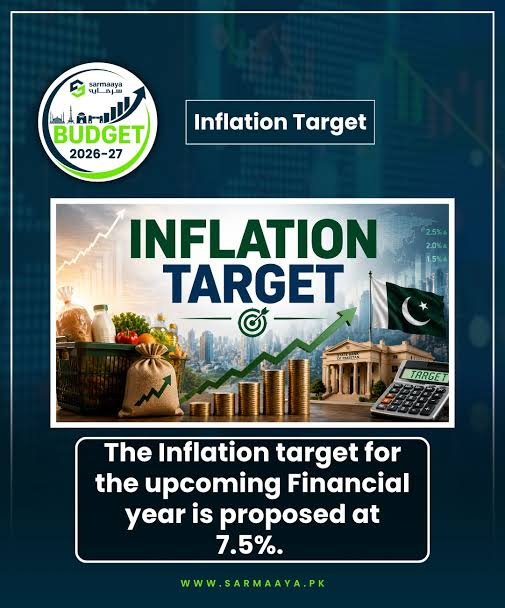
KARACHI: The State Bank of Pakistan said on Monday that consumer price inflation should gradually ease toward its medium-term target range of five to seven percent during financial year 2027. The SBP inflation forecast FY2027 appears in the central bank’s yearly report on the state of the economy. The same report expects real GDP growth between 3.5 and 4.5 percent and a current account deficit of zero to one percent of GDP.
The central bank also projects the fiscal deficit at three to four percent of GDP, which gives households and businesses a clearer picture of the macroeconomic path ahead.
Background: How Pakistan Reached This Point
The SBP inflation forecast FY2027 arrives after a difficult year for prices. For most of the first eight months of FY26, inflation stayed comfortably inside the target band. The picture changed in early March, when conflict in the Middle East pushed up petroleum prices, freight charges and global commodity costs.
The energy shock pushed year-on-year inflation into double digits from April 2026 onward, even though average inflation for the full fiscal year stayed close to the upper limit of the target range. Earlier in the year, the central bank had warned that inflation could remain above the band for most of FY27. In April, it said higher oil prices and second-round effects were the main reasons for that caution.
The latest outlook is more hopeful. The SBP now says the economy entered the new fiscal year on stronger footing, helped by an improved sovereign credit rating and better external buffers. That shift in tone is the main reason the SBP inflation forecast FY2027 is drawing so much attention from analysts and the business community.
Details: What the SBP Report Says
The annual report says prudent monetary and fiscal policies helped keep average national inflation close to the upper bound of the 5 to 7 percent range during FY26, despite the energy price shock. Looking ahead, the same report expects the effect of that shock to keep some upward pressure on prices before inflation settles back toward the target.
On growth, the SBP estimates real GDP growth in FY27 will stay between 3.5 and 4.5 percent. The recovery in large-scale manufacturing helped lift output last year, and the central bank expects domestic demand to keep improving. Higher economic activity has also raised import volumes, while exports remain limited by unfavourable global trends.
The report also highlights risks that could disturb this path. One of them is El Niño, which could threaten agricultural output. A poor harvest would lift food prices quickly, and food is one of the biggest drivers of household inflation in Pakistan. Readers following the farm side of the story can see how Punjab is preparing for the season in our report on the Super Seeder precautions for wheat sowing in Faisalabad.
Latest Inflation Data Shows Early Relief
Recent numbers suggest the easing has already started. Headline inflation slowed to 9.6 percent year-on-year in October 2026, down from 10.3 percent in September. That brought inflation back into single digits after two months above ten percent.
The relief is partial. Average inflation for the first four months of FY27 stood at 10.05 percent, well above the target band. For the SBP inflation forecast FY2027 to hold, monthly readings will need to keep falling through the second half of the fiscal year.
Quotes: What Officials and Institutions Are Saying
SBP Governor Jameel Ahmad has been consistent about the broader outlook. Speaking in August, he said “SBP reserves are expected to exceed $21bn during FY27.” He also described the central bank’s stance as appropriate for keeping inflation inside the medium-term range while leaving room for investment and job creation.
Other institutions are less optimistic about timing. The Asian Development Bank projects average inflation of 8.3 percent in FY2027, assuming a return to the 5 to 7 percent range only in the second half of the year. The gap between the ADB and the SBP shows how much depends on global fuel prices and domestic food supply.
Impact: What It Means for Households, Business and Markets
For ordinary households, a lower inflation path means slower growth in the cost of fuel, transport, food and utilities. Real incomes recover only gradually, so families are unlikely to feel relief immediately. Still, a clear direction for prices helps people plan budgets and savings with more confidence.
For businesses, the forecast matters for borrowing costs and investment decisions. Steady inflation expectations give the central bank room to keep policy balanced rather than tighten further. Predictable prices also help manufacturers and exporters set contracts and wages with fewer surprises.
The regional and global angle is just as important. Pakistan remains exposed to oil prices and shipping costs, which move with events far beyond its borders. Global market swings, such as the recent rebound described in our coverage of tech stocks recovering as the Nasdaq rebounds after a global sell-off, show how quickly sentiment can change. More stories on the economy and public policy are available in our National section.
Conclusion: What to Watch Next
The SBP inflation forecast FY2027 offers cautious optimism. Inflation has already eased to 9.6 percent, growth is expected to stay between 3.5 and 4.5 percent, and external buffers look stronger than a year ago. The path back to the 5 to 7 percent band is still gradual and uncertain.
The next signals will come from monthly PBS inflation releases, global oil prices, the wheat and food supply situation, and the SBP’s upcoming policy meetings. Agricultural planning also matters, as seen in the Faisalabad wheat cultivation target of 1.834 million acres. If energy prices stay calm and harvests are good, the central bank’s forecast looks achievable.
FAQs on the SBP Inflation Forecast FY2027
What is the SBP inflation forecast for FY2027?
The State Bank of Pakistan expects consumer price inflation to ease gradually toward its medium-term target range of 5 to 7 percent during the 2026-27 fiscal year. The central bank made this projection in its annual report on the state of the economy, released on November 16, 2026. It does not promise a sudden drop. Prices are expected to cool step by step as the effect of the global energy shock fades, and as food and fuel costs stabilise.
What is the current inflation rate in Pakistan?
According to the Pakistan Bureau of Statistics, headline inflation was 9.6 percent year-on-year in October 2026. That was lower than the 10.3 percent recorded in September and returned inflation to single digits after two months in double digits. The average for the first four months of FY27 was still about 10.05 percent, so inflation remains above the SBP’s target band for now.
How much GDP growth does the SBP expect in FY27?
The SBP projects real GDP growth in the range of 3.5 to 4.5 percent for FY27. The recovery is supported by stronger large-scale manufacturing, improving domestic demand and fiscal measures aimed at keeping economic momentum going. The central bank also expects the current account deficit to stay between zero and one percent of GDP, and the fiscal deficit between three and four percent of GDP.
What risks could change the SBP inflation forecast FY2027?
Several risks could push inflation off the expected path. Global oil and commodity prices remain exposed to Middle East tensions, and any new spike would feed quickly into fuel, transport and food costs. Weather is another concern, since El Niño conditions could damage crops and raise food prices. Fiscal slippages and sudden changes in administered prices, such as electricity and gas tariffs, could also slow the decline.
Why does the 5 to 7 percent inflation target matter?
The 5 to 7 percent band is the SBP’s medium-term target for price stability. Inflation inside this range protects purchasing power and keeps borrowing costs lower than they would be under high inflation. It also helps businesses plan investment and gives households more certainty about future expenses. When inflation moves far above the band, the central bank usually has to keep interest rates high, which can slow growth and hiring.