Pakistan Reaffirms Support for Kashmiris’ Right to Self-Determination on Kashmir Black Day
Ambassador Rizwan Saeed Sheikh calls for a peaceful resolution of the longstanding dispute in accordance with relevant UN Security Council resolutions
By Fazal Khaliq | Washington, D.C.
WASHINGTON, D.C., October 27, 2026 — Pakistan has reiterated its political, diplomatic and moral support for the people of Jammu and Kashmir, with Ambassador to the United States Rizwan Saeed Sheikh calling for a peaceful and just resolution of the longstanding dispute in accordance with relevant United Nations Security Council resolutions.
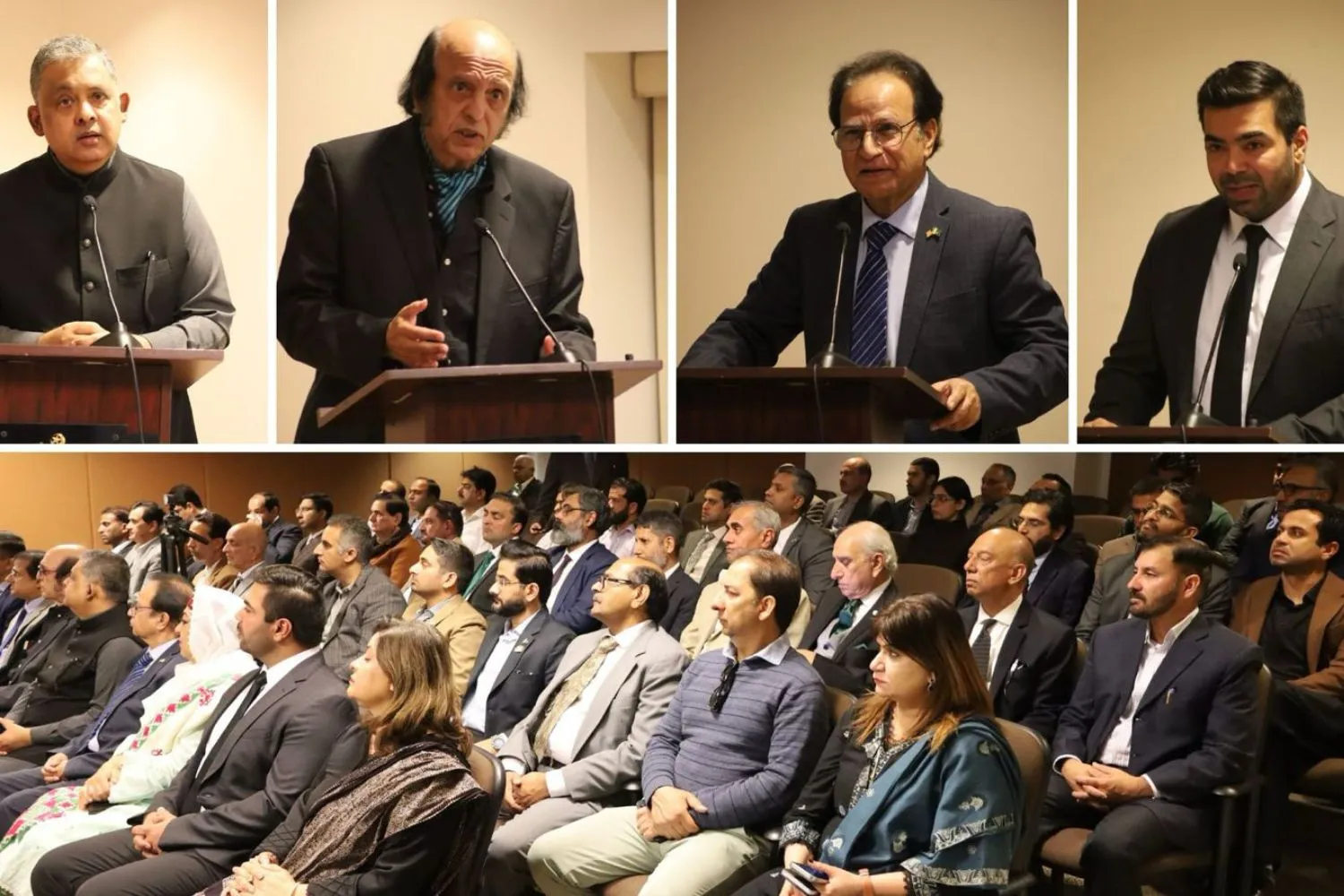
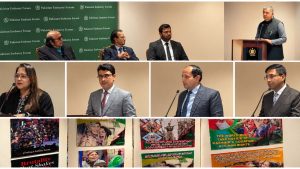
Speaking at a ceremony held at the Embassy of Pakistan in Washington, D.C., to mark Kashmir Black Day, Ambassador Sheikh described Kashmir as an important part of Pakistan’s national identity and emphasized the dispute’s continuing implications for regional peace and security.
“Kashmir is part of our national identity and dignity,” the ambassador said, reaffirming Pakistan’s commitment to advocating for a settlement that reflects the aspirations of the Kashmiri people.
Ceremony Marks October 27 Anniversary
Kashmir Black Day is observed by Pakistan on October 27 to commemorate the arrival of Indian troops in Jammu and Kashmir in 1947, following the partition of British India. The anniversary remains a significant date in Pakistan’s official narrative of the Kashmir dispute.
The ceremony brought together members of the Pakistani-American and Kashmiri communities, policy analysts, legal experts and community representatives to express solidarity with Kashmiris and discuss the dispute’s political, legal and humanitarian dimensions.

The proceedings began with the recitation of verses from the Holy Quran, followed by the reading of special messages from Pakistan’s president, prime minister and deputy prime minister.
In his address, Ambassador Sheikh described the events of October 1947 as a consequential chapter in South Asian history, arguing that the unresolved dispute continues to affect regional stability.
He maintained that the circumstances surrounding Jammu and Kashmir’s accession to India did not reflect the wishes of the Kashmiri people and emphasized Pakistan’s position that the dispute should be resolved in accordance with relevant UN resolutions.
India, for its part, maintains that Jammu and Kashmir legally acceded to India in 1947 and regards the territory as an integral part of the country. Pakistan disputes India’s position and continues to advocate a settlement based on the right to self-determination.
Ambassador Calls for Greater International Engagement
Ambassador Sheikh expressed concern over alleged human rights violations and restrictions on fundamental freedoms in Indian-administered Jammu and Kashmir. He urged the international community and human rights organizations to give greater attention to the situation.
He said Pakistan’s support for Kashmiris remained a longstanding national commitment that extended beyond political differences.
The ambassador also called on Pakistani and Kashmiri communities living in international centres, including Washington, London, New York, Brussels and Jeddah, to strengthen their diplomatic outreach.
He encouraged community representatives to engage policymakers, international institutions and civil society organizations through coordinated advocacy on Kashmir.
Sheikh stressed that relevant United Nations resolutions should remain central to efforts to resolve the dispute, arguing that abandoning this framework could weaken prospects for a lasting settlement.
“The past, present and future do not allow us to abandon this cause,” he said, reiterating Pakistan’s position that Kashmir remains an unresolved issue in the region’s political history.
Speakers Discuss Historical and Legal Dimensions
The ceremony also featured addresses by Ali Raza Anar, president of the Foundation for American Security and Technology; Zulfiqar Ali Kazmi, executive director of The Common Grounds of USA and president of Discover Pakistan TV; and attorney, author and policy analyst Mowahid Hussain Shah.
The speakers discussed the historical developments of October 1947, the legal dimensions of the Kashmir dispute and the political and humanitarian challenges facing the region.
They highlighted the importance of international dialogue, diplomatic engagement and adherence to international law in efforts to address the dispute.
A documentary focusing on allegations of human rights abuses, restrictions on civil liberties and the humanitarian situation in Indian-administered Jammu and Kashmir was also screened during the event.
Kashmir Dispute Remains a Regional Concern
In his concluding remarks, Ambassador Sheikh said Kashmiris had endured decades of uncertainty and hardship. He called for continued international attention to their political aspirations and fundamental rights.
He reiterated Pakistan’s position that a lasting settlement should be pursued peacefully, in accordance with relevant UN Security Council resolutions and the aspirations of the Kashmiri people.
The ambassador thanked the speakers, community representatives and other participants for attending the commemoration and expressing solidarity with Kashmiris.
The Jammu and Kashmir dispute has remained a source of tension between India and Pakistan since the partition of British India in 1947. Both countries claim the territory in its entirety but administer separate portions of it. The United Nations Security Council has considered the dispute since 1948, and its historical resolutions form part of the diplomatic and legal context surrounding the issue.
Pakistan continues to advocate a settlement based on self-determination and relevant UN resolutions, while India maintains that Jammu and Kashmir is an integral part of its sovereign territory.
The Washington ceremony highlighted Pakistan’s continued efforts to keep the Kashmir dispute on the international agenda, while underscoring calls for dialogue, regional stability and attention to human rights.