The Soldier Who Chose the Path of Peace
by Muhammad Mohsin Iqbal
The true stature of a nation is measured not merely by the strength of its weapons, but by the wisdom with which it employs that strength. Defence remains the foremost responsibility of every sovereign state, for without security neither freedom nor prosperity can flourish. Yet the finest military leadership understands that victory on the battlefield is only one dimension of national service; the greater achievement lies in preventing the next war, reconciling estranged nations and creating conditions in which peace may endure. It is in this wider understanding of military responsibility that Field Marshal Syed Asim Munir’s role in Pakistan’s evolving strategic and diplomatic landscape deserves consideration.
A professional army is distinguished not only by courage, discipline and operational competence, but also by its adherence to ethical principles. The laws of armed conflict require the protection of civilians, humane treatment of prisoners and restraint in the use of force. Military strength, when guided by sound judgement, becomes an instrument of stability rather than an invitation to aggression. A commander who recognises these obligations understands that the purpose of defence is not the glorification of war, but the preservation of national sovereignty and human life.
Islam offers a profound moral foundation for this philosophy. The Holy Quran commands believers to incline towards peace when the opposing side inclines towards it, while permitting firm resistance against aggression. It further declares that believers are brothers and calls upon them to reconcile their differences. These teachings acquire particular significance in a world where religious affinity, historical rivalries and competing strategic interests too often divide nations that might otherwise cooperate for the common good.
Pakistan’s confrontation with India in May 2025 brought the relationship between military preparedness and diplomatic restraint into sharp relief. Following the escalation of hostilities, Pakistan’s armed forces mounted Operation Bunyan-ul-Marsoos, while the country maintained that its response was an exercise of its right to self-defence. On 10 May, an understanding to cease military action was reached between the two countries. The episode demonstrated both the importance of credible deterrence and the necessity of communication when two nuclear-armed neighbours approach the precipice of a wider conflict. The challenge for Pakistan remains to translate the confidence generated by its response into sustained diplomatic engagement over Kashmir, cross-border security and other unresolved disputes.
Pakistan’s subsequent engagement with the United States and Iran has further demonstrated the value of mediation. Islamabad facilitated a temporary ceasefire in April 2026 and hosted high-level talks between Washington and Tehran. Field Marshal Munir’s visits to Iran and his contacts with the Iranian leadership formed part of Pakistan’s continuing efforts to prevent a wider regional conflagration. These initiatives have not removed the profound differences between the two countries, but they have kept diplomatic channels open at a time when renewed hostilities threaten international security, energy supplies and maritime commerce. The distinction is important: mediation is not the same as a final settlement, yet without mediation a settlement may never become possible.
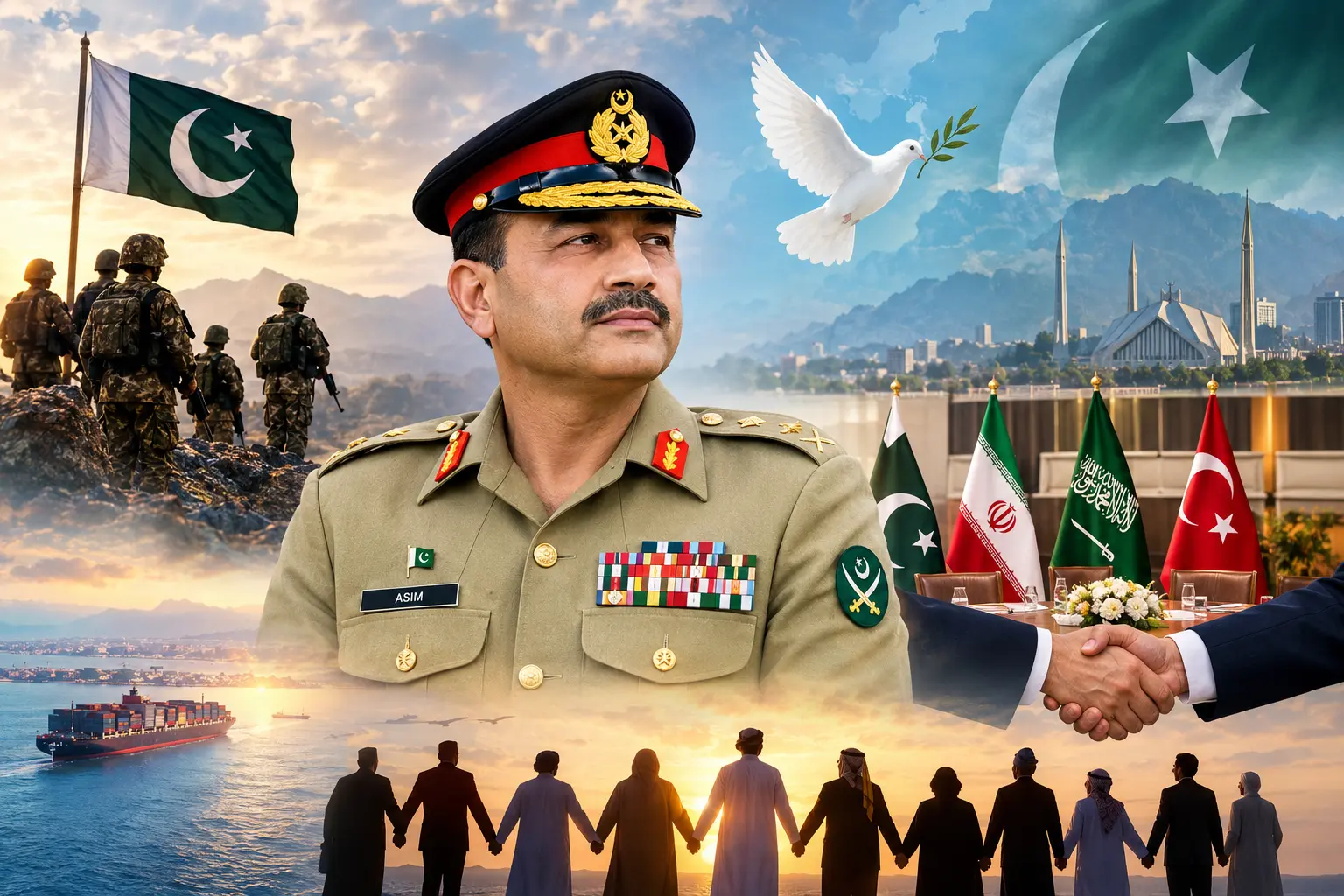
The most recent chapter in this diplomatic endeavour concerns relations between Saudi Arabia and Iran. On 26 October 2026, Munir participated in high-level discussions in Tehran involving Iranian, Saudi and Turkish representatives, alongside Pakistan’s delegation. The talks took place against the background of Houthi attacks threatening Saudi security and renewed fears of a wider confrontation involving Iran, the United States and Israel. Munir’s engagement reflected Pakistan’s attempt to maintain communication with Tehran while honouring its strategic relationship with Riyadh. He had also urged the Iranian leadership to use its influence to help halt attacks against Saudi Arabia and had explored ways of reviving direct US–Iran negotiations.
This is a delicate diplomatic undertaking. Saudi Arabia and Iran are influential powers whose rivalry has affected the security of the Gulf, Yemen and the wider Middle East for decades. Yet the persistence of regional conflicts has shown how fragile such progress can be. Pakistan’s contribution lies in encouraging both sides to prevent local disputes from becoming a broader Muslim-world crisis. Its close ties with Saudi Arabia, geographical proximity to Iran and longstanding relations with other regional powers give Islamabad channels of communication that can be employed in the service of de-escalation.
The wider regional dimension became more visible through the Makkah Joint Defence Agreement signed by Pakistan, Saudi Arabia and Türkiye in August 2026. The arrangement seeks to strengthen collective defence and cooperation among the three countries. Its significance, however, need not be confined to military coordination. If accompanied by regular consultation, confidence-building measures and engagement with neighbouring states, such cooperation could also contribute to a regional order in which security is pursued through dialogue rather than perpetual confrontation. The participation of Muslim nations in a common framework would be most valuable if it helped them manage disagreements, protect their populations and avoid unnecessary conflict.
The Muslim world possesses immense human resources, strategic geography, energy wealth and economic potential. Yet divisions, sectarian mistrust and competing national ambitions have frequently prevented these advantages from being translated into collective strength. No single leader can resolve these difficulties, and no alliance can substitute for the political will required to settle disputes. Nevertheless, sustained diplomacy can create opportunities for cooperation where suspicion has long prevailed. Pakistan can play a constructive role by encouraging Saudi-Iranian engagement, supporting dialogue between Washington and Tehran, and working with Türkiye, Qatar and other Muslim countries to strengthen regional stability.
Field Marshal Asim Munir’s place in this unfolding story should therefore be understood through the relationship between defence, diplomacy and national purpose. His recent engagement with Iranian and Saudi representatives illustrates the difficult task of maintaining Pakistan’s security commitments while keeping open the channels necessary for peace. Such efforts deserve assessment not merely through declarations or diplomatic photographs, but through their eventual results: fewer attacks, renewed negotiations, safer trade routes and a lasting reduction in regional tensions.
History remembers military commanders for their victories, but it also honours those who use their influence to prevent further bloodshed. The ultimate measure of military leadership is not how frequently it confronts an adversary, but how wisely it employs strength to secure a more peaceful future. If Pakistan can transform its recent diplomatic initiatives into enduring agreements and genuine reconciliation among Muslim nations, the achievement will extend far beyond any single individual. It will affirm a principle worthy of remembrance: the strongest shield of a nation is not its arsenal alone, but the wisdom, restraint and moral courage with which it safeguards peace.