Yair Golan, head of Israel’s opposition Democrats party, said the killing of Iran’s former supreme leader Ali Khamenei at the start of the US-Israeli war on Iran was a “mistake.” He made the remarks during an interview in Rishon LeZion on Friday. The comments have drawn attention because they cut against the dominant view in Israeli politics.
The debate over the Ali Khamenei killing is far from over. It touches on the Ali Khamenei assassination attempt history, the question of who now holds power in Tehran, and the wider war. Here is what Golan said, the background, and what could follow.
Background: How Khamenei Died and Was Buried
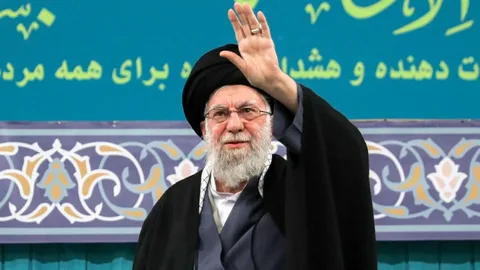
Khamenei was killed in an Israeli airstrike on his Tehran compound on February 28, in the opening wave of the joint US-Israeli offensive against Iran. He was 86. On the Ali Khamenei death time question, Wikipedia’s account says the strike hit at about 08:10 Iran time, and Iranian state broadcaster IRIB confirmed his death around 05:00 the following day.
The question of whether Khamenei was buried has a clear answer. He was buried at the Imam Reza shrine in his birthplace of Mashhad on July 9, after a week of funeral processions in Iran and Iraq. The funeral came about four months after his death.
An Earlier Attempt on His Life
Khamenei had survived danger before. On June 27, 1981, a bomb hidden in a tape recorder exploded near him at a Tehran mosque, permanently paralysing his right arm. Iranian authorities have always blamed the People’s Mujahedin of Iran, or MEK, for that attack.
Succession and the War
His son Mojtaba Khamenei succeeded him, but had not been seen in public after the February attack as of the July funeral. Washington and Tehran signed a framework agreement in June after mediation by Pakistan and Qatar. That deal aimed to halt hostilities and open the way for talks.
Details: What Golan Said
Golan said that killing Khamenei was a mistake, though not because Khamenei did not deserve to die. He said it was a mistake because it did not serve the interests of the State of Israel. He added that an elderly, long-serving leader brings a certain advantage.
His argument centres on who came next. Golan said Israel was left with more extreme and violent figures after the top tier of Iran’s leadership was removed. He also said that, if Mojtaba Khamenei is functioning at all, he appears to be controlled by Iran’s hardline security leadership.
Criticism of Netanyahu
Golan also targeted the prime minister’s goals. He said Benjamin Netanyahu set an “unrealistic goal” of toppling the Iranian regime, and that it was never achieved. He argued that Israel’s achievements peaked with Operation Rising Lion in June 2025.
A Shift From His Earlier Stance
The remarks mark a change in tone. When the assassination happened in late February, Golan publicly welcomed the operation and praised the Israeli and American forces involved. His new position suggests that the strategic results, rather than the act itself, are now his focus.
Quotes and Expert Views
Golan was direct about his view. He said he believed “unequivocally” that the killing of the elder Khamenei was a mistake. He stressed that he was not defending Khamenei, only questioning the outcome.
Outside analysts have offered a mixed picture of Khamenei’s record. One US radio analysis said his legacy was in tatters by the time he died, though a strong ballistic missile programme remains. Supporters in Iran, by contrast, call him a martyr, and state media refers to him that way.
Impact: Regional and Global Consequences
For Israel, the comments add to a domestic debate over the war’s goals and results. Golan is an opposition figure, so his view does not reflect government policy. Even so, it shows that questions about strategy are being raised publicly.
For the wider region, the war has had large economic effects. The conflict heightened tensions across the Middle East and raised global energy prices, as commercial oil traffic through the strait has effectively halted. Pakistan has an interest in this too, as it helped mediate the June framework deal.
Leadership Uncertainty in Iran
The question of who truly runs Iran remains open. Mojtaba Khamenei’s low public profile has fuelled speculation, though sources reviewed do not confirm who holds real control. Any shift in Tehran’s leadership would affect talks with Washington.
Conclusion: What Comes Next
Attention will stay on the US-Iran framework agreement and whether it leads to formal negotiations. Golan’s comments are unlikely to change Israeli policy, but they may shape the wider political debate ahead of future elections. Reactions from the government and other parties could follow.
In Iran, the focus is on whether Mojtaba Khamenei appears in public and how the leadership manages tensions. The legacy of the Ali Khamenei killing will be argued over for years. For now, the war’s outcome remains unsettled.
Frequently Asked Questions (FAQs)
What did Khamenei do for Iran?
Ali Khamenei led Iran as supreme leader for about 36 years, from 1989 until his death. Supporters credit him with preserving the Islamic Republic, building a strong military and expanding Iran’s regional influence. Analysts note that he built a robust ballistic missile programme and was deeply hostile to the United States. He also steered Iran through major domestic crises, including protests in 1999, 2009 and 2019 and the “Woman, Life, Freedom” movement. Critics point to repression of dissent, economic hardship under sanctions and the costs of regional conflicts. His record is viewed very differently inside and outside Iran.
Who tried to assassinate Ali Khamenei?
The best-known earlier attempt was in 1981. Authorities have always blamed the People’s Mujahedin of Iran (MEK), a group that is now outlawed in Iran. Other attempts have been reported, including a drone attack in 2022, but details are limited. He was ultimately killed on February 28, 2026, in what was described as a joint US-Israeli airstrike. So the answer depends on the period: the MEK in 1981, and US and Israeli forces in 2026.
Why did the US assassinate Soleimani?
Qassem Soleimani was the head of Iran’s Quds Force, and he was killed by a US drone strike near Baghdad airport on January 3, 2020. The US administration at the time said he was planning imminent attacks on Americans and was responsible for the deaths of US personnel in the region. Iran called it an assassination and retaliated with missile strikes on a base housing US forces. Critics questioned whether the threat was truly imminent and whether the strike was legal. This answer comes from general knowledge, not from the sources used for this article.
Was Ali Khamenei buried?
Yes. He was buried on July 9 at the Imam Reza shrine in Mashhad, Iran’s most revered place of worship. The funeral included processions in Tehran, Qom, Najaf and Karbala before his coffin was flown to Mashhad. The ceremonies took place months after his death because of the war.What was Ali Khamenei’s death time?
Reports give different details because the attack and the announcement were separate events. The strike is reported to have happened at about 08:10 Iran time on February 28, and state media confirmed his death at about 05:00 the next day. Iran’s government declared 40 days of mourning and seven days of public holiday after the confirmation. Readers should treat the exact time as reported, not officially independently verified