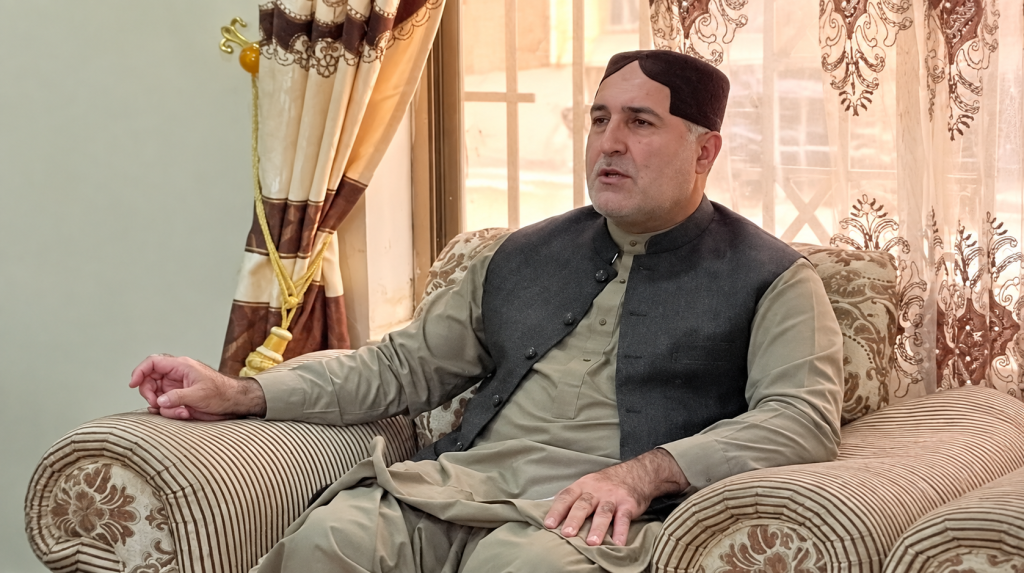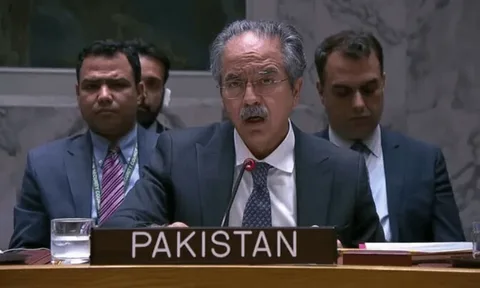
Rana Muhammad Qasim Noon, Chairman of the Parliamentary Committee on Kashmir, and Pakistan’s Ambassador to the United States, Rizwan Saeed Sheikh, have called for a peaceful resolution of the Kashmir dispute. They said lasting peace and stability in South Asia depend on a settlement in line with the relevant UN Security Council resolutions. The remarks came during a media session at the Pakistan Embassy in Washington, as reported on Tuesday.
Background: A Dispute That Dates Back to 1947
The Kashmir issue has been unresolved since the partition of British India in 1947. Both India and Pakistan claim the region in full but control only parts of it. The dispute has led to wars and repeated military standoffs, and it remains one of the longest-running unresolved conflicts in the world. It continues to shape relations between the two nuclear-armed neighbours.
Pakistan has long argued that the Jammu and Kashmir dispute is an international matter that should be settled through UN Security Council resolutions, including a UN-supervised vote for the Kashmiri people. India, on the other hand, describes Jammu and Kashmir as an integral part of the country and opposes third-party involvement. The two positions have barely moved in decades, which is why the Kashmir dispute keeps returning to the diplomatic agenda.
Tensions rose again after India revoked Articles 370 and 35A in August 2019, a decision Pakistan rejects. More recently, a military conflict between the two sides in May 2025 brought fresh international attention to the issue. Pakistani officials have since cited that episode as proof that the Kashmir issue cannot be set aside.
Details: What Was Said at the Pakistan Embassy
According to a statement issued by the Pakistan Embassy in the US, Noon and Ambassador Sheikh held an interactive session with journalists at the embassy in Washington, D.C. The chairman briefed the media on developments concerning the Kashmir dispute and the way forward. Noon was in the US capital after attending engagements linked to the 81st session of the United Nations General Assembly.
Noon told reporters that lasting peace in South Asia depends on a just resolution of the Jammu and Kashmir dispute. He said the matter should be settled in accordance with the solution set out in the relevant UN Security Council resolutions. The message fits the position Pakistan has repeated at international forums for years.
Ambassador Sheikh, who is Pakistan’s top diplomat in Washington, has spoken on the same theme in recent months. In earlier remarks, he stressed adherence to international law and said respect for accepted legal principles is vital for lasting stability in the region. He has also linked the Kashmir dispute to the Indus Waters Treaty, calling both issues significant in political, economic and geographical terms.
Quotes: Pakistan’s Official Position
Noon has often described the Kashmir issue as an international matter, not a bilateral or internal one. In earlier public remarks he said a lasting settlement was the only route to peace, and that ceasefires alone could not deliver stability. His latest comments in Washington follow the same line.
Pakistani officials also say their support for Kashmiris is moral, political and diplomatic, and that they back the Kashmiri people’s right to self-determination. Sheikh has repeated that position at community gatherings and legal webinars in the US. India rejects this framing and maintains that Kashmir is its internal matter, so the two governments still describe the dispute in very different terms.
Impact: Why the Kashmir Dispute Matters Beyond South Asia
For Pakistan, the Washington session is part of a wider effort to keep the Kashmir issue visible in the United States and at the UN. Diplomats often use such media briefings to reach think tanks, lawmakers and journalists who shape the debate on South Asia. The timing, just after UNGA engagements, helps carry the message to an international audience.
At the regional level, any progress on Kashmir peace resolution would ease tensions between two nuclear-armed states that together hold a large share of the world’s population. Analysts often point out that a crisis over Kashmir can escalate quickly, as the 2019 and 2025 episodes showed. Trade, water sharing and border security are all affected by the dispute.
Globally, major powers have shown interest in keeping the peace between India and Pakistan. However, India’s firm opposition to outside mediation limits how much other countries can do. This is why progress on the Jammu and Kashmir dispute has remained slow despite repeated appeals.
Conclusion: What to Expect Next
No formal talks between India and Pakistan appear to be planned, so the latest statements are unlikely to change the situation on the ground soon. Pakistan is expected to keep raising the Kashmir dispute at the UN, in Washington and in other capitals. Any shift would need a change in political will on both sides, along with steady diplomatic contact.
Observers will watch whether the United States and other powers play a larger role in encouraging dialogue. They will also watch for developments around the Indus Waters Treaty, which has become closely tied to the wider debate. Until then, the Kashmir issue is likely to remain a central and sensitive topic in South Asian diplomacy.
Frequently Asked Questions (FAQs)
What is the current issue of Kashmir?
The main current issue is the unresolved political status of Jammu and Kashmir, which India and Pakistan both claim in full but administer in parts. Since India revoked Articles 370 and 35A in 2019, the region has been governed under a different constitutional arrangement, which Pakistan rejects and many Kashmiri political groups oppose. Concerns about civil liberties, political detentions, internet restrictions and demographic change are also raised regularly by rights groups and Pakistani officials, while India says its steps have promoted development and integration. Tensions between the two countries flared again in 2025, and there is still no formal dialogue process. This leaves the Kashmir dispute as a live diplomatic and security problem.
What is the main issue of conflict between India and Pakistan?
The core issue of conflict between India and Pakistan is the status of Kashmir. It began after partition in 1947, when the ruler of the princely state of Jammu and Kashmir acceded to India amid a tribal and military intervention from Pakistan’s side, a decision Pakistan disputes. The first war followed in 1947-48, and the UN Security Council later passed resolutions calling for a plebiscite. India argues that the accession is final and that the matter should be handled bilaterally under agreements such as the 1972 Simla Agreement. Other disputes, including water sharing under the Indus Waters Treaty, cross-border terrorism allegations and trade, add to the friction, but Kashmir remains at the centre.
What are the main reasons for the protests in Kashmir?
Protests in Kashmir have had several causes over the years. In Indian-administered Kashmir, they have been linked to the 2019 revocation of special status, arrests of political leaders, communication shutdowns, allegations of human rights abuses and concerns about jobs and land laws. Local groups have also protested killings during security operations and restrictions on political activity. In Pakistan-administered Kashmir, protests in recent years have focused on issues such as electricity prices, food subsidies and the cost of living, and on demands for better public services. Because the causes differ by region, it is best not to treat the protests as one single movement.