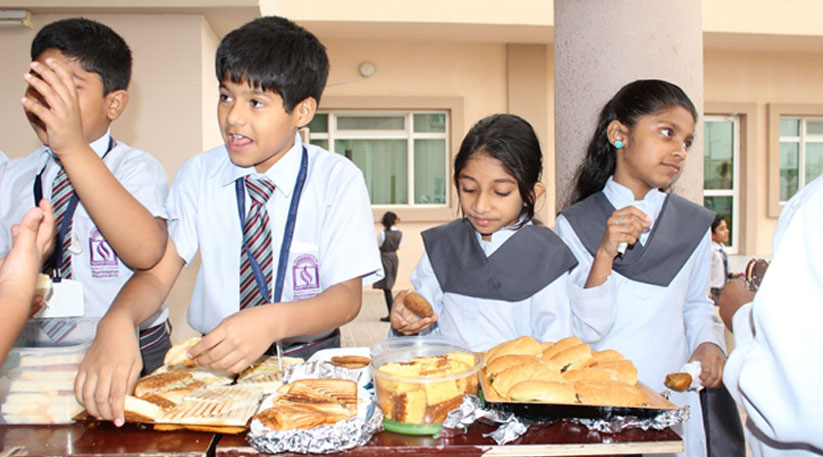
India is moving closer to a nationwide junk food ban that would restrict the sale of high-fat and high-sugar food within 50 metres of schools. The proposal marks one of the country’s biggest steps yet against childhood obesity and poor eating habits among students.
Background
Concerns over unhealthy eating near schools in India are not new. Courts and state health departments have raised the issue for years, but the current push comes from the Food Safety and Standards Authority of India (FSSAI), the national food regulator. The idea was first proposed back in 2020 but has gained fresh momentum this year.
In August, the authority published draft thresholds for fat, salt and sugar content that would trigger sales restrictions near and inside schools. Public feedback on the draft is open until October 6, after which the rule could move toward formal implementation.
Details of the Junk Food Ban Near Schools
Under the proposed India junk food ban, shops, canteens and food stalls within a 50-metre radius of roughly 1.5 million schools across the country would face new limits on selling items high in fat, salt and sugar, commonly known as HFSS food. This includes packaged chips, carbonated drinks, sweets, pizzas, burgers and similar snacks.
The federal draft focuses on stopping sales and advertising of junk food specifically to schoolchildren, rather than banning such shops from stocking these products altogether. That distinction has become a key talking point, since some states are choosing to go further than the central proposal.
Maharashtra, home to Mumbai, has already adopted a stricter version of the school food regulations India is now considering nationally. The state’s food safety department has barred shops within 50 metres of schools from stocking HFSS items at all, not just from selling them to students. Officials there have already flagged violations at more than 130 shops near schools.
What Officials Are Saying
Rajit Punhani, chief executive of FSSAI, said the plan is meant to build healthier eating habits in children from an early age, noting that regulators want to discourage the habit of reaching for packaged snacks. He added that businesses should not be badly affected, since shop owners can continue selling non-HFSS food, and that the real goal is pushing companies to reformulate their products.
Maharashtra’s food safety commissioner, Tukaram Mundhe, pointed out the practical challenge of enforcement, questioning how anyone could tell whether a shop near a school is selling to schoolchildren or adults. His answer was a simpler rule: shops in that zone should not stock these items at all.
Impact on Businesses and Families
Small shopkeepers near schools are already worried about the coming junk food restrictions. In Bhubaneswar, several shop owners said their sales could fall by a third or more if the rule takes effect. Industry groups, including the Confederation of Indian Food Trade and Industry, have warned that compliance will be difficult since many schools sit inside busy, mixed-use markets that also serve the general public.
Large food companies are watching closely too. PepsiCo and Nestle told Reuters they already follow global policies limiting what they sell in and around schools, while Coca-Cola and Mondelez did not respond to queries. These companies also face separate proposed rules requiring red warning labels on packaged food high in fat, salt and sugar, a step that would bring India’s junk food shops near schools regulations closer to countries like Chile and Mexico.
Why the Crackdown Now
The numbers explain the urgency behind India’s junk food crackdown. According to World Obesity Federation data, the number of Indian children aged 5 to 19 who are overweight or obese rose from 28 million in 2015 to 41 million in 2025, and is projected to reach 56 million by 2040.
Health experts point to Chile as a possible model. A Lancet study this year found that after 18 months of similar warning-label rules, Chile saw a measurable drop in excess weight among both girls and boys, along with wider reformulation of food products by manufacturers.
Conclusion
With public feedback open until October 6, the India junk food ban is not yet law, but the direction is clear. Whether the final rule follows the stricter Maharashtra model or the lighter federal approach, food stalls near India’s schools are likely to look very different in the coming years.
FAQs
Which country consumes the most junk food?
Global surveys on ultra-processed and packaged food consumption often place the United States at or near the top, largely due to high intake of fast food, sugary drinks and packaged snacks. However, rankings shift depending on how “junk food” is defined and measured, and fast-growing markets such as India and China are seeing consumption rise quickly as well, which is part of why regulators there are now stepping in with rules like the proposed junk food ban near schools.
Is Maggi a junk food?
Maggi instant noodles are generally classified as a processed, high-sodium convenience food rather than a nutritionally balanced meal, which places it in the broader category regulators are targeting under HFSS (high fat, salt and sugar) rules. Nestle, which makes Maggi, has said it follows its own global policy restricting sales of such products in primary and secondary schools, so its exact status under India’s new school food regulations will depend on the final salt, sugar and fat thresholds set by FSSAI.
Is India having a food crisis?
India is not facing a food shortage crisis in the traditional sense, but it is dealing with a nutrition transition crisis, where processed and packaged foods are replacing traditional home-cooked meals, especially among children. This shift is a major driver behind rising obesity rates and is precisely why the government is pursuing the junk food ban near schools and similar public health measures.