Summary
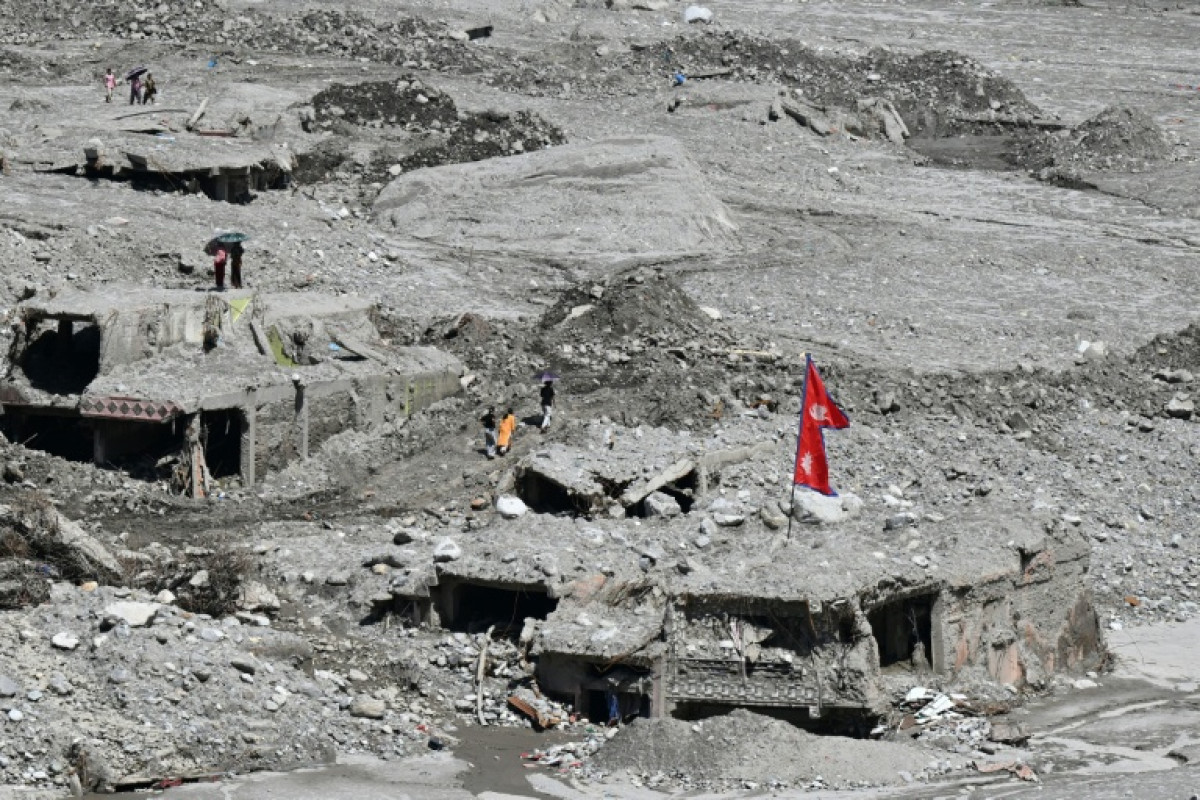
Nepal is marking one grim month since a wall of ice, rock and mud tore through the Langtang valley on August 26. The country’s disaster authority now says 1,451 bodies have been pulled from the wreckage, while more than 5,700 people are still unaccounted for. The scale of loss keeps growing even as rescue teams shift from search-and-rescue to slower, grimmer recovery work.
Background
The disaster began just before 9 am local time on August 26, when a massive section of Nepal’s Langtang Lirung mountain broke away from an altitude of roughly 5,200 metres. The collapsed section was more than a kilometre wide.
What followed was fast and violent. The debris raced roughly 20 kilometres down the valley, dropping 1,700 metres in elevation near Rasuwagadhi in under seven minutes. Geologist Sudan Bikash Maharjan of the Kathmandu-based International Centre for Integrated Mountain Development described the debris flow as moving “like a bullet train” once it hit the steep terrain.
Scientists studying the collapse have linked it to warming temperatures destabilizing high-altitude ice and rock — part of a wider pattern of glacial instability being tracked across the Himalayas.
Details
The human toll has climbed steadily since the first hours after the collapse. Nepal’s National Disaster Risk Reduction and Management Authority now puts the confirmed death toll at 1,451, with over 5,700 people still listed as missing a month on.
Identifying the dead has been slow and difficult. Many bodies were badly damaged by the force of the flood, and morgues across the affected districts were overwhelmed within days. Officials have resorted to recording DNA samples before burying unidentified remains in temporary mass graves. So far, only around 100 bodies have been formally identified.
Across the border in Tibet, Chinese state media have reported a separate toll of 43 deaths, with 519 people still missing on that side.
Among those unaccounted for are several hundred workers from hydropower projects that were directly in the debris path, along with hundreds of foreign nationals — tourists, pilgrims and trekkers — who were passing through the region when the flood hit.
Quotes
Nepal’s Prime Minister Balendra Shah has pushed for the disaster to be treated as a wake-up call rather than an isolated tragedy, calling on the international community to take the risks of a warming Himalayan climate seriously and act with urgency.
Energy Minister Biraj Bhakta Shrestha, addressing the continued search at flooded hydropower tunnels, said crews are still working despite the terrain, weather and communication blackouts making the job nearly impossible in places.
Impact
More than 80,000 people have been affected by the disaster, and thousands who lost their homes are still living in emergency shelters a month later. Nine major highways, dozens of bridges and entire sections of hydropower infrastructure were wiped out.
The United Nations has launched an appeal for close to $50 million in emergency aid to support the response. Several governments, including the United States, have pledged financial assistance, though the amounts pledged so far fall well short of what officials say the crisis demands.
Nepal’s government estimates the total reconstruction bill at around $4.78 billion — a staggering figure for one of South Asia’s smaller economies.
Conclusion
Rescue operations have largely given way to recovery and identification work, but Nepali officials say the search will continue as long as families are still waiting for answers. With winter approaching and thousands still displaced, the coming weeks are expected to test both the government’s relief capacity and the patience of communities still searching for missing relatives.
FAQs
How many people died in Nepal in 2026?
As of one month after the August 26 disaster, Nepal’s disaster authority has confirmed 1,451 deaths from the floods and glacial collapse that struck the Langtang region. The number has risen steadily since the first days of the disaster and officials caution that it may still climb, given that more than 5,700 people remain missing and identification of recovered remains is ongoing.
What is the world’s deadliest flood?
Historically, the deadliest flood on record is the 1931 China floods along the Yellow River, Yangtze River and Huai River, which are estimated to have killed anywhere from several hundred thousand to as many as four million people through drowning, disease and famine in the aftermath. While Nepal’s 2026 disaster is catastrophic by the country’s own standards, it does not approach that scale globally.
Which part of Nepal was flooded?
The disaster centred on the Langtang region near the China-Nepal border, with the debris flow travelling down the Bhote Koshi and Trishuli river systems. Districts including Rasuwa, Nuwakot, Chitwan, Nawalparasi, Gorkha, Dhading and Tanahun were among the hardest hit, with Rasuwa and Nuwakot bearing the brunt of the missing-persons toll due to their proximity to the collapse site and hydropower facilities.