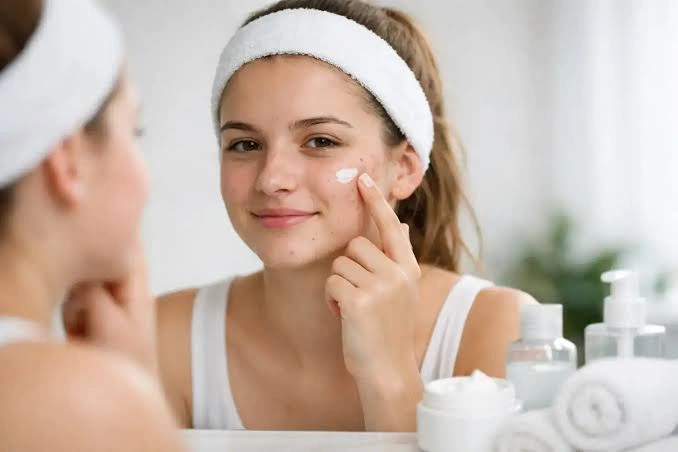
Teen skincare trends driven by social media are encouraging young people to follow complicated “glass skin” routines, but dermatologists say most teenagers need only a simple skincare routine to maintain healthy skin.
Social media is increasingly shaping teen skincare habits, with influencers and “Get Ready With Me” (GRWM) videos promoting flawless complexions and lengthy routines involving multiple serums, masks, exfoliants and active ingredients.
Dermatologists warn that teenagers may be putting unnecessary stress on their skin by copying routines designed for adults or following advice from social media influencers instead of qualified professionals.
Consultant dermatologist Dr Jonathan Kentley said one of the biggest concerns is the constant exposure to unrealistic beauty standards online.
He said he had treated thousands of patients but had never seen anyone with the supposedly flawless “glass skin” promoted on social media.
According to Dr Kentley, highly filtered images can make young people believe that perfectly smooth, poreless skin is a realistic goal when normal skin naturally contains pores, blemishes, redness, pigmentation and scarring.
Teen Skincare Should Be Simple
More than 80% of people aged 13 to 18 experience acne during their teenage years, making spots and other skin changes a normal part of puberty.
Consultant dermatologist Dr Zainab Laftah explained that hormonal changes during puberty can increase oil production and contribute to acne.
Androgens such as testosterone can stimulate oil production, while blocked hair follicles and inflammation can result in blackheads, whiteheads and inflamed spots.
Dr Laftah said acne is extremely common and can be treated when necessary.
For teenagers with oily or acne-prone skin, salicylic acid can be useful because it helps penetrate oil-filled pores and remove accumulated sebum and dead skin cells. However, dermatologists warn that excessive or unnecessary use can cause dryness and irritation.
Experts therefore recommend keeping teen skincare routines straightforward rather than adding numerous active ingredients.
Three Skincare Basics for Teenagers
Dermatologists recommend three basic products for most teenagers:
- A gentle cleanser
- A fragrance-free moisturiser
- A broad-spectrum sunscreen with SPF 30 or higher
Experts say teenagers generally do not need extensive collections of toners, serums, masks and exfoliating products unless a healthcare professional recommends them.
A complicated routine can potentially damage the skin barrier, particularly when young people frequently use strong acids, exfoliants or retinoids.
Dr Kentley said he had seen an increase in perioral dermatitis among teenagers, a condition that can be associated with excessive use of products that irritate or strip the skin barrier.
Dr Laftah also warned that teenagers are increasingly adopting adult-style skincare routines containing multiple active ingredients, which can contribute to skin barrier problems and create additional irritation.
Healthy lifestyle habits can also form part of good teen skincare.
Dermatologists say insufficient sleep can increase cortisol, a stress hormone that may contribute to acne breakouts.
Dr Laftah recommends teenagers maintain good sleeping habits, while Dr Kentley notes that studies have linked high-sugar diets, some carbohydrate-heavy foods and whey protein with acne flare-ups in some people.
However, experts stress that skin varies from person to person. A food or lifestyle factor that appears to trigger acne in one teenager may have little or no effect on another.
Dermatologists also advise teenagers to avoid squeezing or picking spots.
Popping pimples can increase inflammation by pushing their contents deeper into the skin. This can increase the risk of scarring and discolouration.
Dr Laftah recommends hydrocolloid pimple patches as one useful option for some superficial spots. These patches can absorb fluid while creating a protective barrier that makes picking more difficult.
For persistent, painful, cystic or scarring acne, experts recommend seeking medical advice from a GP or dermatologist, as prescription treatment may be required.
Teenage boys can experience many of the same skin problems because androgens are present in both boys and girls, although androgen levels are generally higher in boys.
Higher oil production can contribute to spots, while shaving can create additional irritation.
Dr Kentley said improper shaving can cause folliculitis, an inflammation around hair follicles that can overlap with acne and contribute to damage to the skin barrier.
He recommends shaving after a shower when the skin and hair have been softened. Using a shaving brush can help lift hairs, while a lubricating product such as shaving foam can reduce friction.
Teenagers should also shave in the direction of hair growth to reduce irritation.
Social Media and Teenage Skin
The growing popularity of “glass skin” highlights the influence social media can have on young people’s expectations about appearance.
Dermatologists say visible pores, blackheads, blemishes, redness, pigmentation and scars are normal features of human skin. Attempting to eliminate every natural imperfection can lead teenagers to use too many products and potentially damage their skin.
The central message from experts is that teen skincare does not need to be complicated. A gentle cleanser, moisturiser and daily sunscreen can provide a basic foundation, while persistent or severe skin problems should be assessed by a qualified healthcare professional.
Rather than attempting to reproduce heavily filtered images or lengthy influencer routines, teenagers can benefit from understanding what normal skin looks like and learning when professional medical advice is appropriate.