

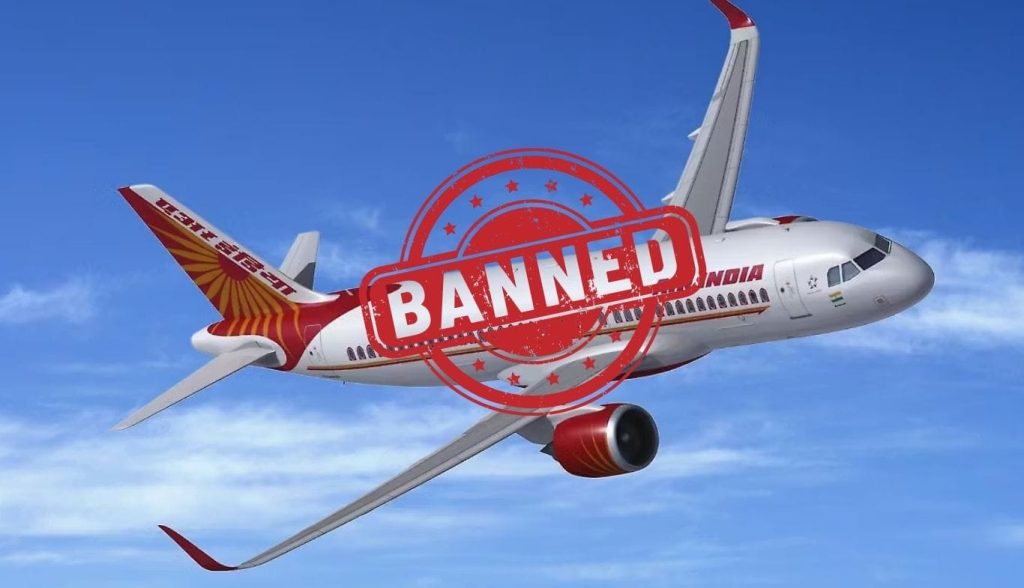

Pakistani Airspace Ban for Indian Aircraft Continues With Fresh NOTAM
Pakistan has once again extended its airspace ban on Indian aircraft, keeping Indian-registered planes and Indian-operated flights out of Pakistani skies for another month. The Pakistan Airports Authority issued a fresh Notice to Airmen confirming that the ban on Indian aircraft remains firmly in place. This Pakistani airspace ban has now stretched on for well over a year, and it keeps reshaping how Indian carriers plan their international routes.
Background of the India Pakistan Airspace Ban
The India Pakistan airspace ban traces back to April 2025, when relations between the two neighbours collapsed after a deadly attack in Pahalgam, in Indian-administered Kashmir, that killed twenty-six people. India blamed Pakistan for the attack, a charge Islamabad firmly denied while calling for a neutral international investigation.
Within days, both countries shut their skies to each other’s aircraft. A short but intense four-day military conflict followed in May 2025, ending only after a ceasefire brokered by the United States. Even though the fighting stopped, the India Pakistan aviation tensions never really cooled, and the airspace restrictions kept getting renewed month after month.
Details of the Latest Pakistan Airspace Restrictions
Under the current NOTAM, Pakistan’s airspace remains unavailable for all Indian-registered aircraft. The Pakistan airspace closure also extends to any aircraft operated, owned, or leased by Indian airlines or operators, and it specifically includes military flights as well.
The restriction covers both of Pakistan’s flight information regions, Karachi and Lahore, and applies from ground level right up to unlimited altitude. This means Indian aircraft cannot use Pakistani skies at any height, whether for commercial passenger flights or for cargo and defence operations.
India, for its part, has kept a matching, reciprocal ban on Pakistani aircraft entering Indian airspace. Neither government has signalled any plan to lift these restrictions in the near future, and each extension has simply pushed the closure forward by roughly a month at a time.
Official Statements on the Airspace Ban
A spokesperson for the Pakistan Airports Authority confirmed the extension in a brief statement, noting that the closure applies to Indian-registered aircraft along with any Indian-operated or Indian-leased planes, including those used by the military. Pakistani officials have consistently framed the restrictions as a response to what they describe as unresolved hostility from New Delhi following the Pahalgam attack.
On the Indian side, aviation ministry officials have described their own reciprocal NOTAM as a matter of maintaining the existing status quo. Indian officials have repeatedly said the ban reflects ongoing security considerations rather than any single new provocation, and they have not offered a fixed timeline for when the restriction might end.
Impact of the Ban on Indian Flights and Pakistan Airspace
The ban on Indian aircraft has had a real financial and operational cost for Indian carriers. Airlines flying to Europe, the Middle East, and parts of Central Asia have had to take longer, roundabout routes that avoid Pakistani skies entirely. That means higher fuel bills, longer flight durations, and added strain on crew scheduling for airlines such as SpiceJet and Akasa Air, among others.
Foreign carriers are not affected by the Pakistan airspace ban, since it applies only to Indian-registered and Indian-operated aircraft. Pakistani airlines, in turn, are unable to use Indian airspace either, which has forced Pakistan International Airlines onto longer alternative paths for some of its own routes. Industry analysts note that Pakistan’s own aviation sector has felt comparatively less disruption than India’s, given the difference in route networks and traffic volumes between the two countries.
Conclusion and What Comes Next
With the India Pakistan airspace ban now well into its second year, most aviation watchers expect another routine extension once the current NOTAM approaches its expiry date. Unless there is a genuine diplomatic breakthrough between Islamabad and New Delhi, the Pakistani airspace ban on Indian aircraft looks set to remain a fixture of regional travel for the foreseeable future.
Both sides have shown no public appetite for reopening their skies to each other just yet. Airlines and passengers on both sides of the border will likely need to keep planning around these Pakistan airspace restrictions for at least the next few renewal cycles.
Frequently Asked Questions
Is Pakistan airspace still banned for India?
Yes, Pakistan airspace remains closed to Indian aircraft. The Pakistan Airports Authority has repeatedly extended the restriction through a series of monthly Notices to Airmen since the ban was first put in place in April 2025. Every renewal keeps the same core rule in force: no Indian-registered, Indian-operated, or Indian-leased aircraft, including military flights, may use Pakistani airspace at any altitude.
Does India have a ban on flights from Pakistan?
Yes, India enforces a reciprocal ban of its own. Indian aviation authorities have issued matching NOTAMs that keep Pakistani-registered aircraft, along with any planes operated, owned, or leased by Pakistani airlines, out of Indian airspace. This includes Pakistani military aircraft as well, and the Indian restriction has been renewed alongside Pakistan’s closure ever since the tensions began in 2025.
Can Pakistani airlines fly over India right now?
No, Pakistani airlines currently cannot fly over Indian territory. Because India’s ban mirrors Pakistan’s own restrictions, Pakistan International Airlines and other Pakistani-registered carriers must plan longer alternative routes for any flights that would normally have crossed Indian airspace, adding to their fuel and time costs in much the same way Indian carriers face on the other side.