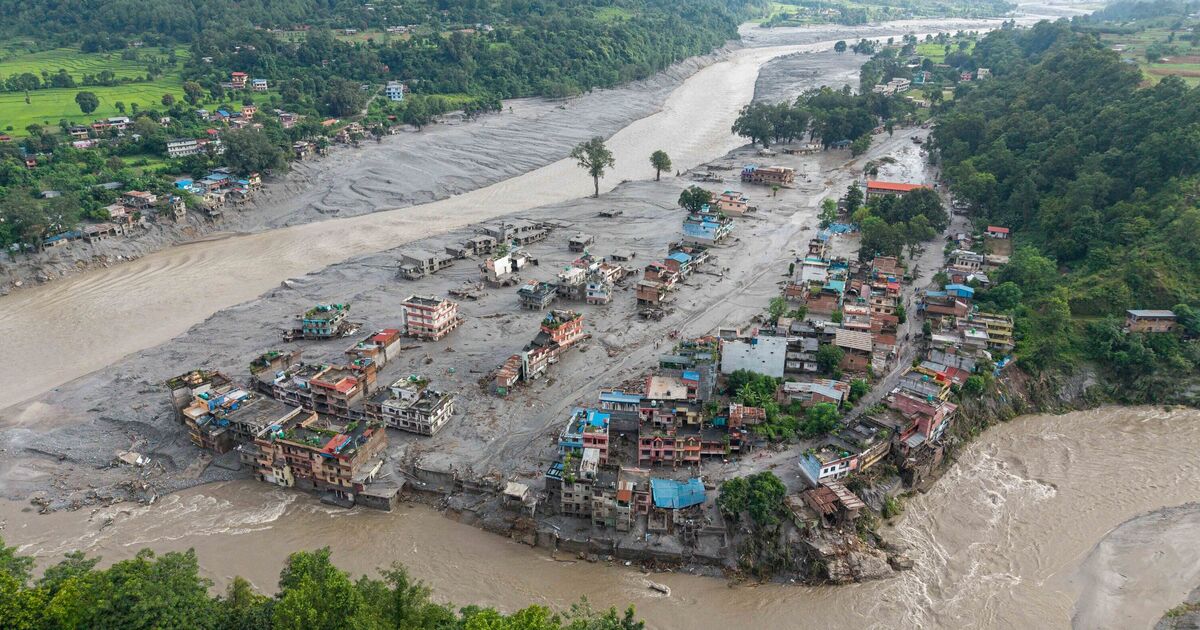
Two days after a catastrophic flash flood tore through Nepal northern border with Tibet, rescue teams are still combing through debris while a new danger looms overhead. A barrier lake formed by the disaster is at risk of bursting, and authorities fear it could unleash a second devastating flood on communities that haven’t yet recovered from the first.
The confirmed death toll has now passed 470 across Nepal and China, with close to 1,000 people still listed as missing. Officials say the numbers could keep rising as search teams push into remote, hard-to-reach villages.
Background: How the Disaster Unfolded
The flood struck early Wednesday morning in the mountainous districts of Rasuwa, Nuwakot, Dhading, and Gorkha, all north of Kathmandu. According to satellite data, the disaster began when a large section of a Himalayan glacier broke off and collapsed, sending an enormous volume of ice, rock, and mud crashing into the river system below.
The surge tore down the Trishuli and Bhotekoshi river valleys, wiping out bridges, roads, and entire sections of riverside towns in a matter of minutes. The town of Bidur in Nuwakot district, sitting directly on the Trishuli River, suffered some of the worst destruction, with video showing residents trapped on rooftops and balconies as the water surged past.
Rescuers Scour Debris Amid Difficult Conditions
Search and rescue crews from Nepal’s army and police, along with international support teams, have been working nonstop since Wednesday. Officials say more than 4,300 personnel have been deployed to the disaster zone.
Progress has been slow. Mountainous terrain, damaged access roads, unstable slopes, and ongoing power and communication outages have all hampered efforts to reach isolated villages. In several areas, rescuers have had to dig by hand through thick mud and wreckage to search for survivors and recover bodies.
The New Threat: A Barrier Lake
The biggest concern right now isn’t just the flood that already happened, it’s the one that could still come. Landslide debris from the initial collapse has dammed part of the river system, creating what disaster experts call a barrier lake. If that natural dam gives way, it could release a fresh torrent of water downstream with little warning.
Rescue teams have already had to pause operations near the Nepal-China border because of this exact risk. Engineers are now monitoring the lake around the clock, trying to determine whether it needs to be drained in a controlled way before it fails on its own.
Quotes From Officials and Affected Families
Nepal’s Prime Minister’s Office confirmed the latest figures on Friday, stating that 469 people have died and 977 remain missing within the country. Chinese authorities reported three deaths and 558 missing on their side of the border.
A UNICEF representative working in Nepal described the scene in the worst-hit districts in stark terms, saying children in Rasuwa and Dhading watched their homes, schools, and clinics disappear in front of them within a short span of time. She warned that surviving children now face heightened risks of illness, malnutrition, and exploitation as the crisis drags on.
Family members searching for missing loved ones describe an anguished wait. Several relatives of foreign tourists caught up in the disaster say they lost contact with their loved ones on Wednesday morning and have received only fragmented updates since.
Regional and Global Impact
The flood has drawn international attention and offers of assistance. Around 644 of the missing people in Nepal are foreign nationals, including pilgrims and trekkers headed toward Tibet’s Mount Kailash region. The United States has confirmed that about 90 Americans remain unaccounted for, while Australia says at least 39 of its citizens are missing.
UNICEF estimates that at least 17,000 children have been affected so far, with at least 18 schools destroyed and 20 more damaged. The scale of displacement and infrastructure damage is expected to strain Nepal’s disaster response resources for weeks to come.
Conclusion: What to Expect Next
With nearly a thousand people still missing and a barrier lake threatening fresh flooding, the situation in Nepal remains highly unstable. Authorities are prioritizing three things: locating survivors, monitoring and managing the barrier lake, and delivering aid to displaced families across the affected districts.
Officials have not given a timeline for when the barrier lake risk will ease, meaning rescue teams may continue to work under the shadow of a possible second flood in the days ahead.
FAQs
How many people died in Nepal today?
The death toll from the Nepal-Tibet flash flood stands at 469 confirmed deaths in Nepal as of Friday, August 28, 2026, with an additional three deaths reported in Tibet. Nearly 1,000 people combined remain missing across both sides of the border, and officials expect the toll to change as rescue teams reach more remote villages cut off by damaged roads.
What is the latest news on the Nepal border?
Rescue operations along the Nepal-China border are ongoing but have been repeatedly interrupted due to the risk posed by a newly formed barrier lake. This lake, created by landslide debris blocking the river, could burst and trigger a second wave of flooding. Around 1,550 people have already been rescued, while hundreds of foreign nationals, including tourists and pilgrims, remain unaccounted for.
What is the reason for the Nepal flash flood?
The flash flood was caused by the collapse of a large section of a Himalayan glacier, which sent tonnes of ice, rock, and mud surging into the Trishuli and Bhotekoshi river systems. The sudden surge overwhelmed riverside towns within minutes. The event was first mistaken for a minor earthquake before satellite imagery confirmed the glacier collapse as the true cause.