Canada Strikes Back: $27.6 Billion in Counter-Tariffs on U.S. Goods
Trade War Deepens as Ottawa Targets 700+ American Products and Announces $7.5 Billion in Support
By Asim Siddiqui
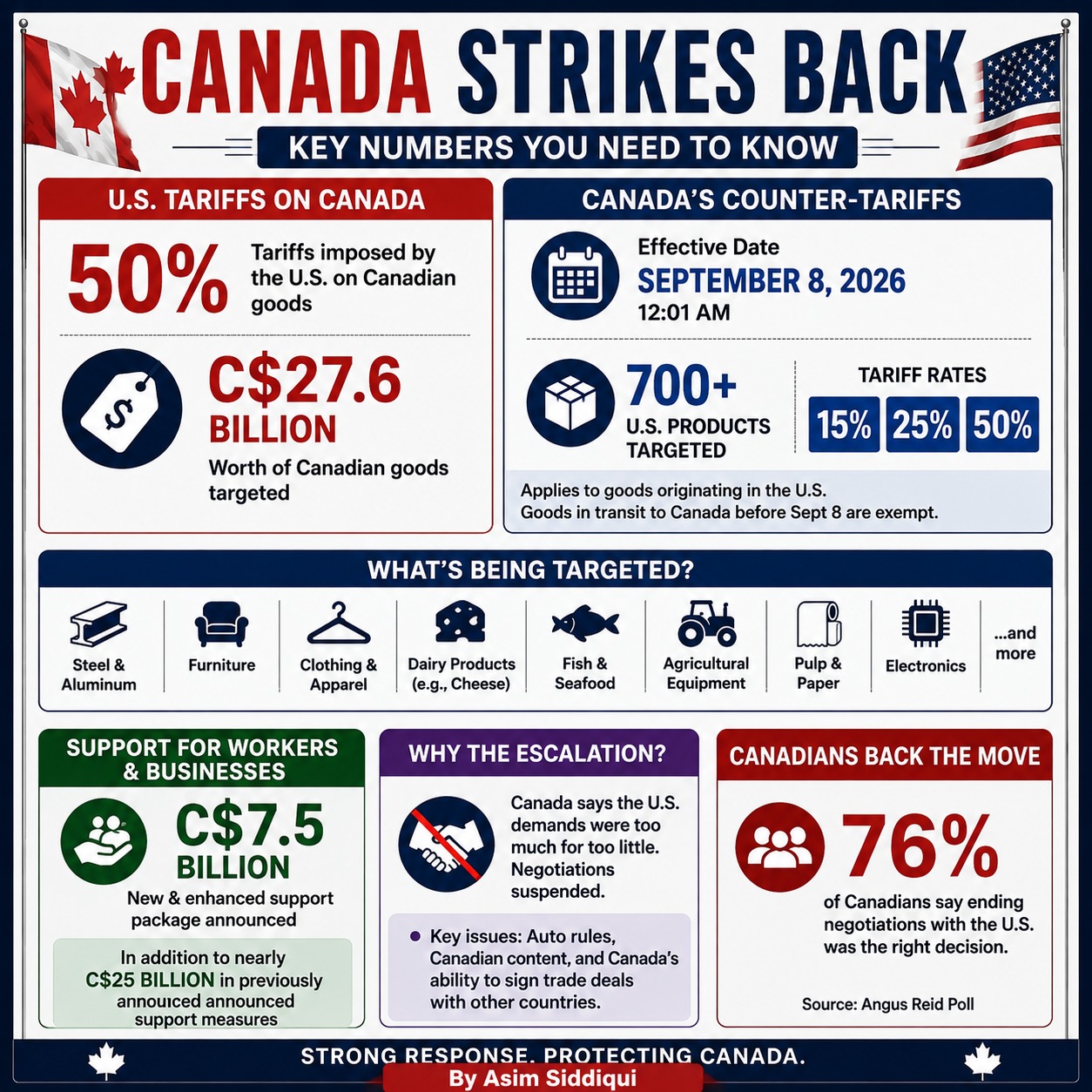
The trade dispute between Canada and the United States has entered a new and potentially damaging phase. Following Washington’s decision to impose 50 percent tariffs on C$27.6 billion worth of Canadian goods, Canada has announced a dollar-for-dollar response targeting the same value of American imports.
Beginning September 8, 2026, Canada will impose counter-tariffs of 15, 25 and 50 percent on more than 700 U.S. products. The measures will affect major categories including steel and aluminum products, furniture, clothing and apparel, dairy products such as cheese, appliances, fish and seafood, agricultural equipment, pulp and paper, and electronics.
Ottawa describes its strategy as a “dollar-for-dollar, rate-for-rate” response designed to protect Canadian workers and industries while giving domestic producers a more competitive position against American imports. The new tariffs apply to goods originating in the United States, although American products already in transit to Canada when the measures take effect will be exempt.
The Canadian government is also introducing a C$7.5 billion package of new and expanded assistance for workers and businesses affected by the trade conflict. This comes on top of nearly C$25 billion in previously announced support measures.
The escalation follows the breakdown of negotiations between Ottawa and Washington. Canada says the latest U.S. terms demanded too much while offering too little in return, prompting the government to suspend negotiations rather than accept an agreement it considered harmful to Canadian economic and national interests.
For ordinary Canadians, the consequences could eventually be felt through higher prices on some American imports, pressure on businesses and supply chains, and uncertainty for workers in industries dependent on cross-border trade. At the same time, the counter-tariffs are intended to encourage Canadian production and strengthen domestic businesses.
The central question now is whether Washington and Ottawa will eventually return to negotiations—or whether one of the world’s most important trading relationships is heading toward an even deeper trade war.
— Asim Siddiqui