Pakistan is currently navigating two separate but connected pressures from Washington: a US tariff regime that has repeatedly reshaped the cost of Pakistani exports to America, and US Federal Reserve interest rate decisions that ripple through Pakistan’s borrowing costs, currency stability and debt servicing. Together, these two forces sit at the center of what analysts have called Pakistan’s current economic dilemma, as the country tries to protect its largest export market while managing an economy still recovering from years of high inflation and IMF-guided reforms.
Background
The relationship between US monetary policy and Pakistan’s economy is not new, but it has taken on fresh urgency in 2026. The US Federal Reserve sets interest rates for the world’s largest economy, and its decisions influence global capital flows, the strength of the US dollar, and borrowing costs for emerging markets like Pakistan that carry significant dollar-denominated debt. Separately, since early 2025, the Trump administration has repeatedly revised tariff rates on imports from dozens of countries, including Pakistan, as part of a broader trade policy overhaul. Pakistan, which depends heavily on the US as its top export destination, has had to adjust to several rounds of tariff changes within just over a year, creating uncertainty for exporters even as trade negotiators on both sides continue talks.
Details
How much tariff is on Pakistan right now
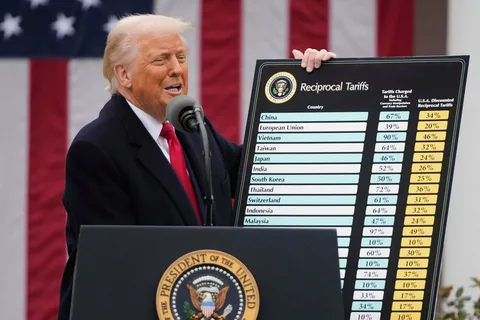
Pakistan’s tariff situation with the US has shifted multiple times since April 2025, when Trump initially announced a 29 percent reciprocal tariff on Pakistan goods as part of his broader “Liberation Day” trade policy overhaul. Following months of negotiation, that rate was revised down to 19 percent, taking effect on August 7, 2025, under a fresh executive order that also set rates for dozens of other trading partners. Pakistan’s 19 percent rate placed it in a relatively favorable position compared to regional competitors, coming in lower than India’s 25 percent, Bangladesh’s 20 percent and Vietnam’s 20 percent at the time. More recently, in July 2026, the US layered on an additional 10 percent tariff affecting Pakistan and 59 other trading partners, this time tied to a separate forced-labor enforcement action under Section 301 rather than the original reciprocal tariff framework. Industry analysts have estimated this newer tariff alone could cost Pakistan’s export sector more than 560 million dollars in the current fiscal year, with the textile and apparel sector bearing the brunt of the impact.
What tariffs Pakistan places on US goods
Trump’s original justification for the higher tariff rates rested partly on claims about Pakistan’s own trade barriers. In announcing the initial 29 percent rate, the administration argued that Pakistan imposes tariffs and non-tariff barriers equivalent to a significantly higher rate on American goods entering the country. Pakistan’s average tariff rates have historically been among the highest in South Asia, and the government began a five-year plan in 2025 aimed at gradually reducing these rates to boost competitiveness and support ongoing trade negotiations with Washington. According to US Trade Representative data, the effective tariff rate the US actually collects on Pakistani goods was measured at close to 25 percent in early 2026, notably higher than the broader US average tariff rate applied across all trading partners.
How US Federal Reserve decisions affect Pakistan
While tariffs dominate headlines, the Federal Reserve’s interest rate policy carries its own significant weight for Pakistan’s economy, even though the Fed has no direct jurisdiction there. The Fed held its benchmark rate steady in the 3.50 to 3.75 percent range at its July 2026 meeting, though three committee members dissented in favor of a hike, and market pricing has since shifted toward expecting a possible rate increase at the Fed’s September meeting amid rising oil prices. Because a large share of Pakistan’s external debt is denominated in US dollars, Fed rate decisions directly affect how expensive it is for Pakistan to service that debt and how attractive Pakistani assets appear to foreign investors relative to US Treasury securities. A higher Fed rate typically strengthens the US dollar and can put downward pressure on the Pakistani rupee, complicating the State Bank of Pakistan’s own monetary policy calculations. As of early 2026, Pakistan’s own central bank had brought its policy rate down to around 10.5 percent, following a sustained rate-cutting cycle after inflation eased from the extreme highs of previous years, meaning the interest rate gap between Pakistan and the US remains an important factor for capital flows.
Why Pakistan’s trade relationship with the US matters so much
The stakes around these tariff and rate decisions are high because of just how central the US is to Pakistan’s export economy. The United States remained Pakistan’s largest single export destination in the 2026 fiscal year, accounting for roughly 20 percent of the country’s total exports, according to State Bank of Pakistan data compiled by Topline Securities. Textiles and apparel make up the overwhelming majority of what Pakistan sells to American buyers, with the sector’s exports to the US averaging more than 4 billion dollars annually over the past five years. The relationship runs in both directions: Pakistan also imports substantial amounts of raw cotton from the US, with American cotton feeding directly into the textile products that are then exported back to the American market, creating a supply chain that is unusually intertwined for two countries with such a large trade imbalance in Pakistan’s favor.
Quotes
US officials have been candid about the reasoning behind the recent tariff decisions. Speaking on the forced-labor tariff action affecting Pakistan and dozens of other countries, US Trade Representative Jamieson Greer said it was “well past time for our trading partners” to enforce forced-labor import bans as rigorously as the United States does, framing the move as a matter of consistent global enforcement rather than a punitive measure aimed specifically at Pakistan. On the Pakistani side, officials have emphasized diplomatic engagement over confrontation, choosing to highlight opportunity rather than grievance in their public messaging. Pakistan’s Ambassador to the US, Rizwan Saeed Sheikh, described the textile sector as “the backbone of Pakistan’s export economy” while reaffirming the government’s commitment to strengthening trade ties despite the new duties, a message he delivered directly to American buyers at a major New York trade exhibition just days after the latest tariff took effect. US Chargé d’Affaires Natalie Baker, addressing the deep interdependence between the two countries’ textile industries, noted that the United States is Pakistan’s second-largest cotton supplier, adding that the shared supply chain runs “from American fields to Pakistani factories to global markets,” a comment that underscored how tariff decisions in Washington inevitably feed back into American agricultural exports as well. On the Federal Reserve side, Chair Kevin Warsh described the internal debate behind the July rate decision candidly, telling reporters that the committee’s discussion amounted to a “real family fight” among policymakers weighing whether inflation risks justified an immediate hike, a level of public candor about internal disagreement that market watchers noted was unusually direct for a sitting Fed chair. Analysts tracking the tariff impact on Pakistan’s economy have also been vocal about the scale of the challenge. Writing on Pakistan’s exposure to the new tariff regime, trade researchers at Tabadlab noted that Pakistan faces meaningfully higher rates than some competitors while lacking the same scale of leverage that larger economies like China or the European Union can bring to bear in tariff negotiations with Washington, a structural disadvantage that shapes how much room Pakistani negotiators actually have at the table.
Impact
The combined effect of tariffs and Fed policy creates a genuinely difficult balancing act for Pakistan’s economic managers, and the pressure shows up differently depending on which side of the equation is examined. On the trade side, every percentage point added to US tariffs on Pakistani goods erodes the competitiveness of an export sector that already operates on thin margins and competes directly with lower-tariff rivals like Bangladesh and Vietnam in some product categories. The textile and apparel sector, which accounts for close to 60 percent of Pakistan’s total exports and employs an estimated 15 million people, or roughly 40 percent of the national labor force, is particularly exposed, meaning tariff shocks translate quickly into real economic pressure on manufacturing hubs and the livelihoods that depend on them. Exporters have responded by increasing their presence at international trade fairs and diversifying their product offerings, but the fundamental exposure to US trade policy shifts remains a structural vulnerability given how concentrated Pakistan’s exports are in the American market, with roughly one in every five dollars of Pakistani exports currently going to US buyers. On the monetary side, a hawkish turn at the Federal Reserve would likely tighten global financial conditions just as Pakistan is trying to consolidate the gains of its recent disinflation and rate-cutting cycle, potentially reversing rupee stability and complicating debt servicing on the country’s dollar-denominated obligations. This matters beyond abstract macroeconomics: higher debt servicing costs directly reduce the fiscal space available for public spending on infrastructure, health and education, at a time when Pakistan is also trying to meet the conditions attached to its ongoing IMF program. Both pressures land on an economy that is still working through IMF-guided reforms and has limited room to absorb external shocks without renewed pressure on foreign exchange reserves, which remain well below the levels economists consider comfortable for a country of Pakistan’s import needs. The dual exposure also creates a policy bind for the State Bank of Pakistan, since responding to rupee weakness driven by Fed tightening with higher domestic interest rates would risk undermining the very disinflation progress that allowed rates to come down from record highs in the first place. For ordinary Pakistanis, the downstream effects of this dynamic tend to surface as currency depreciation, imported inflation on essentials like fuel and food, and slower job growth in export-dependent manufacturing regions such as Faisalabad, Karachi and Sialkot.
Conclusion
With Pakistan and the US continuing trade negotiations aimed at further adjusting tariff terms, and the Federal Reserve’s next policy meeting looming with rate-hike odds rising, both fronts remain fluid heading into the final months of 2026. Pakistani officials have signaled they will keep pushing for more favorable tariff treatment while leaning on textile exhibitions and diplomatic channels to shore up US buyer relationships, and further rounds of negotiation between Finance Minister Muhammad Aurangzeb’s team and US trade officials appear likely in the coming months as both sides look to formalize a more durable trade arrangement. Meanwhile, the State Bank of Pakistan will likely continue watching Fed signals closely, since any shift in Washington’s rate path has direct consequences for Islamabad’s own monetary decisions in the months ahead, particularly regarding how much room the central bank has to keep easing rates without triggering fresh rupee pressure. Should the Fed move toward a rate hike in September as current market pricing suggests, Pakistani policymakers may need to recalibrate their own rate trajectory sooner than currently planned, even as they continue lobbying Washington for tariff relief on the trade front. For exporters and everyday consumers alike, the coming months will likely determine whether Pakistan can hold onto the relative tariff advantage it has secured over some regional competitors, or whether further rounds of US trade policy shifts erode that edge before longer-term negotiations can be finalized.
Frequently Asked Questions
Is FED refundable in Pakistan?
This question touches on two entirely different things that share the same abbreviation, so it’s worth clarifying which one is meant before answering. If referring to Pakistan’s Federal Excise Duty, commonly abbreviated as FED and administered by the Federal Board of Revenue, then yes, refunds are available under specific circumstances. Exported goods are generally exempt from FED, similar to the zero-rating applied under sales tax law, meaning exporters typically do not carry the duty burden on goods leaving the country. Businesses that have overpaid FED due to an error can also request a refund from tax authorities within one year of the payment or the relevant order that gave rise to the refund claim. Refund claims are typically processed alongside sales tax refunds through the FBR’s centralized online payment system, known as FASTER, which was introduced specifically to speed up what had historically been a slow and paperwork-heavy refund process for businesses. Claimants generally need to submit supporting documentation, including proof that goods were exported or evidence of the overpayment, before a refund is approved and disbursed. If the question instead refers to the US Federal Reserve, often also shortened to “the Fed,” that is a completely separate institution — America’s central bank — and the concept of a “refund” does not apply to it at all, since the Fed sets monetary policy and manages the money supply rather than collecting or refunding taxes from individuals or businesses. Given how similar the two abbreviations look in casual writing, it’s worth double-checking which “FED” a specific query or document is actually referring to before taking any action based on it.
Does the US ally with Pakistan?
Yes, though the relationship today is best described as a complex, transactional partnership rather than a formal alliance in the strict military-treaty sense, such as NATO membership would represent. The US and Pakistan have a long history of security cooperation, particularly during the decades of counterterrorism operations in the region following the September 11 attacks, when Pakistan served as a key logistical and intelligence partner for US operations in Afghanistan. The two countries maintain active diplomatic, trade and cultural ties today, with regular high-level visits, military-to-military engagement, and educational exchange programs continuing alongside the commercial relationship. Economically, the US remains Pakistan’s single largest export market, and American officials have repeatedly emphasized the depth of commercial ties, particularly in the textile sector, where supply chains between the two countries are closely intertwined. At the same time, the relationship has faced real strain over tariff disputes, differing views on regional security dynamics including Afghanistan and India, and growing scrutiny in Washington over Pakistan’s deepening ties with China through projects like the China-Pakistan Economic Corridor. Taken together, the partnership today functions more as an evolving economic and diplomatic relationship shaped by mutual interest and periodic friction than a fixed, guaranteed alliance with binding mutual defense commitments.
Who is Pakistan’s 2nd largest trading partner?
Based on the most recent State Bank of Pakistan export data for fiscal year 2026, China ranks as Pakistan’s second-largest export destination, accounting for roughly 9 percent of the country’s total exports, behind the United States at around 20 percent. It’s worth noting that China holds a different, larger role on the import side of Pakistan’s trade balance, remaining the country’s biggest source of imports by a wide margin and its largest trade deficit partner, with that deficit reaching close to 17 billion dollars in the 2026 fiscal year alone. So while the US leads clearly as an export destination, China’s overall trade relationship with Pakistan, factoring in both imports and exports together, is arguably even more significant in raw dollar terms, even though it trails the US specifically in export volume. Beyond these two, other notable destinations for Pakistani exports include Germany, Spain, the Netherlands, Bangladesh and Saudi Arabia, though each accounts for a considerably smaller share of total exports than either the US or China. The overall picture reflects Pakistan’s broader trade pattern: exporting finished goods, primarily textiles, to Western markets while importing raw materials, machinery and intermediate goods from China and other Asian manufacturing hubs, a pattern that has remained fairly consistent over the past several years even as individual country shares have shifted slightly.