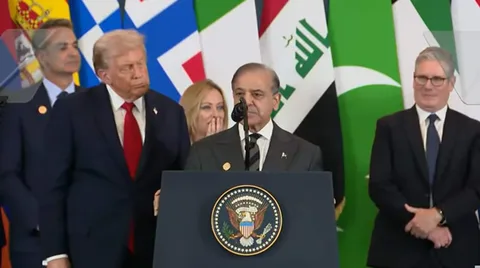
President Donald Trump escalated his rhetoric against Iran this week, announcing what he called the “most crushing economic operation ever taken against any country” and warning that any nation offering Tehran a financial lifeline would face “tremendous economic consequences.” The announcement, made late Wednesday on Truth Social, arrived as diplomatic talks between Washington and Tehran remain stalled, the Strait of Hormuz stays disrupted, and Iran continues issuing counter-threats against Gulf states and American-linked infrastructure, including repeated strikes on Amazon’s cloud data centers in Bahrain and a monthslong campaign against Iranian bridges.
Background
The war between the United States, Israel, and Iran began on February 28, 2026, after coordinated US-Israeli strikes killed several senior Iranian officials, including Supreme Leader Ali Khamenei, amid stalled negotiations over Iran’s nuclear program. What was initially framed by the Trump administration as a short campaign to eliminate an “imminent threat” has since stretched well beyond its original timeline, cycling through phases of intense combat, brief diplomatic openings, and renewed hostilities. Trump’s own public messaging has shifted repeatedly across these months, from his April 1 address declaring Iran “really no longer a threat” after 32 days of operations, to his early August warning that ongoing talks represented Iran’s “last chance” before further military escalation.By mid-August, a memorandum of understanding signed by both sides in June, covering an end to hostilities and a path toward denuclearization, had expired without resolution. Trump publicly instructed his negotiating team to halt conversations with Tehran earlier in the week, only to say days later that talks could still resume “at some point,” calling the current situation “so good.” That inconsistency has defined much of the war’s diplomatic track, with the president alternating between threats of further military action and offers to negotiate, often within the same 24-hour news cycle.
Details
Trump’s economic warfare address
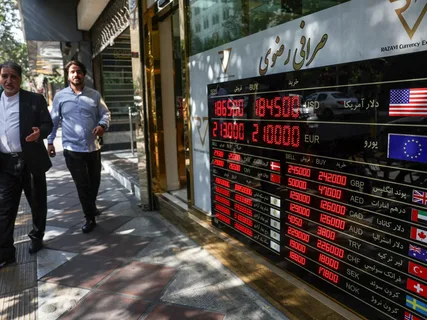
In his Wednesday Truth Social post, Trump framed the new economic measures as a direct consequence of Iran’s refusal to accept a deal. He described Iran’s military position as severely weakened, writing that the country’s navy, air force, and military production facilities had all been destroyed, and that its currency was worthless. He announced that any country allowing its financial institutions, businesses, airports, or government entities to provide any form of support to Iran would face major economic penalties. He specifically named oil smuggling, currency swap arrangements, cash transfers, exchange houses, ship registries, and front companies as targets that needed to stop immediately, addressing unnamed nations directly by saying they knew who they were. He also called the plan an economic version of D-Day and urged US allies to join Washington in isolating Iran. Notably, Trump’s post did not specify exactly which new measures the “economic operation” would involve, and Bloomberg reported that his threat toward Iran’s trading partners, while naming no country directly, put immediate focus on China as the largest buyer of Iranian oil. Treasury Secretary Scott Bessent had previewed the escalation days earlier, stating the United States was preparing economic measures that had “never been seen in the history of economic isolation on a country.”
Iran’s response and the Gulf states warning
Hours before Trump’s announcement, Iran’s Armed Forces Chief of Staff, Major General Ali Abdollahi, issued a pointed warning to countries on the southern shores of the Persian Gulf, cautioning them against assisting or facilitating US military operations. He stated that any such assistance would be treated as direct participation in the war against Iran, and pointed to what he described as an unusually large presence of American military aircraft, including aerial refuelling tankers, at regional bases. His comments came shortly after the United Arab Emirates announced it was suspending trade and financial transactions with Iran, a move that added to the economic pressure already building on Tehran from multiple directions. Iran’s broader posture throughout the war has combined military retaliation with defiant public messaging. Iranian officials have repeatedly framed US and Israeli actions, including strikes on civilian infrastructure, as violations that will not compel Iran’s surrender, while continuing to carry out their own retaliatory attacks against American-linked targets across the region.
The Amazon data center attacks in Bahrain
Among the most closely watched developments in the economic and infrastructure dimension of the war has been Iran’s repeated targeting of Amazon Web Services data centers in Bahrain. The pattern began on March 1, when Iranian drones struck two AWS data centers in the United Arab Emirates and caused indirect damage to a third site in Bahrain, an event widely described as the first confirmed military attack on hyperscale cloud infrastructure. Iran’s Islamic Revolutionary Guard Corps later formally designated Amazon, alongside companies including Microsoft, Google, Apple, Nvidia, Oracle, IBM, and Palantir, as legitimate wartime targets, accusing the firms of providing technology that supported joint US-Israeli military operations. The Bahrain facility was struck again in April, and then a further time in July, when the IRGC claimed its forces had used cruise missiles to destroy Amazon’s central data infrastructure in the country, describing the attack as retaliation for a reported US strike on an unfinished nuclear facility in Darkhovin. Satellite imagery released afterward, drawing on European Space Agency data, appeared to show visible damage consistent with Iran’s claims at two separate Bahrain sites. Amazon has not formally confirmed the extent of the damage at any point during the campaign, though the company’s own status dashboard has shown extended service disruptions in the region.
The campaign against Iranian bridges
Parallel to the data center strikes, the United States has carried out a sustained campaign against bridges and transport infrastructure inside Iran, a campaign that has drawn sharp international criticism. The most widely covered incident occurred on April 2, when US forces struck the newly built B1 bridge in Karaj, west of Tehran, described as the tallest bridge in the Middle East. The strike happened while many Iranian families had gathered in parks beneath the bridge to celebrate the Sizdah Be-dar holiday. Iranian officials reported that eight civilians were killed and more than 95 wounded, with a second missile reportedly striking after first responders had already arrived, a pattern known as a double-tap strike that some legal experts have said may constitute a war crime. The bridge campaign resumed and expanded in mid-July, when US Central Command confirmed a seventh consecutive night of strikes targeting bridges and other infrastructure in southern Iran, part of an intensified pressure campaign tied to the ongoing standoff over the Strait of Hormuz. Iranian state media reported that at least seven people were killed in that specific round of strikes, with health officials citing a toll of 38 killed and more than 400 wounded across the broader week of attacks. Trump had separately warned that the United States would destroy one bridge or power plant for every Iranian attack on shipping in the strait, a threat that has continued to shape the campaign’s targeting logic in the months since.
Quotes
Trump’s own words have set the tone for this latest phase of the conflict, and he chose some of his most sweeping language yet to describe the new campaign. In his Wednesday post, he wrote that no one had given Iran a greater opportunity to reach a deal than his administration, and that Tehran had tragically failed to take it. He went on to describe Iran’s military as effectively dismantled, saying its navy was gone, its air force destroyed, its military factories reduced to rubble, and its currency worthless, before declaring that the country was “hanging by a thread.” He was equally forceful in describing the scope of the new economic measures, calling them an “ECONOMIC D-DAY” and insisting that oil smuggling, currency swap lines, cash transfers, exchange houses, ship registries, and front companies used to help Iran evade sanctions all needed to stop immediately. Addressing unnamed countries directly, he warned “you know who you are,” before appealing to US allies to join the effort, saying America needed all of its partners to stand together to isolate and ultimately defeat what he called the Iran threat. On the Gulf states’ potential role in the conflict, Iran’s armed forces chief of staff was equally direct and used comparably forceful language of his own. Major General Ali Abdollahi warned that any assistance or facilitation provided to what he called the aggressor US military would amount to direct participation in the operation against Iran, a framing that leaves little room for Gulf states to claim neutrality while continuing to host American military assets. He went further, pointing specifically to the unusually large number of US military aircraft, including aerial refuelling tankers, that Iran has observed at regional bases in recent weeks, arguing it was implausible that such a substantial presence could exist without the full knowledge and cooperation of the host governments. He capped his warning with a pointed statement aimed squarely at those governments, saying that countries which have publicly promised not to let the United States use their territory against Iran should understand that Tehran is watching closely and that nothing happening in the region escapes its notice. Reacting to the earlier bridge strikes campaign, an Iranian government spokesperson pushed back forcefully against the idea that targeting infrastructure would change the country’s position, saying that striking civilian structures, including unfinished bridges, would not compel Iranians to surrender, and argued instead that such attacks reflected the moral collapse of an adversary that had run out of other options. Treasury Secretary Scott Bessent, previewing the scale of the new economic pressure campaign days before Trump’s announcement, struck a similarly historic tone from the American side, stating that the measures being prepared would amount to a form of economic isolation never before seen in the modern history of sanctions against any nation.
Impact
The combination of expanded economic threats, continued infrastructure strikes, and rising rhetoric toward Gulf states signals a war that shows no clear sign of nearing resolution, despite Trump’s repeated earlier claims that Iran was close to defeat. The economic dimension in particular carries global consequences: renewed pressure on countries doing business with Iran, especially major oil buyers like China, risks further disrupting already volatile oil markets and could complicate US relationships with allies who maintain their own trade ties with Tehran. The attacks on Amazon’s cloud infrastructure have separately drawn attention from the technology and defense policy world, with analysts describing the strikes as a preview of how future conflicts may target civilian-operated digital infrastructure that underpins both commercial and military operations. For countries across the Gulf, Iran’s warning against hosting or assisting US forces adds a new layer of risk calculation, particularly for states that have publicly tried to avoid being drawn directly into the conflict while hosting American military assets on their territory.
Conclusion
Nearly six months into the war, the pattern established by both sides shows little sign of settling into a stable resolution, and this week’s developments suggest the conflict is entering a new phase rather than winding down. Trump’s economic warfare announcement, while heavy on dramatic language, still leaves open the most important practical questions: which specific sanctions, restrictions, or enforcement actions the “economic operation” will actually involve, which countries will be named as targets if they continue trading with Iran, and how allies who maintain their own commercial relationships with Tehran, from European governments to major oil-importing nations in Asia, will respond to Washington’s renewed pressure campaign. Given that Bloomberg and other outlets have already pointed to China as an obvious focus of concern due to its role as Iran’s largest oil buyer, the coming weeks may reveal whether this new round of measures is aimed primarily at symbolic pressure or at a genuine attempt to cut off Iran’s remaining economic lifelines.
At the same time, the military track of the conflict remains just as unresolved as the diplomatic one. Iran’s warning to Gulf states adds a new and potentially volatile dimension to a war that has already drawn in Iranian strikes on Bahrain, the UAE, Kuwait, Qatar, and Oman at various points over the past six months. Should any Gulf government be seen by Tehran as crossing the line from hosting US assets to actively facilitating operations against Iran, the region could see a further widening of the conflict beyond the direct US-Iran and Israel-Iran fronts that have defined the war so far. The continued campaign against Iranian bridges and infrastructure, meanwhile, shows no clear sign of slowing, despite mounting international criticism and assessments from legal experts that some of these strikes, particularly the deadly April attack on the B1 bridge in Karaj, may amount to violations of the laws of war. For ordinary people across the region and beyond, the practical consequences of this next phase are likely to be felt most immediately through global oil markets, which have already shown volatility tied to disruptions in the Strait of Hormuz, and through the continued vulnerability of shared digital infrastructure, as illustrated by the repeated strikes on Amazon’s cloud computing facilities in Bahrain. With Trump alternating between threats of further military escalation and occasional openings toward renewed talks, often within the same news cycle, predicting the war’s next turn remains difficult. What does appear clear from the events of this week is that both Washington and Tehran are, for now, choosing to escalate pressure through every available channel, military, economic, and rhetorical, rather than moving toward any near-term off-ramp.
Frequently Asked Questions
Which countries are supporting Trump against Iran?
The United States has coordinated closely with Israel throughout the conflict, with the war beginning as a joint US-Israeli military operation against Iran in February 2026. Beyond Israel, the US has relied on cooperation from several Gulf states that host American military bases and infrastructure, although many of these countries have publicly stated they do not want to be seen as directly participating in operations against Iran, a distinction Iran’s military leadership has explicitly challenged in recent statements. The United Arab Emirates has taken a notably firmer economic stance, announcing it was suspending trade and financial transactions with Iran. Reports have also indicated that Ukraine has provided the US and Israel with diplomatic backing along with technical and military expertise aimed at helping counter Iranian drone and missile attacks, in exchange for continued American engagement following a halt to some direct US military aid to Kyiv. Broader Western support has largely taken the form of continued sanctions cooperation and diplomatic alignment rather than direct military participation.
What is the issue between Iran and Trump?
At the center of the conflict is Iran’s nuclear program, which the Trump administration has cited as the primary justification for military action, alongside broader accusations that Iran continues to develop long-range missile capability and support armed groups across the Middle East. Trump has repeatedly stated that Iran will never be allowed to possess a nuclear weapon, framing this as a non-negotiable red line. A memorandum of understanding signed by both sides in June had outlined a potential path toward ending hostilities and beginning a denuclearization process, but that agreement expired in mid-August without a resolution, reigniting both military and economic escalation. Control over the Strait of Hormuz, a critical global oil shipping route that has been repeatedly disrupted during the war, has also become a central and increasingly urgent point of contention between the two sides.
Does the USA support the Iran war?
The war has been led directly by the United States government under President Trump, in coordination with Israel, rather than being a conflict the US is merely supporting from the outside. Domestically, however, the war has faced significant political scrutiny and criticism, including from members of Congress who have questioned the administration’s strategy, its lack of a clear exit plan, and the economic fallout from the conflict, including rising fuel and commodity prices. Public and congressional skepticism has grown as the war has extended well beyond the timeline the administration originally suggested, with lawmakers from both parties pressing for greater clarity on the operation’s objectives and endpoint even as the administration continues to escalate military and economic pressure on Tehran.