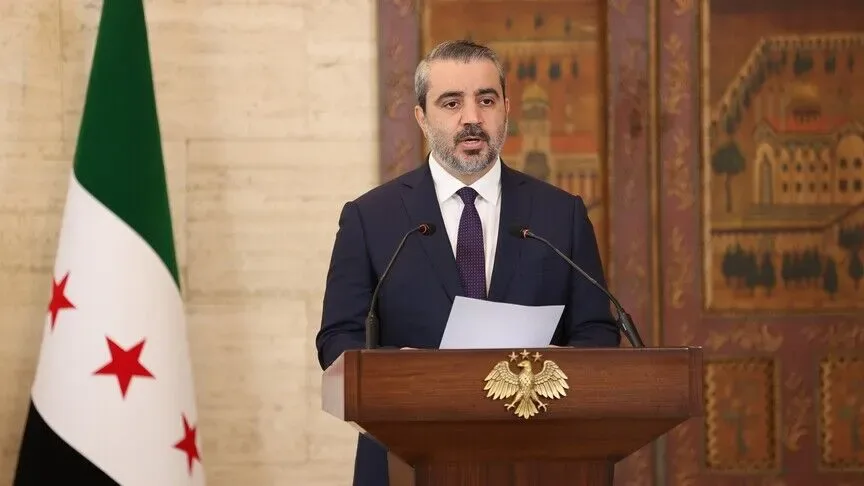
Pakistan Syria relations have taken a significant turn this week. Syrian Foreign Minister Asaad Hassan al-Shaibani landed in Islamabad on August 19 for a two-day official visit, the first trip by a Syrian foreign minister to Pakistan in almost 19 years. The visit, held at the invitation of Deputy Prime Minister and Foreign Minister Ishaq Dar, is being read as a fresh attempt by both countries to rebuild a relationship that cooled during Syria’s long civil war. Al-Shaibani arrived with a high-level delegation and was received at the airport by a senior Pakistani foreign ministry official. He is scheduled to meet Prime Minister Shehbaz Sharif along with Pakistan’s defense and commerce ministers before his departure on August 20.
Background
Pakistan and Syria have a diplomatic relationship that goes back decades, built originally on military cooperation, training exchanges, and shared positions within the Organisation of Islamic Cooperation. Pakistani Air Force pilots reportedly assisted Syria during earlier regional conflicts, and Syria later honored a retired PAF officer for that history with its Medal of Bravery in 2023. The two countries also share political history. Syrian President Hafez al-Assad traveled to Lahore in 1974 for the Islamic Summit, and the last Syrian foreign minister to visit Islamabad before this week was Walid al-Muallem, back in 2007. For almost two decades after that, there was no visit at this level, even as Pakistan kept its embassy in Damascus open throughout the Syrian civil war. Everything shifted after Bashar al-Assad’s government fell in December 2024. A transitional administration led by President Ahmad al-Sharaa took over, and al-Shaibani was appointed foreign minister under the new setup. Since then, Pakistan has been one of the countries trying to build contact with Syria’s new leadership, though formal cooperation between the two states has stayed limited until now.
Details
This week’s visit comes at a tense moment for the region. Just before al-Shaibani’s arrival, Pakistan’s foreign ministry issued a strong statement condemning an Israeli strike on the Abu al-Duhur Airbase in Syria’s Idlib province, calling it a violation of international law. Islamabad also reaffirmed its support for Syria’s sovereignty and territorial integrity, a position it has repeated consistently since Assad’s ouster. According to Pakistani officials, the two sides are expected to hold in-depth talks covering the full range of bilateral relations. Topics on the table reportedly include defense cooperation, economic ties, trade, and possible reconciliation frameworks, since a diplomatic source in Damascus noted that there is currently no formal cooperation agreement between the two governments.
Pakistan Syria relations had already shown small signs of warming earlier this year. In March, Prime Minister Shehbaz Sharif spoke by phone with President al-Sharaa about the escalating situation in the Middle East. A Pakistani delegation also met al-Shaibani in Damascus last year, where both sides agreed to increase the frequency of exchanges going forward. Beyond politics, people search Pakistan vs Syria for very different reasons too. The phrase pulls in football fans as much as it does foreign policy watchers, since the two national teams met in the AFC Asian Cup Qualifiers on November 18, 2025, at Jinnah Stadium, where Syria beat Pakistan by a heavy 5-0 scoreline. It followed an earlier meeting in the same qualifying group, a 2-0 win for Syria in March 2025. Anyone typing in Syria vs Pakistan live during that qualifying window was almost certainly looking for football coverage rather than diplomatic news, and the two searches now sit side by side in trending results.
Quotes
A Pakistani Foreign Office source, speaking on condition of anonymity, said the visit would allow both governments to “review avenues for further enhancing cooperation” and “exchange views on regional and international developments.” A diplomatic source in Damascus told international media ahead of the trip that there is hope the visit “will be historic for bilateral cooperation,” adding that discussions would touch on “defense, economic cooperation, reconciliation.” Pakistan’s foreign ministry, in its statement on the Idlib strike, said Israel’s actions were a “flagrant violation of international law” and warned that such moves “could further undermine regional peace and stability.”
Impact
If the talks produce concrete outcomes, Pakistan Syria economy ties could move from a largely symbolic relationship toward something with real trade and investment content. Syria’s new government is actively courting foreign partners to help fund reconstruction after years of war, and Gulf and Asian countries have already stepped in with pledges and early deals. Syria vs Pakistan economy comparisons are stark right now. Pakistan has an established, if strained, industrial and services base, while Syria’s economy is still recovering from over a decade of conflict and sanctions. That gap is actually part of what makes cooperation attractive to Damascus, since Pakistan could offer expertise in construction, education, and defense-related training as Syria rebuilds its institutions.
Regionally, the visit fits into a broader pattern. Syria has been rapidly widening its diplomatic circle since Assad’s fall, and its outreach to South Korea is one of the clearest examples. South Korea Syria relations were formally established only in April 2025, ending Syria’s status as the last UN member state without ties to Seoul. Since then, the two countries have signed education and media cooperation agreements, and Damascus held its first economic forum with South Korean partners in December 2025, focused on reconstruction and investment. That pattern of new alignments is central to understanding the foreign relations of Syria under its transitional government. Damascus is trying to move away from the isolation of the Assad years, engaging countries across Asia, the Gulf, and Europe in the process. Pakistan’s renewed high-level contact fits squarely into that wider strategy, and it also gives Islamabad a chance to secure early influence in a country that is effectively rebuilding its foreign policy from scratch.
Conclusion
The coming months should show whether this visit turns into lasting cooperation or stays at the level of statements and photo opportunities. Officials on both sides have signaled interest in formal agreements covering trade, defense, and reconstruction assistance, though nothing has been signed yet. Given Syria’s push to diversify its partnerships, and Pakistan’s clear interest in re-establishing influence in the Levant, more visits and possibly formal accords look likely in the near term. For now, Pakistan Syria relations have moved from a quiet, low-key connection to an actively developing one, and al-Shaibani’s Islamabad trip marks the clearest signal of that shift so far.
Frequently Asked Questions
Who is Pakistan’s strongest ally?
Pakistan’s foreign policy is built around a small group of close partnerships rather than one single alliance. China is widely regarded as Pakistan’s most consistent and strategically important ally, largely because of decades of military cooperation, the China-Pakistan Economic Corridor, and consistent diplomatic backing at international forums like the United Nations Security Council. Saudi Arabia and the United Arab Emirates also rank as extremely close partners, providing financial support, oil facilities, and employment for millions of Pakistani workers. The United States, despite periods of tension, remains an important security and economic partner as well, given historical military cooperation and trade ties. So while China is often described as Pakistan’s closest strategic ally, the country actually maintains several overlapping “strongest” relationships depending on whether the lens is defense, economy, or diplomacy.
Can a Pakistani go to Syria?
Yes, Pakistani nationals can travel to Syria, though the process and safety situation require careful planning. Syria requires a visa for Pakistani passport holders, which is generally arranged through the Syrian embassy or its diplomatic representation, since direct consular services have historically been limited. Travelers should check current advisories from Pakistan’s Ministry of Foreign Affairs before planning any trip, as parts of the country remain affected by the aftermath of the civil war, including areas with ongoing security concerns, damaged infrastructure, and administrative transitions under the new government. Business travelers, aid workers, and those visiting for religious or cultural reasons form the bulk of current travel between the two countries, and it is advisable to register with the Pakistani embassy in Damascus upon arrival for safety updates.
Who is Pakistan’s best friend country?
China is most commonly cited as Pakistan’s “best friend,” a description used repeatedly by officials from both countries and reflected in the phrase “Pakistan-China friendship is higher than mountains, deeper than oceans, sweeter than honey,” which is often quoted in diplomatic contexts. This relationship spans defense cooperation, including joint military exercises and arms transfers, as well as massive infrastructure investment through the China-Pakistan Economic Corridor, part of China’s broader Belt and Road Initiative. Beyond China, Saudi Arabia and Turkey are frequently mentioned as close friends of Pakistan because of shared religious, cultural, and strategic interests, along with consistent diplomatic and financial support during periods of economic difficulty. Ultimately, “best friend” status in Pakistan’s foreign policy tends to shift slightly depending on context, but China holds that position most consistently across military, economic, and diplomatic dimensions.