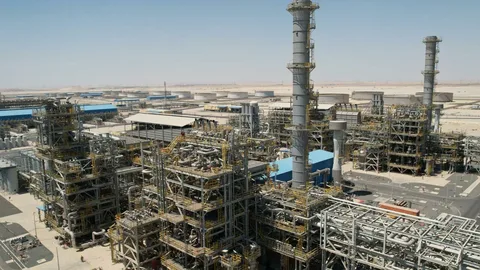
Kuwait’s oil future remains tied almost entirely to the fate of the Strait of Hormuz, as the Gulf nation continues to grapple with the fallout of the prolonged Iran war. Kuwait News Iran developments, disrupted Kuwait flight schedules, a steady Kuwaiti Dinar, and Saudi Arabia’s continued support through open land borders have all become central threads in the story of Kuwait’s ongoing economic and security resilience.
Background
Kuwait has long depended on oil exports for more than ninety percent of government revenue, making the tiny Gulf state one of the most oil-reliant economies in the world. Since the outbreak of the 2026 Iran war in late February, Kuwait’s energy sector has faced repeated disruptions tied directly to the security situation surrounding the Strait of Hormuz. Unlike Saudi Arabia and the United Arab Emirates, Kuwait has no alternative pipeline network capable of bypassing the strait. Every barrel of Kuwaiti crude bound for international markets must sail through the narrow, contested waterway separating Iran and Oman, a route that has become the single largest point of vulnerability for the country’s economy. Before the conflict began, Kuwait was producing just over 2.6 million barrels of oil per day, with long-term ambitions to scale production toward 4 million barrels daily by 2040. Those plans have effectively been placed on hold as the country waits for a durable resolution to the crisis engulfing the wider Gulf region.
Details
Kuwait Oil Future Tied to Hormuz Stability
Kuwait’s oil future is now widely described by regional analysts as hostage to developments far outside the country’s direct control. Preliminary official data shows Kuwait’s economy contracted by 4.6 percent year-on-year in the first quarter of 2026, with the oil-sector component of GDP collapsing by 12.5 percent during the same period. Energy analysts note that Kuwait sits on roughly six percent of the world’s total oil reserves, underscoring just how significant the country’s output is to global supply even though it lacks the infrastructure flexibility of its larger neighbours. Industry watchers tracking the Strait of Hormuz crisis say that around a fifth of the world’s seaborne oil trade normally passes through the waterway, much of it destined for Asian buyers including China, India, Japan and South Korea. With no rerouting option available, Kuwaiti officials have largely avoided disclosing current daily export figures, citing the sensitivity of operating during an active regional conflict. This silence itself has become a talking point among traders and economists trying to gauge the true scale of the disruption to Kuwait’s oil future.
Kuwait News Iran: A Conflict That Refuses to Fully Subside
Kuwait News Iran coverage throughout 2026 has centered on a fragile and repeatedly broken ceasefire between the United States and Iran. A temporary truce announced in April was extended in June through a formal memorandum, yet subsequent months brought renewed missile and drone activity targeting energy and military infrastructure across the Gulf, including sites inside Kuwait. Kuwaiti civilian and military installations, among them power generation and water desalination facilities, have come under direct attack during several rounds of escalation. Despite the recurring violence, Kuwaiti authorities and citizens have largely maintained day-to-day resilience, with officials repeatedly stressing that essential services remain functional even as security alerts continue.
Kuwait MOI Maintains Heightened Security Posture
The Kuwait MOI, or Ministry of Interior, has remained highly active throughout the crisis period, issuing regular public briefings and security updates alongside its routine law enforcement operations. In recent weeks, the ministry reported foiling a plot targeting a vital national facility, with security services arresting a suspect who had reportedly built an explosive-capable drone. Beyond counterterrorism operations, Kuwait MOI teams have also carried out large-scale residency and labour law enforcement campaigns across industrial areas including Jahra, Shuwaikh, Farwaniya and Fahaheel, arresting dozens of violators in coordinated sweeps. First Deputy Prime Minister and Interior Minister Sheikh Fahad Yusuf Al-Sabah has personally visited victims of Iranian strikes and inspected damaged airport infrastructure, signalling the ministry’s dual focus on public safety and crisis response.
Kuwait Flight News: Airspace Disruption and Gradual Recovery
Kuwait flight news has dominated regional travel headlines since the war’s outbreak, when Kuwait International Airport suffered direct drone strikes that damaged terminal buildings, radar systems and fuel storage tanks. The attacks forced a full suspension of commercial aviation inside Kuwaiti airspace for an extended period, with national carriers rerouting operations through Dammam in neighbouring Saudi Arabia. Kuwaiti airspace reopened in stages beginning in late April, though overflight operations have continued to face restrictions even as arrivals and departures resumed under close monitoring. Renewed fighting in July triggered fresh disruptions, with Kuwait Airways cancelling and rescheduling flights following another wave of missile and drone attacks. International carriers including Qatar Airways have since moved to restore limited service to Kuwait as conditions allowed, though full normalization of Kuwait flight operations has not yet been confirmed by aviation authorities.
Kuwaiti Dinar Holds Steady Despite Regional Turmoil
The Kuwaiti Dinar has remained one of the more stable elements of the country’s economic picture throughout the crisis. As the world’s highest-valued currency unit, the Kuwaiti Dinar has continued trading in a narrow band against the US dollar, generally hovering between 3.22 and 3.28 dollars per dinar in recent months. Analysts attribute this resilience to Kuwait’s substantial sovereign financial reserves and conservative currency management by the Central Bank of Kuwait, which pegs the dinar to an undisclosed basket of currencies rather than a single benchmark. Even as oil-sector GDP has weakened sharply, the Kuwaiti Dinar’s relative stability has provided a measure of confidence for businesses and residents navigating an otherwise uncertain economic environment.
Saudi Arabia Opens Border to Kuwait in Show of Solidarity
Saudi Arabia opened its land borders to Kuwait in a widely reported gesture of regional solidarity following renewed drone and missile attacks earlier this year. Kuwaiti sources described the move as an unprompted act of goodwill, noting that Saudi authorities expanded operations at the Khafji crossing to forty-four lanes running around the clock to accommodate travellers and cargo. The expanded border access has been credited with easing congestion and supporting the flow of essential goods into Kuwait during a period when air travel remained heavily disrupted. Saudi transport authorities later added dedicated bus routes connecting the Khafji and Al-Ruqai crossings to airports in Dammam and Qaisumah, giving travellers combined road-and-air options as Kuwait’s own aviation sector worked toward recovery.
Quotes
A senior Kuwaiti oil executive, identified as Al-Sabah, told AFP that Kuwait’s production capacity “reverts to free movement” once the strait reopens fully. Amena Bakr, head of Middle East insights at Kpler, said Kuwait’s dependence on Hormuz “has become a strategic vulnerability” for the country’s broader economic outlook. Kuwaiti sources cited by regional media described the Saudi border decision as a reflection of the “shared destiny” between the two neighbouring Gulf nations, framing the gesture as consistent with decades of close bilateral cooperation.
Impact
The continued uncertainty surrounding Kuwait’s oil future carries implications well beyond its own borders. Global energy markets remain sensitive to any signal from the Strait of Hormuz, given that a meaningful share of the world’s crude oil and liquefied natural gas trade depends on unimpeded passage through the waterway. For Kuwait specifically, prolonged disruption threatens to deepen the contraction already visible in first-quarter economic data, particularly within the oil sector that underpins the vast majority of state revenue. Regionally, the situation has reinforced closer cooperation among Gulf Cooperation Council members, as seen through Saudi Arabia’s border support and coordinated aviation safety advisories issued across Bahrain, Qatar, the UAE and Kuwait. Domestically, the heightened Kuwait MOI security posture and repeated Kuwait flight news disruptions have shaped daily life for residents and expatriates alike, from residency enforcement campaigns to shifting travel logistics. The relative steadiness of the Kuwaiti Dinar, meanwhile, has helped cushion some of the broader economic anxiety even as the oil sector absorbs the heaviest losses.
Conclusion
Kuwait’s oil future will likely remain closely linked to the trajectory of the wider Iran conflict and the security status of the Strait of Hormuz in the months ahead. Analysts broadly agree that production could return to pre-war levels within two to three months of a durable resolution, though the timeline depends heavily on developments outside Kuwait’s control. In the meantime, continued Kuwait MOI vigilance, gradual improvements in Kuwait flight operations, sustained Kuwaiti Dinar stability and ongoing Saudi support through open borders are expected to remain defining features of Kuwait’s crisis response. Regional observers will be watching closely for any formal ceasefire developments that could pave the way for a fuller economic recovery.
Frequently Asked Questions
Which industry is booming in Kuwait?
Despite the pressure facing the oil sector, Kuwait’s logistics, transport and cross-border trade services have seen notable activity growth during the crisis period. The expansion of Saudi land border routes and additional bus links connecting Kuwait to Saudi airports has boosted demand for ground transport and freight-handling services. Financial services and Islamic banking, historically strong pillars of the Kuwaiti economy, have also shown relative resilience, supported in part by the stability of the Kuwaiti Dinar and the country’s substantial sovereign wealth reserves.
Who buys the most oil from Kuwait?
Kuwait’s crude oil exports have traditionally been directed toward major Asian economies, with China, India, Japan and South Korea representing the largest buyers of oil moving through the Strait of Hormuz from Gulf producers including Kuwait. Asian markets account for the overwhelming majority of crude and condensate shipments passing through the strait, making the region Kuwait’s most critical customer base. Any prolonged disruption to Hormuz shipping lanes therefore has an outsized effect on Kuwait’s relationships with its principal Asian trading partners.
Is Kuwait producing oil now?
Yes, Kuwait continues to produce oil despite the ongoing regional conflict, though officials have declined to publicly disclose current daily output figures given the sensitivity of operating during active hostilities near the Strait of Hormuz. Before the war, production stood at just over 2.6 million barrels per day, and analysts estimate that output could return to those pre-war levels within roughly two to three months once shipping conditions through the strait stabilize fully. Kuwaiti officials have indicated that production capacity itself has not been permanently damaged, meaning a recovery remains achievable once the security situation allows for unrestricted export activity.