

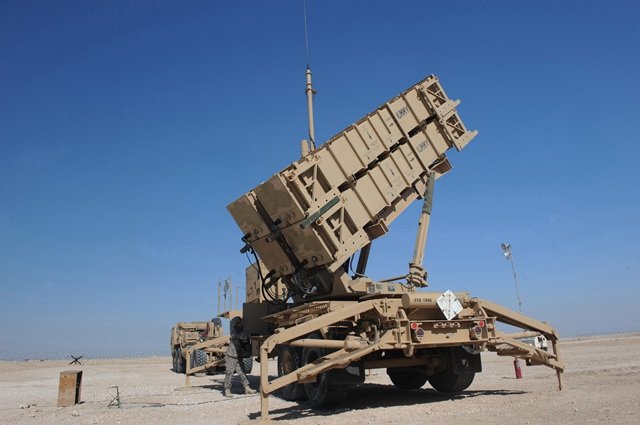

WASHINGTON: The United States has signed a defense agreement worth more than $3 billion with Lockheed Martin and Northrop Grumman to significantly increase the production of key components for Patriot and THAAD interceptor missiles, as rising global conflicts continue to place pressure on American missile stockpiles.
The agreement, announced jointly by the US Department of Defense (Pentagon) and Northrop Grumman, is part of Washington’s broader effort to strengthen its air defense capabilities amid ongoing conflicts in Ukraine and the Middle East.
Patriot and THAAD Production to Increase
According to the Pentagon, the new framework agreement will allow production of Patriot interceptor missile components to triple, while manufacturing capacity for Terminal High Altitude Area Defense (THAAD) systems is expected to increase fourfold.
The initiative follows another major contract awarded to Lockheed Martin last week, valued at up to $58.6 billion, for the production of Patriot interceptor missiles.
US defense officials say the increased production is essential to replenish inventories after extensive military support provided to allies and the heavy use of precision-guided weapons during recent regional conflicts.
Growing Pressure on Missile Stockpiles
The United States has supplied large quantities of advanced weapons to partner nations, particularly Ukraine, while also deploying missile defense systems in response to escalating tensions in the Middle East.
These commitments have raised concerns about the availability of critical air defense interceptors needed to respond to future security threats.
A recent assessment by the Center for Strategic and International Studies (CSIS) estimated that the US military currently possesses fewer than 1,000 Patriot interceptor missiles and less than 250 THAAD interceptors. Both systems have been extensively deployed in recent operations across the Middle East.
Pentagon Pushes for Faster Manufacturing
Defense officials have been working with major contractors throughout the year to accelerate missile production and reduce manufacturing delays.
Under the latest agreement, a second production source will be established for PAC-3 solid rocket motors, a critical component of Patriot interceptor missiles. The plan also includes expanding the production of ignition safety devices, which are essential for missile reliability and operational readiness.
The Pentagon believes diversifying the supply chain will improve production efficiency and strengthen long-term defense preparedness.
Continued Support for Ukraine
Patriot missile systems remain one of Ukraine’s most important air defense assets, particularly for intercepting ballistic missiles launched during the ongoing conflict.
Military analysts have repeatedly noted that Ukraine continues to face shortages of Patriot interceptors, increasing pressure on the United States and its allies to expand manufacturing capacity.
The latest investment is expected to help replenish US inventories while ensuring continued military assistance to allied nations.
Broader Expansion of Missile Production
The Patriot and THAAD agreement is part of a wider effort by Washington to strengthen domestic defense manufacturing.
The United States has also reached a similar framework agreement with RTX, the parent company of Raytheon, to increase production of Tomahawk cruise missiles.
Under that arrangement, annual production is expected to rise dramatically—from approximately 60 missiles per year currently produced for the US military to a long-term target of 1,000 missiles annually.
US officials say these initiatives are designed to ensure the country’s defense industrial base can meet growing global security demands while maintaining sufficient reserves for future operations and allied commitments.