

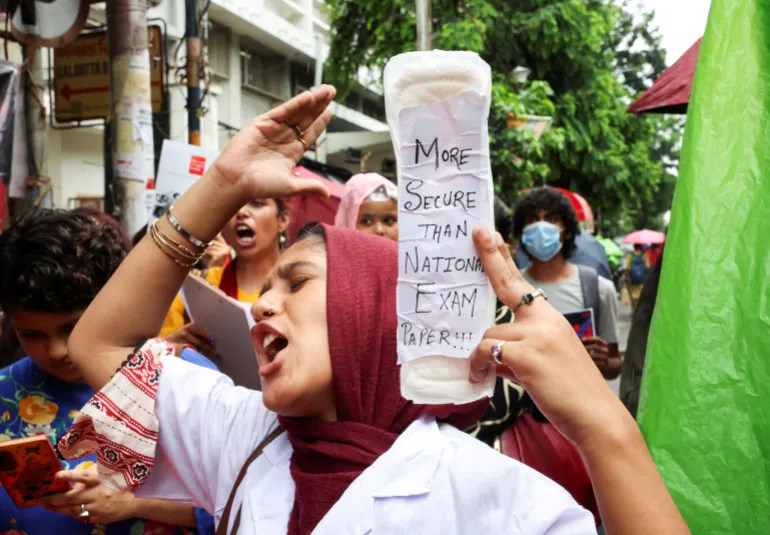

NEW DELHI: Student activist Neha Bora has strongly rejected allegations that protesters were acting as “Pakistani agents,” saying the claims were an attempt to silence young people demanding accountability over India’s exam paper leak controversy.
Speaking after participating in the mass demonstrations at Delhi’s Jantar Mantar, Bora said branding protesters as foreign agents was a familiar tactic used to suppress dissent. She argued that similar accusations had previously been directed at people in Indian Illegally Occupied Jammu and Kashmir (IIOJK).
Neha Bora Criticises Crackdown on Student Protesters
Bora said many people had ignored violence in Kashmir in the past, but now similar methods were being used against protesters in the Indian capital.
“People remained silent about the bullets in Kashmir. Now those bullets have reached Connaught Place in Delhi,” she said.
She added that students protesting for their rights were unfairly being portrayed as “Pakistani agents.”
“Today, when students are protesting for their rights, they are being called ‘Pakistani agents’.”
Bora further claimed that public opinion was changing as more people questioned such allegations.
“Now people have realised that earlier allegations were false,” she said.
Neha Bora’s remarks came after Gen Z protesters called off their demonstrations following the resignation of India’s Education Minister and assurances from the government that their key demands would be addressed.
According to Cockroach Janta Party (CJP) spokesperson Ashutosh Ranka, the protesters had also demanded compensation for students affected by examination irregularities and the withdrawal of legal cases filed against demonstrators.
Following days of nationwide protests over alleged exam paper leaks, Indian Prime Minister Narendra Modi announced the formation of a task force to overhaul the country’s examination system.
The panel will be headed by technology entrepreneur Nandan Nilekani and is expected to recommend reforms aimed at improving transparency, security, and accountability in India’s examination process.
The student movement gained national attention after thousands of young people gathered in New Delhi demanding action over alleged examination irregularities and broader education reforms.