

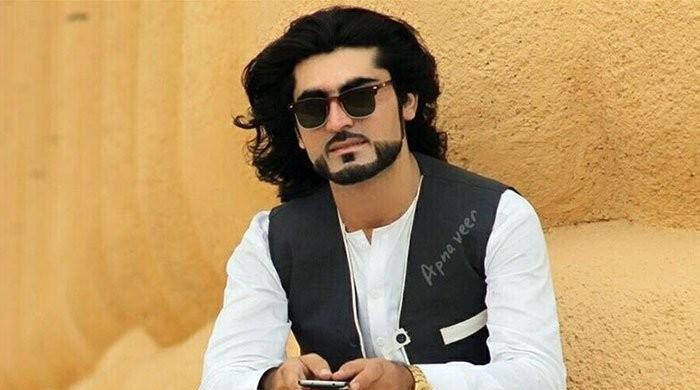

The long-running legal battle over the killing of Naqeebullah Mehsud has taken a new turn, with the victim’s son submitting an affidavit before the Sindh High Court as part of ongoing appeals against the acquittal of former police officer Rao Anwar. The development keeps one of Pakistan’s most closely watched police encounter cases active more than eight years after Naqeebullah’s death.
Background
Naqeebullah Mehsud, also known by his birth name Naseemullah, was a 27-year-old shopkeeper from South Waziristan who had gained a following on social media as an aspiring model. On January 13, 2018, he was killed in Karachi’s Shah Latif Town along with three other men in what was later described in court as a staged police encounter.
At the time, Rao Anwar Ahmed Khan served as senior superintendent of police for Malir district and oversaw the operation. Naqeebullah Mehsud’s death, and the Rao Anwar encounter that followed, triggered nationwide protests and a suo motu notice from then Chief Justice Saqib Nisar, who ordered a joint investigation team to examine the case.
The case became one of the most prominent tests of police accountability in Pakistan’s recent history. Investigators eventually found sufficient grounds to charge Rao Anwar and 17 other police officials over the killings, though the officer maintained throughout that he was innocent and had arrived at the scene only after the encounter took place.
Details
In January 2023, an anti-terrorism court acquitted all 18 accused, including Rao Anwar, citing insufficient evidence and witnesses who had deviated from their original statements. The verdict, delivered exactly five years after Naqeebullah Mehsud’s death, drew sharp criticism from human rights advocates who called it a miscarriage of justice.
Naqeebullah Mehsud’s family, supported by their legal counsel, filed appeals challenging the acquittal, arguing that the trial court had ignored key evidence, including call data records and testimony indicating Rao Anwar’s presence near the crime scene at the time of the killings.
The case has continued moving through Pakistan’s appellate courts in the years since, with the Sindh High Court now reviewing the family’s appeal. In the latest development, Naqeebullah Mehsud’s son, Atif, submitted a sworn affidavit explaining the family’s position and the circumstances behind who had been representing them in court.
According to the affidavit, Atif stated he was still a minor when the original appeals were filed, and that his mother had been unable to appear in court due to prevailing social and cultural norms. Following the death of Naqeebullah Mehsud’s father, who had pursued the case until he passed away from cancer in December 2019, an uncle stepped in to file the appeals on the family’s behalf.
Throughout the legal proceedings, Rao Anwar has consistently denied wrongdoing, at one point claiming Naqeebullah Mehsud had used a false identity and alleging he had links to banned militant groups, a claim that was never substantiated in court and that Naqeebullah Mehsud’s family has firmly rejected.
Quotes
A Joint Investigation Team official told Arab News early in the case that Rao Anwar had been found responsible for Naqeebullah Mehsud’s death, a significant break at a time when the investigation was under intense public pressure.
Advocate Sallahuddin Panhwar, representing the family, argued during the original trial that the case involved three distinct episodes: Naqeebullah Mehsud’s abduction, his illegal detention, and finally his extrajudicial killing, and said call data records placed Rao Anwar near the scene despite his denials.
Rao Anwar, speaking to reporters after his acquittal, said he had been treated unfairly and insisted he had protected the people of Karachi from what he described as oppressors, a defense he repeated consistently across years of court appearances.
Impact
The Naqeebullah Mehsud case has had a lasting effect on how extrajudicial police killings are scrutinized in Pakistan. It prompted broader public debate about accountability for police “encounters,” a term used in South Asian policing to describe shootouts that rights groups say are sometimes staged to justify killings without trial.
The case also shaped public discourse around the treatment of Pashtun citizens from Pakistan’s tribal areas, with Naqeebullah Mehsud’s death becoming a rallying point for the Pashtun Tahafuz Movement, which has continued to cite the case in its broader campaign against enforced disappearances and extrajudicial killings.
For Sindh’s police force, the case contributed to institutional scrutiny of encounter-related killings and renewed calls for stronger oversight mechanisms, though critics argue accountability measures introduced since 2018 have not been consistently enforced.
Conclusion
With Atif Mehsud’s affidavit now part of the Sindh High Court record, the family’s appeal against Rao Anwar’s acquittal is expected to continue moving through the appellate process in the coming months. Legal observers say the outcome could set an important precedent for how Pakistani courts handle appeals in high-profile police encounter cases involving significant public interest.
For now, the case remains unresolved more than eight years after Naqeebullah Mehsud’s killing. His family is still pressing for a different outcome than the 2023 acquittal that cleared Rao Anwar and his co-accused.
Frequently Asked Questions
Who is the former IG of Sindh police?
Sindh has had several Inspectors General of Police overseeing the force during the years the Naqeebullah Mehsud case has unfolded, since the post rotates fairly frequently in Pakistan’s provincial police structure. At the time the Joint Investigation Team was formed to probe Rao Anwar in 2018, Additional IG Sindh Aftab Ahmed Pathan was tasked with leading the inquiry into the case, working alongside other senior officers including the Additional IG of the Special Branch and regional DIGs. Since then, the office of Sindh’s IG has changed hands multiple times as part of routine administrative transfers, and readers looking for the current officeholder should check the latest updates from Sindh police’s official channels, since the position is subject to change through provincial government notifications.
Who was Naqeebullah Mehsud?
Naqeebullah Mehsud, born Naseemullah, was a 27-year-old shopkeeper originally from South Waziristan who had built a modest following on social media as an aspiring model. He moved to Karachi in search of better opportunities, like many young men from Pakistan’s tribal districts, and was known within his community for his ambitions beyond his shopkeeping work. His killing in a police encounter in January 2018 turned him into a symbol of the broader struggle against extrajudicial killings in Pakistan, and his case remains one of the most cited examples in discussions about police accountability and the rights of citizens from the country’s tribal areas.
Are encounters legal in India?
Encounter killings, where police claim a suspect was killed during an exchange of gunfire, exist in a legally ambiguous space in India. Indian law does not recognize “encounters” as a separate legal category, and any police killing must be justified under the same self-defense and use-of-force standards that apply to ordinary law enforcement actions. The Supreme Court of India has laid out specific guidelines requiring independent investigation of every encounter death, including mandatory FIR registration and magisterial inquiry, precisely because rights groups have long alleged that some encounters are staged to bypass due process, a criticism that closely mirrors the concerns raised in Pakistan’s Naqeebullah Mehsud case.