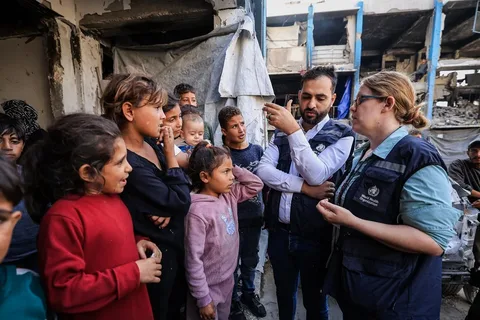
International organizations are sounding the alarm again about conditions in Gaza. The UN’s latest warning centers on funding shortfalls and shrinking access to basic services the kind of thing that, on paper, sounds bureaucratic, but on the ground means fewer meals, less medicine, and less clean water for millions of people.
Relief agencies are pushing governments for more support as their own operations get squeezed. Groups tracking the crisis, including those publishing through Reliefweb, keep documenting the same urgent gaps: food, healthcare, shelter, and basic services that aren’t reaching enough people.
Background
Gaza’s humanitarian situation has been one of the world’s worst for years now. Conflict, mass displacement, wrecked infrastructure, and restricted access to resources have piled up into conditions that are hard for outsiders to fully grasp.
International organizations have effectively become a lifeline for local communities the UN and various relief groups run food distribution, medical care, education programs, and emergency response, often because there’s no functioning alternative left.
Platforms like Reliefweb’s Palestine job postings and other UN-linked networks tell their own story here: the constant churn of postings for humanitarian workers and emergency responders shows just how much demand there still is for people on the ground.
Details of the Current Situation
Right now, aid agencies are struggling just to keep operations running. Access restrictions, funding gaps, and security risks are all colliding at once, and officials say all three are slowing down the delivery of basic supplies.
Money is the recurring problem. Long-term programs healthcare, food assistance, sanitation, protection services for vulnerable groups all need steady funding, and steady funding is exactly what’s missing.
UN officials keep repeating the same line: humanitarian support has to reach civilians no matter what’s happening politically. Their warning is blunt if relief programs get cut further, millions of people face worse conditions, not marginally worse ones.
One of the biggest players here is UNRWA the UN Relief and Works Agency for Palestine Refugees in the Near East. It runs education, healthcare, and emergency services for Palestinian refugees, and it’s been under serious financial strain.
That funding pressure worries a lot of humanitarian groups. Their argument is straightforward: cut UNRWA’s budget, and you cut services that huge numbers of families actually rely on day to day.
Humanitarian Aid and Relief Efforts
Despite the obstacles, relief teams are still out there delivering medical supplies, clean water, food packages, and shelter materials to communities caught in the crisis.
Demand for humanitarian workers hasn’t slowed either. Reliefweb’s Palestine job listings keep showing openings in healthcare, logistics, emergency management, and community support a rough proxy for how stretched current teams already are.
Children and other vulnerable groups are getting particular attention. Conflict zones tend to hit kids hardest disrupted schooling, limited healthcare access, and psychological strain that doesn’t show up in the aid statistics but matters just as much.
Education is one of the harder problems to solve mid-crisis. Prolonged instability doesn’t just delay a school year it can knock kids out of education entirely. Humanitarian groups keep pushing for safe access to schools, though “safe access” is often the exact thing missing.
What Officials Are Saying
UN officials have been consistent in flagging how bad conditions are in Gaza, and they keep calling for more international cooperation and money to keep programs running.
Their point isn’t just about immediate relief, either several UN representatives have framed this as a matter of basic human dignity, not just logistics.
Humanitarian experts add a longer-term warning too: real recovery means rebuilding infrastructure and healthcare systems from the ground up, not just patching gaps as they appear.
Global and Regional Impact
This isn’t a contained crisis. It’s shaping diplomatic conversations, humanitarian policy, and international relief planning well beyond Gaza itself.
Neighboring regions feel the pressure too large-scale humanitarian emergencies tend to spill outward economically and socially, and this one is no exception. International organizations are watching closely and drawing up contingency plans.
The consistent message from the humanitarian community: none of this gets fixed without governments, international institutions, and relief organizations actually working together not just issuing statements.
What Comes Next
What happens next depends almost entirely on funding and access. Aid agencies are watching the situation closely and adjusting programs as conditions shift, which in practice means scaling up or down depending on whatever money comes through.
This update will keep evolving as the situation does. Sustained attention from the international community isn’t optional here without it, both emergency relief and any long-term recovery stall out.
FAQs
How does the UN respond to crises like this?
The UN coordinates humanitarian assistance across its various agencies food, medical supplies, shelter, protection programs usually working alongside local partners to figure out where the need is most urgent and get resources there.
Are girls allowed to go to school in Palestine?
Yes. Girls have historically had access to education across Palestinian communities. But conflict, displacement, and damaged infrastructure make actual attendance a lot harder than the policy on paper suggests.
Is UNRWA only for Palestinians?
Largely, yes. UNRWA’s mandate centers on Palestine refugees and their descendants education, healthcare, relief assistance, and social services for millions of registered refugees.