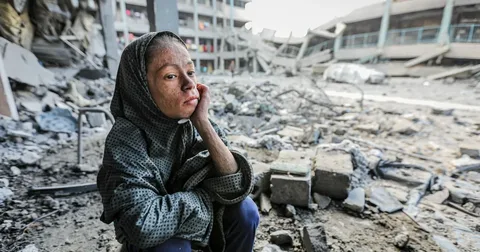
The humanitarian situation facing Gaza children remains severe, even with a ceasefire technically in place since October 2025. Recurring violations, funding shortfalls, and restricted aid access have left thousands of children without enough food, healthcare, education, or safe shelter. UNICEF and other aid organizations say children are still bearing the worst of it, dealing with displacement, trauma, and shortages that haven’t gone away just because a truce was signed.
International agencies are renewing calls for full humanitarian access and stronger protection for children specifically. The latest UNICEF Gaza children appeal is asking governments and donors to scale up emergency support as families try to get by under conditions that remain genuinely dangerous, ceasefire or not.
Background
Gaza has been at the center of one of the world’s most serious humanitarian emergencies for the past several years. A ceasefire took effect in October 2025, but humanitarian organizations have since described it as fragile, pointing to continued strikes, funding shortfalls, and restricted aid access that have kept children at real risk even after the fighting was supposed to stop. Hospitals, schools, and other infrastructure across the territory remain damaged or destroyed, and most residents have been displaced at least once.
Children make up close to half of Gaza’s population, which makes them the most exposed group by a wide margin. International humanitarian law requires that civilians, children especially, be protected, but aid agencies keep documenting a serious gap between that standard and what’s actually happening on the ground.
The United Nations, UNICEF, the World Health Organization, and other relief groups have all repeated warnings about the long-term toll this could take on an entire generation, ceasefire or no ceasefire.
Gaza Children Continue to Face Daily Hardships
For a lot of families, everyday life is still a struggle for survival. Children are short on clean drinking water, nutritious food, medicine, and safe shelter. Many schools have either been damaged or turned into temporary shelters for displaced families instead of classrooms.
Healthcare services remain under enormous strain. Hospitals routinely report shortages of medical supplies, and doctors are treating patients under conditions that would be considered a crisis almost anywhere else.
Prolonged exposure to violence and displacement tends to leave a real psychological mark on children, and humanitarian groups expect the effects of fear, anxiety, and interrupted schooling to show up in children’s development for years rather than fading once the immediate crisis ends.
UNICEF Gaza Children Appeal Calls for Urgent Support
The UNICEF Gaza children appeal keeps pushing for more international funding to support lifesaving programs. Children urgently need food assistance, safe drinking water, vaccines, emergency healthcare, education support, and psychological care, according to the agency.
UNICEF has said repeatedly that humanitarian access is the real bottleneck: even with funding in place, getting aid to families who need it depends on supply routes and crossings staying open and convoys not being delayed or blocked. The agency continues calling for stronger protection of children in line with the ceasefire agreement and international humanitarian law.
A lot of people search “Is UNICEF helping Gaza?” The short answer is yes. UNICEF continues working with humanitarian partners to provide emergency supplies, child protection services, nutritional assistance, clean water projects, and healthcare support wherever access allows, though access itself remains inconsistent.
Children in Gaza Donation Campaigns Continue Worldwide
Humanitarian organizations have launched numerous children in Gaza donation campaigns to help cover urgent needs. Donations typically go toward emergency food distribution, temporary shelters, medical treatment, sanitation projects, education materials, and child protection services.
Aid agencies say donations help expand what they can do, but access restrictions remain the bigger obstacle in reaching every affected community, regardless of how much funding comes in.
Anyone looking to support relief efforts is best off donating through established humanitarian organizations, which gives some assurance that assistance reaches civilians in line with humanitarian standards rather than getting lost along the way.
Gaza Children Charity Organizations Expand Emergency Programs
Several international and regional Gaza children charity organizations are expanding their emergency response despite difficult operating conditions. Their work covers:
- Emergency food assistance
- Safe drinking water distribution
- Child nutrition programs
- Medical care
- Psychological support
- Temporary education spaces
- Family reunification efforts
- Protection services for vulnerable children
Workers on the ground say sustained international support is essential, since needs haven’t shrunk just because the headlines have moved on.
Debate Around Gaza Children Adoption
Interest in Gaza children adoption has grown internationally after widespread images of children’s suffering circulated online. Child protection experts are quick to point out, though, that adoption during or after active conflict is governed by strict legal and ethical standards for good reason.
Organizations working in child protection generally prioritize tracing families, reunifying children with relatives, and arranging temporary care before any long-term adoption process is even considered. International agencies actively caution against informal or unregulated adoption efforts in emergency settings, since they can do real harm even when intentions are good.
Protecting a child’s legal identity and family connections matters just as much as their immediate safety, which is why this process tends to move more slowly than people expect.
Education Interrupted for Thousands of Children
Education has been one of the biggest casualties of the past two years. Almost every school in Gaza has been destroyed or seriously damaged, and many of the ones still standing are being used as shelters rather than classrooms.
Children have missed roughly two years of regular schooling at this point, which raises real concerns about long-term educational setbacks. Teachers and aid organizations are running temporary learning spaces and remote learning programs wherever security conditions allow, but it’s a patchwork solution rather than a real fix.
Extended school closures tend to raise other risks too: child labor, early marriage, exploitation, and a harder path out of poverty later on.
Healthcare Challenges Continue to Grow
Medical staff working in Gaza describe relentless pressure on hospitals and clinics.
Children needing specialized treatment often face delays because of medicine, equipment, and resource shortages, and vaccination campaigns have been repeatedly disrupted, which raises the risk of preventable disease outbreaks on top of everything else.
Malnutrition remains a serious problem, with tens of thousands of children, particularly infants and toddlers, still requiring specialized feeding support even after food access improved somewhat following the ceasefire.
Growing Mental Health Concerns
Children exposed to repeated violence and displacement often carry trauma well past the point the immediate danger ends. Common concerns include:
- Anxiety
- Depression
- Sleep disorders
- Fear of loud sounds
- Difficulty concentrating
- Emotional distress
- Social withdrawal
Humanitarian groups are expanding child-friendly spaces and psychosocial support programs to help with this, though access and funding shortfalls limit how far that support can stretch.
UNICEF Gaza Statement Repeats Call for Civilian Protection
Recent UNICEF Gaza statement updates keep stressing that every child deserves protection, regardless of nationality, ethnicity, or religion.
The agency has repeatedly called for:
- Protection of children
- Safe, unimpeded humanitarian access
- Medical assistance
- Respect for international humanitarian law and the ceasefire agreement
- Restoration of essential services
- Increased humanitarian funding
International organizations keep urging all parties to fully honor the ceasefire’s terms and prioritize civilian safety while letting relief operations proceed without obstruction.
Global Response Continues
Governments and humanitarian agencies remain engaged in talks over scaling up aid deliveries and supporting Gaza’s civilian population.
Several countries have pledged additional humanitarian assistance, and diplomatic efforts around reconstruction and a longer-term political resolution are ongoing alongside the current ceasefire arrangement.
Aid experts are blunt about one thing: emergency relief alone won’t solve this. Real recovery means rebuilding homes, schools, hospitals, water systems, and the rest of the infrastructure that’s been damaged or destroyed, which is a far bigger undertaking than keeping aid trucks moving.
Voices Reflect the Human Cost
Humanitarian workers on the ground have shared plenty of firsthand accounts of what children in Gaza are going through.
Some widely shared Gaza children quotes from relief workers focus on resilience and hope, alongside a consistent message: children shouldn’t have to bear the cost of conflict, ceasefire or not. Those accounts keep reinforcing calls for stronger international cooperation to reduce civilian suffering and get aid to the people who need it most.
Looking Ahead
The outlook here is still uncertain. The ceasefire hasn’t translated into the level of protection or aid access that children in Gaza actually need, and humanitarian agencies warn that every delay in access raises the risk for vulnerable families.
Continued funding, expanded aid delivery, and sustained international pressure to enforce the ceasefire’s terms are likely to remain the key issues over the coming months. For Gaza’s children, what happens next depends not just on emergency aid holding up, but on longer-term commitments to recovery, education, healthcare, and an actual lasting peace.
Frequently Asked Questions (FAQs)
Who lived in Israel first, Jews or Muslims?
Historically, the ancient Israelites, ancestors of the Jewish people, lived in the region thousands of years before Islam emerged in the 7th century CE. Over the centuries, the area has been home to numerous peoples and civilizations, including Canaanites, Israelites, Romans, Byzantines, and Arabs, among others. Most historians treat the region’s history as long and shared among multiple communities rather than belonging exclusively to one group.
What was Gaza called in the Bible?
The Bible refers to Gaza simply as Gaza. It was one of the five principal Philistine cities and appears in both the Old and New Testaments. The city has remained significant throughout history largely because of its location connecting Africa and Asia, and it’s been continuously inhabited for thousands of years.
How to explain Gaza to children?
Keep it simple and age-appropriate. You can explain that Gaza is a small area where many families and children live, and that conflict there has made life very difficult for a long time, even with a ceasefire now in place. It helps to emphasize that children everywhere deserve safety, education, healthcare, and the chance to grow up in peace. Encourage empathy, skip the graphic details, and remind children that many humanitarian organizations are working to help families affected by the crisis.