What began as a conflict primarily between Iran and Israel has expanded into something considerably more dangerous. The latest round of Iranian strikes targeting locations connected to military infrastructure in Bahrain and Kuwait and the subsequent US military response near the Strait of Hormuz have pushed the Gulf into one of its most volatile periods in recent memory.
Nobody has formally declared war. But the gap between what’s happening and what a war looks like is narrowing in ways that have governments, energy markets, and humanitarian organizations deeply concerned.
How We Got Here
The current escalation didn’t emerge overnight. Throughout early 2026, Iran and Israel exchanged direct missile and drone strikes in what became one of the most dangerous direct confrontations between the two countries in modern history.
As those exchanges intensified, the United States expanded its military presence in the Gulf more naval patrols, more assets positioned around the Strait of Hormuz, more explicit commitments to protecting allied interests and international shipping.
Iran has consistently framed its military actions as defensive responses to attacks on Iranian territory and strategic infrastructure, and pushback against what Tehran characterizes as foreign military encroachment. Israel has maintained that its operations are aimed at limiting Iran’s ability to threaten Israeli security through missiles, drones, and regional proxy networks. The US has positioned itself as protecting freedom of navigation and its Gulf allies.
Three countries, three justifications, one increasingly crowded and dangerous theater of operations.
The Latest Strikes: What Happened
Iranian missiles and drones struck targets connected to regional security infrastructure in Bahrain and Kuwait. Air defense systems intercepted several incoming projectiles, which prevented worse outcomes but the fact that Gulf states beyond the original conflict zone are now in the target picture represents a significant escalation.
The immediate response across the Gulf was a rapid increase in military readiness. Civil aviation authorities began monitoring airspace. Commercial shipping companies reviewed their security protocols for vessels operating near Hormuz. Regional governments activated heightened alert procedures.
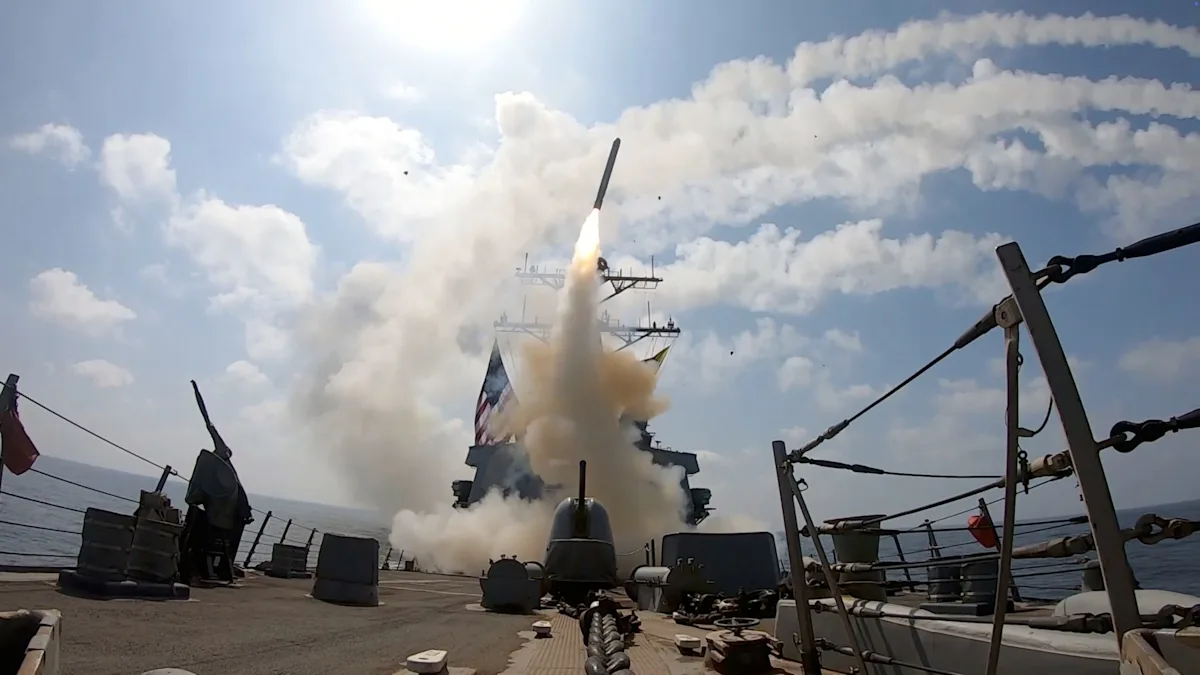
The US followed with precision strikes near the Strait of Hormuz, which American officials described as targeting Iranian military assets that posed direct threats to international shipping and coalition forces. Iran called the strikes illegal foreign intervention. The exchange of accusations followed the pattern that’s become familiar each side claiming its actions were forced by the other’s aggression.
Why the Strait of Hormuz Changes Everything
This particular stretch of water roughly 33 kilometers at its narrowest point is one of the most consequential pieces of geography on earth.
Nearly a fifth of globally traded oil moves through the Strait of Hormuz every day. That number represents an enormous share of the energy supply for Europe, Asia, and beyond. Any meaningful disruption to shipping through Hormuz doesn’t stay a Middle East problem it becomes a global economic problem within days.
Shipping companies have already begun implementing additional security measures. Insurance premiums for vessels operating in the region have risen. Energy analysts are warning that sustained military operations near Hormuz could push oil prices higher in ways that ripple through fuel costs, freight rates, and inflation across multiple continents.
Financial markets have been reacting cautiously to each new development, which is itself a form of damage even before anything more severe happens.
Gulf States: No Longer Just Bystanders
The expansion of Iranian strikes to include targets in Bahrain and Kuwait has forced Gulf states into a more exposed position than most of them wanted.
Bahrain, Kuwait, Saudi Arabia, Qatar, and the UAE have all increased security measures around military installations, airports, oil facilities, ports, and critical infrastructure. Several governments have issued reassurances to their populations that defense systems are fully prepared.
Behind those reassurances, however, is a more uncomfortable reality: these countries are now inside the blast radius of a conflict they didn’t start and can’t fully control. Regional cooperation among Gulf states has become increasingly important and increasingly urgent.
Israel Is Watching Carefully
Israeli defense officials have remained on high alert throughout the latest escalation. The strikes on Gulf targets haven’t directly involved Israel in this phase, but the assumption in Israeli military planning is straightforward: if Iranian regional operations expand, Israel remains a primary target for any retaliatory or opportunistic strikes.
Missile defense systems have been reinforced. Intelligence surveillance has intensified. Military analysts believe Israel is preparing for the possibility of renewed direct drone or missile attacks if tensions continue climbing.
Israel’s core objective hasn’t changed limiting Iran’s ability to project military power through missiles, drones, and allied armed groups. Whether that objective is achievable through the current approach is a question Israeli strategists are actively wrestling with.
Diplomacy Is Still Happening But Struggling
The diplomatic machinery is active, which matters. The UN has called for restraint. European governments have emphasized the importance of protecting international shipping and avoiding civilian infrastructure attacks. Multiple countries are working communication channels with both Washington and Tehran.
But active diplomacy and successful diplomacy are different things, and no breakthrough has emerged. The underlying disputes Iran’s nuclear program, sanctions, regional influence, the future of various proxy relationships haven’t been resolved. Each new military exchange makes the next round of negotiations harder by eroding whatever trust existed before the strike.
The concern that serious analysts keep returning to is accidental escalation. When large numbers of military assets from multiple countries are operating in close proximity, the risk of a miscalculation a misidentified target, a communications failure, a commander in the field making a split-second decision grows significantly. Wars have started that way before.
The Human Cost Being Overlooked
In the coverage of military exchanges and market reactions, the humanitarian dimension sometimes gets lost. It shouldn’t.
Civilians living near potential target areas in affected countries are exposed to real danger. Medical services, transportation networks, and supply chains are under pressure across multiple countries simultaneously. Humanitarian organizations are monitoring the situation and preparing contingency plans for potential displacement.
The people least responsible for this conflict are, as usual, the ones most vulnerable to its consequences.
What Comes Next
The honest answer is that the next few days will tell a great deal about the trajectory of this conflict.If diplomatic efforts gain traction, if military restraint holds, if no new incident occurs that forces another round of strikes the situation could begin to stabilize. There are people on all sides who understand that the costs of further escalation are severe and who are working to prevent it.
If another significant strike occurs, if a vessel is sunk in the Strait of Hormuz, if an attack causes substantial casualties in a Gulf capital the calculus changes. The pressure to respond escalates, the diplomatic space narrows, and the path to a broader US-Iran war becomes shorter.
The international community is watching. Energy markets are watching. And the governments involved are trying to hold together a situation that is straining hard against the structures meant to contain it.
FAQs
When did the Iran conflict escalate to this point in 2026?
The major escalation developed gradually through months of increasing tension between Iran and Israel that eventually became direct missile and drone exchanges. The US became more directly involved as it expanded military presence to protect Gulf allies and shipping routes. Since then, a cycle of retaliatory strikes has pushed the situation to its current dangerous state — with each exchange making the next one harder to prevent.
Why is Israel involved in this conflict with Iran?
Israel’s stated objective is preventing Iran from expanding capabilities that could threaten Israeli security specifically missile programs, drone development, and the network of regional armed groups that Iran supports. Iran frames its actions as defensive responses to Israeli strikes on Iranian territory and infrastructure. Underneath the immediate military exchanges is a deeper geopolitical rivalry that has been building for decades, now expressing itself in direct military confrontation rather than proxy conflict alone.
Who has the military advantage Iran or Israel?
Neither country holds a clear overall advantage because they’ve built fundamentally different kinds of military strength. Israel has some of the world’s most capable air defense systems, advanced air power, and sophisticated intelligence networks. Iran has a massive arsenal of missiles and drones, significant experience in asymmetric warfare, and influence through a network of allied groups across multiple countries. Military experts consistently conclude that any sustained direct conflict between the two would be enormously costly for both sides — and potentially destabilizing for the entire region in ways that go well beyond their bilateral relationship.