The FIFA World Cup 2026 will be unlike any previous edition of the tournament. Hosted jointly by the United States, Canada, and Mexico, the competition will feature 48 teams instead of the traditional 32. This expansion has required FIFA to review and update many aspects of tournament management, including the FIFA World Cup disciplinary rules.
Football’s governing body has spent recent years evaluating player conduct, referee protection, and sporting integrity. Officials believe stricter disciplinary measures are necessary to ensure matches are conducted fairly and professionally, especially with more teams and more matches being played than ever before.
The introduction of additional regulations also reflects FIFA’s broader efforts to improve the behavior of players and coaching staff during high-pressure international competitions.
New Rules FIFA World Cup 2026: What Has Changed?
Among the most discussed World Cup new rules are those related to player interactions with referees. FIFA has emphasized greater respect toward match officials and introduced stricter enforcement mechanisms.
Under recent guidance, players are expected to follow specific communication standards during matches. Excessive protests, aggressive behavior, and actions that interfere with referee authority may result in disciplinary action.
The mouth-covering rule, which has generated headlines in recent weeks, is intended to improve transparency and prevent inappropriate conduct during interactions between players and officials. FIFA believes the measure can help reduce disputes and maintain accountability on the field.
In addition to behavioral regulations, disciplinary procedures regarding suspensions, cautions, and red cards have also been clarified ahead of the tournament.
FIFA World Cup Disciplinary Rules Explained
The FIFA World Cup disciplinary rules govern how players, coaches, and team officials are punished for misconduct during the tournament.
These regulations cover a wide range of offenses, including dangerous tackles, violent conduct, dissent toward referees, unsporting behavior, and breaches of tournament protocols. FIFA’s disciplinary committee reviews serious incidents and can impose additional sanctions beyond those issued during matches.
Players who accumulate disciplinary records throughout the tournament may face suspensions that affect their team’s chances of progressing. Because knockout matches leave little room for error, disciplinary decisions often play a significant role in determining tournament outcomes.
Teams are therefore expected to educate players on all regulations before the competition begins.
World Cup Yellow Card Rule: How Suspensions Work
The World Cup yellow card rule remains one of the most important aspects of tournament discipline.
A yellow card is issued for offenses such as unsporting behavior, persistent fouling, delaying the restart of play, or dissent. When a player receives multiple yellow cards across different matches, suspension rules may apply.
FIFA generally tracks caution accumulations during the tournament. Once a player reaches the designated threshold, they can be suspended for the next match. This system encourages players to maintain discipline throughout both group-stage and knockout fixtures.
However, FIFA often includes provisions allowing yellow card records to be cleared at certain stages of the competition. Such measures help ensure that players are not forced to miss major matches solely because of earlier cautions accumulated over several games.
The exact details are outlined in official tournament regulations and are expected to be included in the final FIFA World Cup 2026 Regulations PDF released before the event.
World Cup Red Card Rules and Immediate Consequences
The World Cup red card rules are considerably stricter than yellow card regulations because they involve serious misconduct.
A player receiving a red card must leave the field immediately and cannot be replaced. This leaves their team with fewer players for the remainder of the match, often creating a significant competitive disadvantage.
Direct red cards can be issued for violent conduct, serious foul play, offensive language, denying an obvious goal-scoring opportunity, or other severe offenses identified by match officials.
Players sent off are automatically suspended for at least one subsequent match. Depending on the severity of the incident, FIFA’s disciplinary committee may impose additional suspensions or sanctions.
As the 2026 tournament approaches, coaches are expected to place greater emphasis on discipline to avoid costly suspensions during crucial matches.
World Cup Rules for Qualification: How Teams Reach the Tournament
The World Cup rules for qualification vary by confederation but follow FIFA’s overall framework.
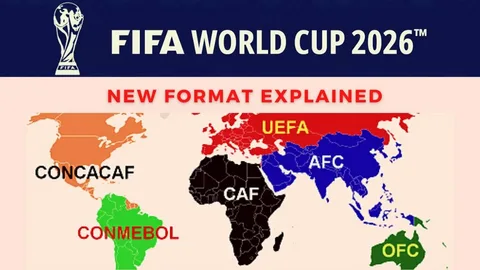
National teams compete in regional qualification tournaments organized by their respective confederations. These include Europe, South America, Africa, Asia, North America, and Oceania.
Because the 2026 tournament has expanded to 48 teams, more qualification places are available than in previous editions. This change has increased opportunities for emerging football nations to reach the World Cup.
Teams earn qualification through points accumulated during regional competitions. Wins, draws, goal difference, and other criteria are used to determine standings. Some teams may also participate in intercontinental playoffs to secure final tournament spots.
The expanded format is expected to bring greater diversity and competitiveness to the World Cup.
World Cup Rules to Advance from the Group Stage
Understanding the World Cup rules to advance is essential for both teams and supporters.
Under the new 48-team structure, FIFA has adopted a revised competition format designed to accommodate additional participants while maintaining competitive balance.
Teams must earn points during the group stage through wins and draws. The highest-ranked teams in each group advance to the knockout rounds.
When teams finish level on points, FIFA applies several tiebreaking criteria. These typically include goal difference, goals scored, head-to-head records, and disciplinary records.
Because disciplinary points can influence final standings in rare circumstances, the FIFA World Cup disciplinary rules may directly impact which teams progress to later stages of the competition.
This connection highlights the growing importance of maintaining discipline throughout the tournament.
How Disciplinary Records Could Affect World Cup 2026
The expanded tournament means players may participate in more matches than ever before during a single World Cup campaign.
As a result, managing disciplinary records will become increasingly important. Teams reaching the latter stages of the competition must avoid unnecessary yellow cards and suspensions.
A single red card could force a key player to miss a decisive knockout match. Likewise, accumulated cautions may create selection challenges for coaches attempting to field their strongest lineups.
Football analysts believe discipline could become one of the defining factors separating successful teams from those eliminated early.
The combination of stricter enforcement and increased tournament length means players must demonstrate both technical quality and professional conduct.
FIFA World Cup 2026 Regulations PDF: What Fans Should Expect
The official FIFA World Cup 2026 Regulations PDF is expected to provide comprehensive details covering tournament operations, disciplinary procedures, player eligibility, competition formats, and appeal mechanisms.
The document will serve as the primary reference for teams, media organizations, and supporters seeking accurate information regarding tournament regulations.
FIFA typically updates these regulations before major competitions to reflect rule changes, organizational adjustments, and new disciplinary policies.
Fans eager to understand the latest World Cup new rules are expected to closely review the document once it becomes publicly available.
Global Impact of the New Disciplinary Measures
The latest disciplinary regulations extend beyond the World Cup itself. National leagues, continental competitions, and youth tournaments often monitor FIFA’s regulatory developments and adopt similar standards.
Stricter enforcement of player behavior could influence football culture worldwide. Many experts believe greater respect for officials may improve the game’s image and reduce on-field confrontations.
At the same time, some critics argue that certain regulations may require further clarification to ensure consistent application across different competitions.
The debate surrounding the new rules is likely to continue as teams prepare for the tournament.
Conclusion
The FIFA World Cup disciplinary rules will play a crucial role in shaping the 2026 tournament. With the introduction of several new rules FIFA World Cup 2026, FIFA is seeking to improve transparency, accountability, and respect for match officials.
From the World Cup yellow card rule to the World Cup red card rules, disciplinary decisions can significantly affect a team’s chances of success. Combined with updated World Cup rules for qualification and revised World Cup rules to advance, the tournament promises to be one of the most closely regulated events in football history.
As FIFA prepares to release the final FIFA World Cup 2026 Regulations PDF, players, coaches, and supporters will be watching closely to understand how the evolving regulations could shape the future of the world’s most prestigious football competition.
FAQs
Are there penalties in the World Cup?
Yes, penalties are an important part of the FIFA World Cup. During regular matches, referees can award penalty kicks when a defending player commits a foul inside the penalty area. In knockout-stage matches, if teams remain tied after extra time, a penalty shootout is used to determine the winner. Some of the most memorable moments in World Cup history have occurred during dramatic penalty shootouts that decided championship outcomes.
What is the new penalty rule?
Recent FIFA updates focus on ensuring goalkeepers keep at least part of one foot on or above the goal line when a penalty kick is taken. VAR technology is also used to review potential infringements. These measures aim to create consistency and fairness while reducing disputes between players and match officials. FIFA continues to refine penalty regulations as part of broader efforts to improve officiating standards.
What is the controversy with the World Cup 2026?
One of the major discussions surrounding World Cup 2026 involves the expanded 48-team format and the introduction of new disciplinary regulations. Critics have questioned whether some enforcement measures, including recently highlighted communication and conduct rules, could lead to inconsistent interpretations. Supporters argue that stricter standards are necessary to protect referees and improve sportsmanship. The debate is expected to continue as teams adapt to the new FIFA World Cup disciplinary rules ahead of the tournament.