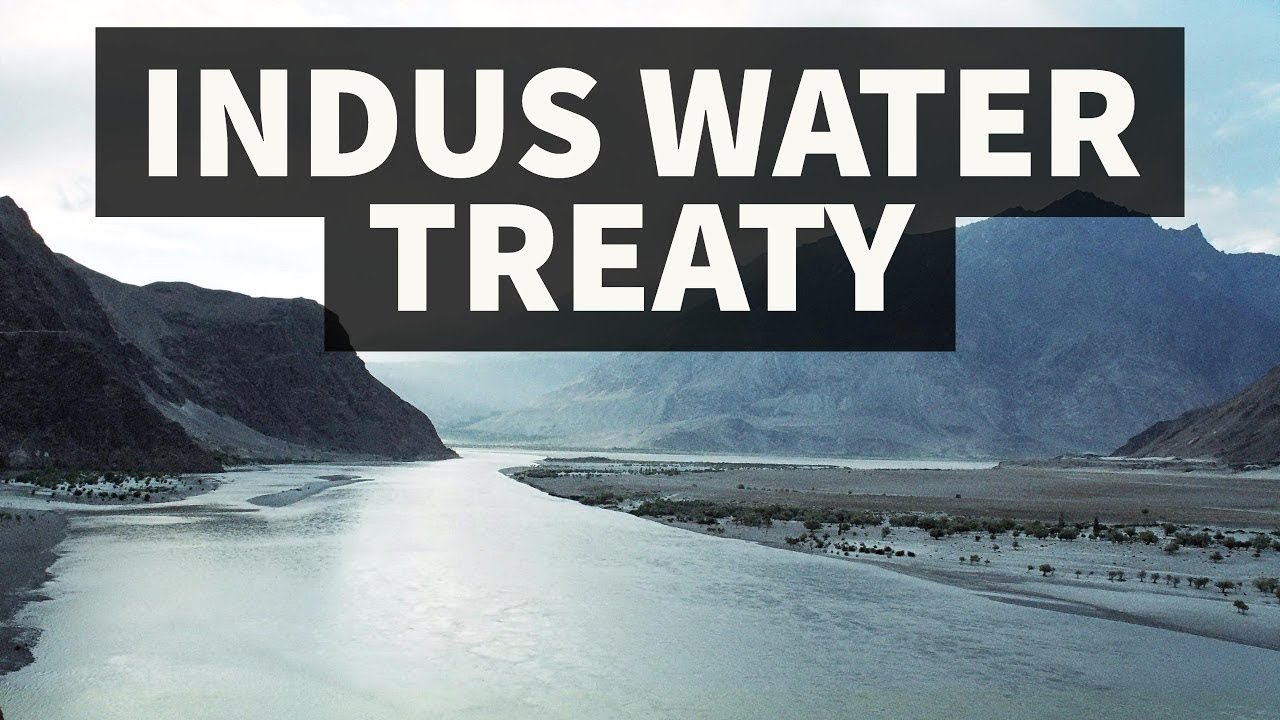
The Indus Water Treaty has once again become the centre of diplomatic discussions between Pakistan and India after Islamabad raised concerns over what it describes as violations of the historic water-sharing agreement. Pakistani officials have recently highlighted the matter before international forums, arguing that the treaty remains legally binding despite increasing tensions between the two neighbouring countries.
The latest developments have renewed global attention on the Indus Water Treaty current status, with policymakers, legal experts, and regional observers closely monitoring whether both countries can preserve one of the world’s longest-standing international water-sharing agreements.
Background of the Indus Water Treaty
The Indus Water Treaty was signed on September 19, 1960, in Karachi after years of negotiations facilitated by the World Bank. The agreement was designed to fairly distribute the waters of the Indus River system between India and Pakistan while reducing the risk of conflict over shared water resources.
The treaty was signed by Pakistan’s President Field Marshal Ayub Khan and India’s Prime Minister Jawaharlal Nehru, with the World Bank acting as a guarantor and facilitator of the negotiations. Since then, the treaty has often been described as one of the most successful international water-sharing agreements despite multiple wars and prolonged political disputes.
Indus Water Treaty Signed By
Many readers frequently search for Indus water treaty signed by, as it remains one of the most significant diplomatic agreements in South Asia.
The treaty was signed by:
- Pakistan President Field Marshal Ayub Khan
- Indian Prime Minister Jawaharlal Nehru
- The World Bank as the facilitating international institution
The agreement entered into force in 1960 and continues to govern water sharing between the two countries today.
Indus Water Treaty Main Points
The Indus water Treaty main points remain largely unchanged since 1960 and continue to define how river waters are shared.
Some of the key provisions include:
- Pakistan receives exclusive rights over the western rivers:
- Indus
- Jhelum
- Chenab
- India receives exclusive rights over the eastern rivers:
- Ravi
- Beas
- Sutlej
- India may use western rivers for limited purposes, including domestic use, irrigation within agreed limits, and run-of-the-river hydropower projects.
- Pakistan has rights to receive information regarding certain Indian water infrastructure projects.
- Both countries established a permanent mechanism for cooperation through the Indus Water Commission.
These provisions have helped regulate water sharing for more than six decades despite political tensions.
Indus Water Treaty Articles Explained
The Indus water Treaty Articles outline the legal obligations of both countries.
Important treaty articles include:
Article I
Defines key terms and technical interpretations used throughout the treaty.
Article II
Grants India unrestricted use of the eastern rivers under agreed conditions.
Article III
Allocates the western rivers primarily to Pakistan while allowing limited Indian usage under strict rules.
Article IV
Establishes principles for cooperation, engineering works, and river management.
Article VIII
Creates the Permanent Indus Commission, commonly known as the Indus Water Commission, to oversee implementation of the treaty.
Article IX
Provides mechanisms for resolving disagreements, disputes, and legal differences through neutral experts or international arbitration if required.
These articles continue to form the legal backbone of Indo-Pakistan water relations.
What is the Indus Water Commission?
The Indus Water Commission consists of one commissioner from Pakistan and one commissioner from India.
The commission is responsible for:
- Sharing hydrological data.
- Conducting inspections.
- Reviewing engineering projects.
- Holding regular meetings.
- Preventing disputes through dialogue.
The commission has continued functioning for decades even during periods of strained diplomatic relations, although meetings have occasionally faced delays due to political developments.
Indus Water Treaty Current Status in 2026
The Indus water Treaty current status has become a major diplomatic issue in 2026. Pakistan has expressed concern over India’s recent statements and actions relating to the treaty and has raised the matter at international forums, including communication with the United Nations.
Pakistani officials argue that the treaty remains a legally binding international agreement and should continue to be implemented according to its original provisions. They maintain that any unilateral attempt to suspend or alter the agreement would undermine international law governing transboundary water resources.
India, meanwhile, has previously stated that it seeks modifications to aspects of the treaty and has expressed concerns regarding changing security circumstances, infrastructure development, and water management needs. Discussions over treaty implementation continue alongside broader diplomatic tensions between the two countries.
Despite these disagreements, the treaty has not been formally terminated and remains one of the few bilateral agreements that has survived decades of conflict.
Abeyance of Indus Water Treaty
One of the most searched terms recently has been Abeyance of Indus water Treaty.
The word “abeyance” generally means temporarily suspending or holding something inoperative. Legal experts note that the treaty itself does not contain a simple mechanism allowing either party to unilaterally place it in abeyance. Any significant changes would generally require legal procedures consistent with international law and the treaty’s dispute-resolution framework.
As a result, discussions surrounding the Abeyance of Indus water Treaty remain politically sensitive and legally complex.
Why the Treaty Matters
The Indus River system supports millions of people across Pakistan and northern India.
Agriculture, drinking water supplies, hydropower generation, and industrial activities all depend heavily on these rivers. Pakistan, in particular, relies extensively on the Indus basin for irrigation, making the treaty strategically important for food security and economic stability.
Water experts often describe the agreement as not only a technical document but also a confidence-building measure between two nuclear-armed neighbours.
Global Importance of the Treaty
International observers continue to monitor developments surrounding the treaty because water security has become increasingly important worldwide.
Climate change, glacier melt, population growth, and rising agricultural demand have placed additional pressure on shared river systems. As freshwater resources become more valuable, international cooperation over transboundary rivers is expected to become even more significant.
Many international experts continue to view the Indus Water Treaty as a model for peaceful water-sharing despite ongoing political disagreements.
Is There an Indus Water Treaty PDF?
Many researchers search online for the Indus water Treaty PDF.
The complete treaty text is publicly available through official government archives and international institutions, including the World Bank. The document contains all treaty articles, engineering annexes, technical specifications, and dispute-resolution procedures that govern implementation.
Students, researchers, legal professionals, and policymakers frequently consult the treaty PDF for detailed analysis.
Regional Impact
Any uncertainty surrounding the treaty could have significant regional implications.
Agriculture in Pakistan depends heavily on predictable river flows, while India continues investing in hydropower and water infrastructure within treaty guidelines. Diplomatic tensions over water management could influence broader bilateral relations, although both countries have historically continued technical engagement under the treaty framework.
The international community generally encourages dialogue and legal mechanisms to address differences rather than unilateral actions.
Conclusion
More than sixty-five years after it was signed, the Indus Water Treaty remains one of the world’s most significant international water-sharing agreements. Although political tensions between Pakistan and India continue to influence discussions over implementation, the treaty has survived wars, diplomatic crises, and changing regional dynamics.
The Indus water Treaty current status demonstrates both the challenges and resilience of international cooperation over shared natural resources. Future dialogue through the Indus Water Commission, along with adherence to treaty obligations and international legal principles, will likely play a critical role in maintaining regional stability and ensuring sustainable management of the Indus River system.
Frequently Asked Questions (FAQs)
What is the main dispute between Pakistan and India?
The primary dispute between Pakistan and India extends beyond water issues and includes long-standing political, territorial, and security concerns. Regarding the Indus River system, disagreements generally focus on the interpretation of treaty provisions, hydropower projects, information sharing, and infrastructure development on rivers allocated under the Indus Water Treaty. Both countries maintain different legal interpretations of certain treaty clauses, which has led to formal dispute-resolution processes over the years.
Does India have dams on the Indus River?
Yes. India has constructed and continues to develop several hydroelectric and water management projects on rivers covered under the Indus Water Treaty. The treaty permits certain run-of-the-river hydroelectric projects on the western rivers, provided they comply with the treaty’s engineering and operational requirements. Pakistan has raised concerns about some projects, while India maintains that they are consistent with treaty provisions.
What is happening with India and Pakistan?
Relations between India and Pakistan remain complex, involving diplomatic, security, trade, and water-related issues. In 2026, renewed attention has focused on the Indus Water Treaty after Pakistan raised concerns regarding India’s actions and communications related to the agreement. Despite political tensions, the treaty remains in force, and both countries continue to rely on legal and diplomatic mechanisms established under the agreement to address water-related differences.
Why is the Indus Water Treaty considered one of the world’s most successful water agreements?
The Indus Water Treaty is widely regarded as successful because it has remained operational for more than six decades despite multiple wars and prolonged political tensions between Pakistan and India. It established clear water-sharing rules, created the Permanent Indus Commission for regular dialogue, and introduced formal dispute-resolution mechanisms. Many international experts consider it an important example of how neighbouring countries can cooperate over shared water resources even during difficult diplomatic periods.