Something fundamental is changing about how Pakistan looks and where its people live. Urbanization has quietly become one of the most consequential demographic shifts the country has ever experienced, and the debate around what it means to have an Urban Province Pakistan has moved from academic circles into mainstream policy conversation.
At the heart of this discussion are questions that touch nearly every part of national life the Pakistan urbanization rate, the nature of urban settlement in Pakistan, and what happens to infrastructure, governance, and economic development when millions of people keep moving toward cities that were not designed to hold them. Understanding this shift is no longer optional for anyone trying to make sense of where Pakistan is heading.
Background
Pakistan was, for most of its history, a country of villages. Agricultural communities formed the social and economic backbone of the nation, and the majority of the population lived and worked on the land or in small rural settlements connected to it.
That picture has been changing steadily for decades, and the pace of that change has been accelerating. Industrialization created new types of work. Economic opportunity concentrated in urban centers. Transportation networks made it easier to leave. The result has been a sustained movement of people toward cities that shows no sign of reversing.
Anyone who has looked through Urban Province Pakistan Wikipedia entries, government demographic reports, or Urban Province Pakistan PDF documents from research institutions will have seen the same trend reflected across every dataset — Pakistan’s metropolitan areas have been growing faster than the country’s overall population, and the weight of economic and social life has been shifting accordingly.
The cities that have absorbed most of this growth are well known: Karachi, Lahore, Faisalabad, Rawalpindi, Islamabad, Peshawar, and Quetta. Each has been transformed by population pressure in ways that are visible on the ground and measurable in the data.
Understanding Urban Province Pakistan
The phrase “Urban Province Pakistan” does not refer to an officially designated administrative category Pakistan’s provinces are not formally classified as urban or rural. But in everyday discussion and in analytical writing, the term has become a useful shorthand for talking about which parts of the country have the highest concentrations of city-dwellers and what that means for governance and development.
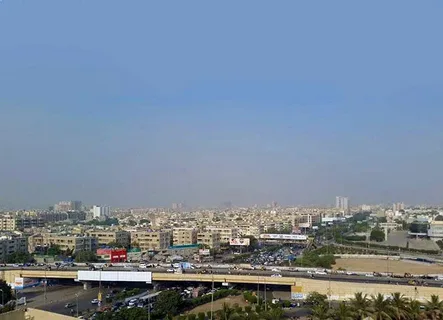
By any reasonable measure, Sindh is the province that fits this description most clearly. The presence of Karachi alone the country’s largest city and its commercial and financial center gives Sindh an urban character that no other province can match. Urban Province Pakistan 2020 studies consistently placed Sindh at the top of rankings for the proportion of its population living in urban areas, and that position has not changed in the years since.
The concentration of commerce, industry, finance, and transportation infrastructure in Karachi and other Sindh cities has made the province a destination for migrants from across the country. People come looking for work, for education, for healthcare, and for opportunities that simply do not exist in the places they are coming from.
Pakistan Urbanization Rate Continues to Rise
The Pakistan urbanization rate is perhaps the single most important number for understanding the scale of what is happening. It measures what share of the total population lives in towns and cities rather than in rural settings, and the direction of that number has been consistently upward for decades.
International development reports and demographic studies have all tracked the same trajectory Pakistan’s urban population is growing as a share of the total, and the expectation among population experts is that this trend will continue well into the future, probably accelerating rather than stabilizing.
The reasons are not complicated. Employment opportunities are concentrated in cities. Universities and training institutions are primarily located in urban centers. Healthcare facilities of any real quality are overwhelmingly in cities. Industrial development happens where infrastructure already exists. And transportation systems make it possible for people to make the move.
When you put all of those pull factors together, the flow of people from rural areas toward cities makes complete economic sense at the individual level — even when, at the aggregate level, it creates challenges that no city government has fully figured out how to handle.
Urban Settlement in Pakistan
The physical pattern of urban settlement in Pakistan is not uniform across the country, and that variation matters for how policy gets designed and implemented.
Some regions are organized around large metropolitan centers that dominate their surrounding areas economically and politically. Others have more distributed patterns of smaller towns connected to agricultural economies that still function in relatively traditional ways. The growth of urban settlement in Pakistan has not followed a single template — it has been shaped by geography, by the location of industrial investment, by the presence of transport corridors, and by historical patterns of migration.
What has been consistent, regardless of which city you are looking at, is the pressure that rapid growth places on the systems that are supposed to support it. Housing gets built faster than planning frameworks can accommodate. Road networks designed for smaller populations get overwhelmed. Water and sanitation infrastructure falls behind. Public services that were stretched before migration accelerated get pushed past their limits.
Managing urban settlement in Pakistan has become one of the defining policy challenges of the current era, and there are no easy answers — the growth is happening whether or not the infrastructure is ready for it.
Which Is the Most Rural Province of Pakistan?
If Sindh sits at one end of the urban-rural spectrum, Balochistan sits firmly at the other. It is widely and consistently identified as the most rural province of Pakistan, and the reasons are straightforward when you look at the geography.
Balochistan covers roughly half of Pakistan’s total land area a vast expanse of mountains, desert, and remote terrain. But its population is relatively small compared to its size, and much of that population lives in dispersed communities, agricultural settlements, and areas that are physically cut off from the kind of connectivity that drives urbanization elsewhere.
Being the most rural province of Pakistan is not without its specific challenges. Limited infrastructure, lower population density, and geographic isolation combine to make service delivery difficult and economic development slower than in more accessible parts of the country. The distance between communities and between communities and administrative centers creates governance challenges that more densely settled provinces do not face in the same way.
Urbanization in Pakistan Essay: Key Themes
Students and researchers looking for Urbanization in Pakistan essay angles will find that the topic opens onto almost every dimension of contemporary Pakistani society it is genuinely hard to think of an area that urbanization does not touch.
The economic dimension is the most obvious. Cities generate economic activity, create employment, support innovation, and attract investment. Businesses benefit from the scale that urban markets provide, from the availability of skilled workers, and from the infrastructure that makes commerce possible.
But the social and environmental dimensions are just as important, and they often tell a more complicated story. Overcrowding, air pollution, housing shortages, traffic that consumes hours of people’s lives, and pressure on water supplies are not incidental side effects of urban growth in Pakistan they are central features of the urban experience for millions of people right now.
The Urbanization in Pakistan PDF literature from academic institutions and international organizations tends to land in the same place — better planning, sustained infrastructure investment, and serious environmental management are all necessary if urban growth is going to generate benefits rather than simply concentrate problems.
Economic Impact of Urban Growth
Cities are where Pakistan’s economy happens. That is perhaps an overstatement, but not by much the country’s major urban centers generate a disproportionate share of national income, employ a huge proportion of the formal workforce, and account for the vast majority of domestic and foreign investment.
Industrial zones, financial institutions, technology companies, commercial districts, and logistics hubs are all concentrated in and around urban areas, and they reinforce each other in ways that make it economically rational to keep investing in the same places. The Urban Province Pakistan conversation is, at its core, a conversation about economic geography about where prosperity is being created and who has access to it.
Economists working on Pakistani development are increasingly focused on the question of whether urban growth can be sustained in ways that generate broad prosperity rather than simply enriching a relatively small urban elite while leaving the majority of urban residents in informal settlements without adequate services.
Social and Environmental Challenges
Rapid urbanization has a way of revealing infrastructure weaknesses that were manageable at smaller scales but become critical problems at larger ones. Roads, public transportation, water systems, electricity grids, and healthcare facilities all of these are under pressure in Pakistani cities, and the pressure is not going away.
Environmental concerns have climbed up the agenda as Pakistani cities have grown denser and more polluted. Air quality in Lahore and Karachi has become a serious public health concern. Waste management in cities that are growing faster than their disposal systems can handle has become a visible problem. The shrinking of green space as development spreads has reduced the quality of urban life in ways that affect health and wellbeing.
The experts working on these issues tend to converge on the same message: urban growth cannot be managed by reacting to problems after they have already developed. It requires coordinated, forward-looking planning that takes environmental limits seriously alongside economic and population projections.
Expert Perspectives
People who spend their careers studying urban development in Pakistan are broadly consistent in their priorities, even when they disagree on specifics. Long-term planning matters more than short-term fixes. Infrastructure investment needs to get ahead of population growth rather than perpetually chasing it. Environmental considerations need to be built into development frameworks from the beginning rather than treated as optional add-ons.
Researchers examining Urban Province Pakistan trends have also identified a pattern worth paying attention to: the concentration of investment and opportunity in a small number of very large cities primarily Karachi and Lahore has created pressure on those cities that might have been better distributed. Secondary cities that received more investment might have absorbed some of the migration that has instead piled into the largest metropolitan centers.
This is a policy lever that has not been fully pulled yet, and many experts believe that encouraging balanced regional development is one of the more promising strategies available.
Future Outlook
The direction of travel seems clear Pakistan’s urban population is going to keep growing, and cities are going to keep playing a more central role in national economic and social life. The question is not whether urbanization will continue but whether it will be managed in ways that make city life genuinely better for the people living it.
Investment in transportation, digital infrastructure, housing, and public services can help cities absorb growth without simply concentrating its costs on the people with the least ability to escape them. Rural development initiatives that create genuine economic opportunities outside the major cities could reduce some of the migration pressure, giving people real choices rather than making the city the only option worth considering.
As the Pakistan urbanization rate continues its upward trajectory, the decisions made over the next decade or two about where to invest, how to govern, and how to plan will shape what Pakistani cities actually feel like to live in for millions of people who have no option but to be there.
Conclusion
Urban Province Pakistan is more than an academic phrase it is shorthand for one of the most consequential transformations happening in the country right now. The movement of people toward cities, the concentration of economic activity in urban centers, and the pressure that rapid growth places on infrastructure and governance are all part of a single story that is still being written.
Whether you are coming to this topic through Urban Province Pakistan Wikipedia searches, Urban Province Pakistan PDF reports, or trying to understand urban settlement in Pakistan from a policy or research perspective, the core conclusion is the same: urbanization is central to Pakistan’s future, and how well the country manages it will go a long way toward determining what that future actually looks like.
For policymakers, business leaders, researchers, and ordinary citizens trying to understand a country that is changing faster than most people fully appreciate, getting to grips with these urban trends is not optional. It is essential.
FAQs
What are the urban areas of Pakistan?
Pakistan’s major urban centers include Karachi, Lahore, Faisalabad, Rawalpindi, Islamabad, Multan, Peshawar, Quetta, Hyderabad, and Gujranwala, among others. These cities serve as the primary hubs for commerce, industry, education, healthcare, and government activity across the country. Beyond these well-known names, dozens of smaller cities and towns are also classified as urban areas under demographic definitions, and many of them are growing rapidly as the broader urbanization trend continues to pull people out of rural settlements.
What is the national drink of Pakistan?
Pakistan does not have a legally designated national drink no official state declaration exists naming one beverage above others. However, sugarcane juice is the drink most commonly associated with that informal distinction in popular culture and everyday conversation. It is widely consumed across both urban and rural settings, deeply embedded in the country’s food culture, and available from street vendors in virtually every city and town. Its cultural reach and everyday presence make it the closest thing Pakistan has to an unofficial national drink.
What are the 5 provinces of Pakistan?
Pakistan currently has four constitutionally recognized provinces: Punjab, Sindh, Khyber Pakhtunkhwa, and Balochistan. Gilgit-Baltistan and Azad Jammu and Kashmir exist as distinct administrative territories with their own governance arrangements, though their constitutional status differs from that of the four main provinces. The question of whether additional provinces should be created particularly through the subdivision of Punjab comes up periodically in political debate, but no new province has been formally established through the legislative process as of now.