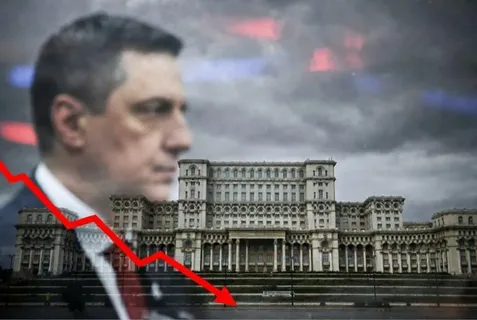
The Romania political crisis 2026 has entered a crucial new stage after weeks of negotiations following a deeply contested election. Political leaders are working to establish a Romania coalition government capable of restoring stability after months of uncertainty.
The latest developments have attracted international attention as Romania, an important member of the European Union and NATO, seeks to move forward after a period of political division. Questions about what happened in Romania election debates, coalition negotiations, and Romania results continue to dominate headlines across Europe.
Background
The roots of the Romania political crisis 2026 can be traced to growing public frustration over economic challenges, political polarization, and concerns about government performance. Over the past several years, Romanian politics has become increasingly fragmented, making it difficult for any single party to secure a governing majority.
The Romania recent elections reflected these divisions. Multiple parties competed aggressively for support, presenting voters with competing visions for the country’s future. The result was a fragmented parliament that made coalition-building essential.
Political analysts noted that voters were seeking both stability and reform. However, the election outcome created a complicated political landscape in which no party possessed enough seats to govern alone.
What Happened in Romania Election?
One of the most frequently asked questions following the vote has been: What happened in Romania election campaigns that produced such a divided outcome?
The election saw strong competition among traditional political parties, reform-oriented groups, and emerging political movements. Economic concerns, inflation, public services, and governance issues became major campaign topics.
Voter turnout remained significant as citizens recognized the importance of the election for Romania’s future. Once ballots were counted, the Romania results revealed a parliament divided among several major political forces.
The outcome made coalition negotiations unavoidable. Rather than producing a clear winner, the election generated a complex political environment requiring compromise among rival parties.
Romania Results Trigger Coalition Talks
The official Romania results immediately triggered discussions about forming a governing alliance. Political leaders began negotiations aimed at creating a stable administration capable of addressing domestic and international challenges.
Several parties emphasized the need for cooperation despite ideological differences. The primary objective became preventing prolonged political paralysis while ensuring that government institutions could continue functioning effectively.
The Romania coalition government discussions were closely watched by investors, European partners, and citizens concerned about economic stability. Financial markets generally prefer predictable governance, making coalition negotiations particularly important.
As talks progressed, political observers described the process as one of the most significant periods in Romanian politics in recent years.
Romania Coalition Government Negotiations
The formation of a Romania coalition government has required extensive negotiations among parties with differing priorities. Coalition-building in parliamentary systems often involves compromises on policy, cabinet positions, and legislative agendas.
Political leaders have emphasized that any coalition must focus on economic growth, public services, infrastructure investment, and strengthening democratic institutions.
Supporters of coalition governance argue that cooperation can produce broader political consensus. Critics, however, worry that alliances between rival parties may create tensions within government.
Despite these concerns, many analysts believe a coalition remains the most realistic path toward stability following the Romania political crisis 2026.
Romania Forward: What Comes Next?
The phrase Romania forward has become increasingly common in political discussions as leaders seek to reassure citizens that progress remains possible despite recent turmoil.
Government officials have emphasized the importance of maintaining economic confidence, attracting investment, and strengthening Romania’s position within Europe. Supporters of reform argue that the current political transition presents an opportunity to modernize institutions and improve governance.
At the same time, opposition parties continue pushing for accountability and transparency. They argue that political stability must be accompanied by meaningful reforms that address public concerns.
The challenge for the incoming government will be balancing these competing expectations while maintaining coalition unity.
Reactions From Political Leaders
Political figures across the spectrum have commented on the evolving situation. Government representatives have stressed the importance of responsible leadership during a period of uncertainty.
Several political leaders have called for cooperation and compromise, arguing that national interests should take priority over partisan disputes. Others have emphasized the need to respect voter concerns expressed during the election campaign.
European officials have also followed developments closely, recognizing Romania’s importance within regional institutions. Many international partners hope the coalition process will result in a stable and effective government.
These reactions reflect the broader significance of the Romania political crisis 2026 beyond the country’s borders.
Economic Impact of the Crisis
The Romania political crisis 2026 has had important economic implications. Investors generally prefer stable political environments because uncertainty can affect business decisions and market confidence.
During periods of political instability, governments often find it more difficult to implement major reforms or approve significant economic legislation. This can create challenges for businesses, consumers, and public institutions.
Economists have noted that a functioning Romania coalition government could help restore confidence and provide greater policy predictability. Much will depend on the coalition’s ability to maintain unity and implement its agenda.
The economic dimension of the crisis remains one of the most closely watched aspects of current developments.
Regional and International Significance
Romania occupies an important strategic position in Eastern Europe. As a member of NATO and the European Union, developments in Romanian politics have implications beyond national borders.
International partners are monitoring the formation of the new government because political stability contributes to regional security and economic cooperation. A stable administration can strengthen Romania’s role within European institutions and regional initiatives.
The Romania recent elections therefore represent more than a domestic political event. They are part of a broader conversation about governance, democracy, and stability in Europe.
Challenges Facing the New Government
Even if coalition negotiations succeed, significant challenges remain. Economic pressures, public expectations, and political divisions will continue testing the new administration.
The government must also address issues related to infrastructure, healthcare, education, and public sector efficiency. Many voters expect tangible improvements rather than political rhetoric.
Maintaining coalition unity could prove difficult if disagreements emerge over policy priorities. Successful governance will require continuous negotiation and compromise among coalition partners.
How effectively leaders manage these challenges may determine whether the Romania political crisis 2026 becomes a turning point or merely another chapter in ongoing political instability.
Conclusion
The Romania political crisis 2026 has highlighted both the challenges and resilience of the country’s democratic system. Following a highly competitive election, political leaders are working to form a Romania coalition government capable of providing stability and direction.
Questions about what happened in Romania election campaigns, coalition negotiations, and Romania results continue to shape political debate. While uncertainty remains, many observers believe the coalition process offers an opportunity for constructive compromise.
The coming months will reveal whether political leaders can transform a period of division into a foundation for effective governance. For now, Romania stands at an important crossroads as it seeks to move forward after one of the most significant political transitions in recent years.
FAQs
What are the biggest issues in Romania?
Romania faces several major challenges, including economic development, healthcare improvements, infrastructure modernization, education reform, and public sector efficiency. Many voters are also concerned about political stability and government accountability. These issues played a significant role during recent election campaigns and continue to influence public debate.
Which country is Romania’s biggest enemy?
Romania does not officially identify any country as its biggest enemy. As a member of NATO and the European Union, Romania maintains diplomatic relations with most countries and focuses on regional security cooperation. Political analysts generally discuss security concerns in terms of broader geopolitical challenges rather than specific national enemies.
Is Romania in danger of war?
There is currently no indication that Romania is facing an immediate threat of war. However, like many countries in Eastern Europe, Romania closely monitors regional security developments. Its membership in NATO provides important security guarantees, while government officials continue working with international partners to maintain stability and defense preparedness.