
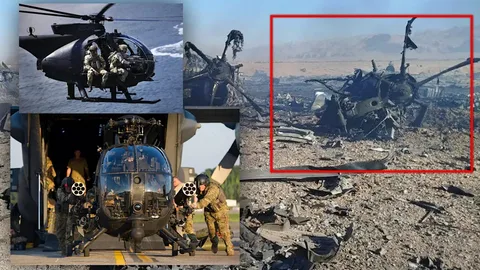
The Middle East is on edge again, and this time the situation feels different. Reports of direct military escalation between Washington and Tehran are dominating international news, triggered by claims that Iran shot down a US helicopter near the Strait of Hormuz. Washington responded swiftly, and now the world is watching to see how far this goes.
As “US attacks Iran today” becomes one of the most searched phrases globally, governments from London to Beijing are urging restraint. But urging restraint and achieving it are two very different things in a region where miscalculations have consequences far beyond the immediate parties involved.
Background
US-Iran tensions have never really gone away. For years, the two countries have circled each other across disagreements over nuclear ambitions, regional military presence, economic sanctions, and influence over smaller states caught in between. There have been moments where diplomacy has briefly lowered the temperature but they never last long.
Analysts have warned repeatedly that the architecture of confrontation between Washington and Tehran is fragile enough that a single incident can set things moving in a very dangerous direction. Maritime security flashpoints, proxy clashes, and aggressive military posturing have all added fuel to an already volatile situation.
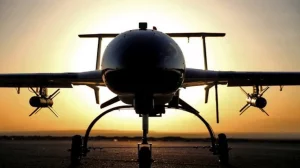
The latest flashpoint involves a reported US Apache helicopter shot down by Iran near one of the world’s most strategically sensitive waterways. The details are still coming in, but the incident has already shifted the situation from tense to critical.
Iran Down US Helicopter Claims Spark Crisis
When reports first emerged that Iran had shot down a US Apache helicopter near the Strait of Hormuz, the reaction was immediate. Military analysts, governments, and markets all registered the significance of an incident in a waterway that handles a substantial share of the world’s oil shipments every single day.
Early accounts indicate the helicopter was operating during a period of already heightened military activity in the Gulf. The exact circumstances remain contested both sides have their own version of events but the outcome is not in dispute. A US military asset is down, American personnel are involved, and Washington is not treating this as something to absorb quietly.
The phrase “US Apache helicopter shot down by Iran” quickly became one of the most searched terms online as people around the world tried to piece together what actually happened and what comes next.
US Attacks Iran Today Following Escalation
Washington’s response did not take long. US military action targeting facilities connected to Iranian military operations was announced, representing a sharp and deliberate escalation from a government that had been watching Iranian provocations accumulate for months.
Officials framed the strikes as a necessary response to direct threats against American personnel and assets. The message was clear: the helicopter incident was not going to be absorbed without consequence. But in a region already stretched thin with competing conflicts and fragile alliances, responses have a way of generating counter-responses.
International observers are now asking the question that always follows these moments — where does it stop? The phrase “US attacks Iran today” has taken over headlines, and behind every headline is a genuine anxiety about whether this becomes something much larger.
Iran’s Response to the Latest Developments
Tehran was not quiet. Iranian officials came out swinging, condemning the US military action in strong terms and framing it as deliberate aggression against a sovereign nation. Government representatives made clear that Iran considers itself to have both the right and the obligation to defend its security interests and that this confrontation is not one it chose to start.
State media has been covering the crisis wall-to-wall, leaning heavily into themes of national sovereignty and regional resistance to foreign military presence. Iran News is trending across international platforms for exactly this reason there is an audience inside and outside Iran that is paying very close attention to how Tehran frames what just happened.
Political analysts watching Tehran note that the government is facing a delicate balancing act. Domestic expectations demand strength. International realities demand caution. How Iranian leadership navigates that tension in the coming days will shape what happens next.
Iran Attack on Israel Today Update
The situation does not exist in isolation. Running alongside the US-Iran confrontation is a continuing thread of tension involving Israel, and the two storylines are feeding each other in ways that concern security experts across the board.
Reports connected to an Iran attack on Israel today update have added another layer of complexity to an already crowded crisis picture. The prospect of multiple active fronts emerging simultaneously Israel on one side, US forces on another is exactly the scenario that regional governments have been quietly dreading.
Military analysts are spending considerable time mapping the connections between these threads. Whether they remain parallel developments or begin to converge into something bigger is one of the defining questions of this moment.
US Strikes Iran and Regional Reactions
The US strikes on Iranian-linked facilities have landed hard across the region. Gulf states, caught between their economic relationships with the West and their geographic proximity to Iran, are watching events with obvious anxiety. Several governments have publicly called for restraint from both sides careful diplomatic language for a situation they feel powerless to directly influence.
Behind the scenes, diplomatic channels are active. International mediators are making calls, holding meetings, and trying to find any opening that could reduce the temperature before another incident pushes things further. Whether those efforts gain traction or get overtaken by events is impossible to predict.
The consensus among regional observers is simple: the situation is very fragile, and it would not take much to break it.
Impact on Global Markets
Financial markets have already felt the tremors. Energy traders moved quickly once the scope of the escalation became clear, because anything that threatens the flow of oil through the Gulf is a direct economic concern for much of the world.
Oil prices are sensitive to exactly this kind of instability, particularly when the countries involved are as strategically positioned as Iran and the United States. Investors are running risk assessments on supply chain disruptions, shipping insurance costs, and the broader economic fallout of a prolonged confrontation.
Global markets do not like uncertainty, and right now uncertainty is the defining feature of this story. Until there is some clarity on where this is heading, financial volatility is likely to continue.
Military Analysis
Defense analysts are careful not to overstate where this is heading, but they are equally careful not to dismiss the risks. Both the United States and Iran have significant military capabilities, and a sustained confrontation between them would be costly for both sides in ways that go well beyond the initial exchange.
Neither government, most analysts agree, is actively seeking a full-scale war. But the history of conflicts in this region is full of moments where neither side wanted a major war and ended up in one anyway. Incidents have a logic of their own, especially when domestic political pressures are high on both sides.
The helicopter episode and what followed demonstrate exactly how fast things can move from manageable tension to active military exchange. Every analyst currently watching this situation is emphasizing the same thing the communication channels between Washington and Tehran need to stay open, because the alternative is a dangerous dependence on assumptions about what the other side will or will not do next.
Humanitarian Concerns
The military and political dimensions of this crisis are getting most of the attention, but humanitarian organizations are sounding their own alarms. If military operations continue and expand, the consequences for civilian populations across the region could be severe.
Infrastructure damage, displacement, disrupted supply chains for food and medicine these are the downstream effects of conflicts that tend to be invisible in the early headlines but devastating in practice. Aid organizations are watching developments closely and positioning resources as best they can under conditions of deep uncertainty.
International bodies have been consistent in their message: civilian lives must be protected regardless of the political and military decisions being made at the top. Whether that message is heard in the current climate remains to be seen.
US-Iran War Updates: What Happens Next?
The next few days carry enormous weight. Decisions made or not made in Washington and Tehran over this period will go a long way toward determining whether this crisis becomes something history remembers as a near-miss or something much worse.
Current US-Iran war updates point to elevated military readiness on both sides while back-channel diplomatic conversations continue out of public view. The pressure for de-escalation is real and is coming from multiple directions allies, international institutions, economic stakeholders, and governments across the region that have the most to lose from a wider conflict.
But pressure and outcomes are not the same thing. The possibility of additional military action has not been taken off the table, and the conditions that produced this crisis have not changed simply because strikes have been exchanged.
Conclusion
What is unfolding between Washington and Tehran is a reminder of just how quickly the Middle East’s underlying tensions can break through to the surface. The reported helicopter incident and the US military response that followed have pushed the region into one of its more genuinely dangerous moments in recent years.
Diplomatic efforts are running alongside military ones, and that is important. But the coming weeks will reveal which set of efforts proves more consequential. For now, the world is watching governments calculating their positions, markets pricing in risk, and ordinary people in the region facing the uncertainty that comes with being close to a crisis that neither side seems fully in control of.
FAQs
What does Iran say about the US strike?
Iranian officials have condemned the military action in unambiguous terms, describing it as a direct violation of national sovereignty and a destabilizing act of aggression. Government representatives have made clear that Iran considers itself entitled to defend its security interests while also framing the strikes as evidence of what they call persistent American hostility toward the Iranian state. Official statements have stopped short of announcing specific retaliatory steps, but the language used leaves little doubt that Tehran is treating this as a serious provocation requiring a serious response.
What would Iran do to the US in retaliation?
Iran has a range of options and has used most of them at various points in the past proxy attacks through allied militias in Iraq, Syria, and Yemen; cyber operations targeting US infrastructure and financial systems; harassment of commercial shipping in the Gulf; and direct missile strikes when it has judged the situation to warrant them. The choice of response will depend heavily on how Iranian leadership reads the political moment, how much domestic pressure exists to act decisively, and what signals it is receiving from regional and international actors about how far it can go before triggering a response it cannot manage.
Did Iran strike a deal with the USA?
No comprehensive agreement between Iran and the United States currently exists. There have been periods of negotiation most significantly around Iran’s nuclear program but those efforts have repeatedly broken down, and the relationship has deteriorated significantly since the US withdrawal from the 2015 nuclear deal. Recent military exchanges have made the prospect of near-term diplomatic progress considerably harder. Significant and fundamental differences remain between the two governments on virtually every major issue that divides them.