

Military strikes have resumed along the Israel-Lebanon border despite active ceasefire discussions, pushing Israel attacks Lebanon 2026 back into international headlines. Cross-border fire, airstrikes, and military responses are happening while diplomats are still trying to prevent exactly this kind of escalation.
The timing is troubling. Efforts to de-escalate were already fragile, and the renewed violence has raised a direct question: are ceasefire arrangements in this region capable of holding at all?
Background
The Israel-Lebanon conflict does not have a clean starting point. Tensions along this border stretch back decades, shaped by disputes over security, armed groups operating in southern Lebanon, and a web of regional rivalries that involve actors well beyond the two countries directly on the border.
Ceasefires have come and gone repeatedly. Some reduced the violence for months. None produced lasting stability. Each time fighting resumed, it did so against a background that was already complicated — which is where things stand now.
The latest round of military activity has revived concerns that the region is moving toward another prolonged confrontation. Israel Lebanon news is dominating international coverage for reasons that go beyond any single incident.
Israel Attacks Lebanon After Ceasefire
The fact that military activity is continuing despite ceasefire discussions has become the central story. Israel attacks Lebanon after ceasefire is not just a headline — it is the detail that analysts and diplomats are focusing on, because it raises uncomfortable questions about whether agreements made on paper mean anything on the ground.
Ceasefires in this part of the Middle East have a history of breaking down quickly. A single incident — a drone, a strike, a cross-border rocket — can restart the cycle before mediators have time to respond. That dynamic is playing out again now, and the pattern is familiar enough to be genuinely worrying.
Diplomatic channels are still open. But military realities are moving faster than the diplomats.
What Happened on the Border?
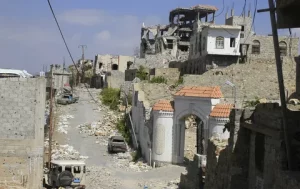
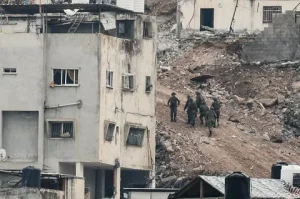
Military operations have continued in parts of southern Lebanon. Israeli authorities have framed their actions as responses to security threats near the border — a position they have maintained consistently across multiple rounds of this conflict.
Lebanese officials and local communities tell a different story, with concerns focused on strikes hitting civilian areas and damaging infrastructure. Both accounts are circulating simultaneously, which is part of why people are actively searching terms like “Did Israel bomb Lebanon yesterday?” and “Did Israel bomb Lebanon this week?” — they want to cut through the competing narratives and understand what actually happened.
The situation on the ground is still shifting. Verified information is arriving in pieces.
Lebanon Attack on Israel Today
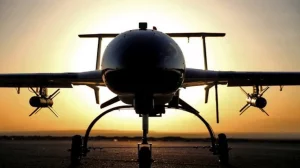
The border has not been quiet from one direction only. Reports of incoming projectiles, drones, and other security incidents have kept Israeli forces on alert and given military planners on both sides reasons to justify continued operations.
Lebanon attack on Israel today remains a thread that analysts are tracking separately from Israeli strikes — because the question of who moved first, and when, matters enormously for how the next phase of the conflict develops.
Security experts have been consistent on one point: every exchange raises the probability of miscalculation. Small confrontations can become large ones fast when both sides are operating in a state of high alert and neither wants to appear weak.
Regional Reactions
Governments across the Middle East and further abroad have called for restraint. The language in those statements is careful — nobody wants to be seen as taking sides openly, and several regional actors have their own complicated relationships with both Israel and Lebanon.
International organizations have pushed for civilian protection and a return to dialogue. Humanitarian agencies are watching closely because the communities closest to the border are the ones absorbing the immediate consequences — disrupted lives, damaged infrastructure, and an atmosphere of uncertainty that does not lift between incidents.
The conflict has also become harder to separate from the wider regional picture. Iranian involvement, shifting security alliances, and ongoing instability elsewhere in the Middle East all feed into how this situation develops and how outside actors choose to respond.
Why the Conflict Matters
Israel attacks Lebanon 2026 is not a contained border dispute. The Middle East carries too much strategic weight — energy supply lines, trade routes, overlapping alliances — for a conflict here to stay local for long.
Serious escalation would move through regional security and into global markets and diplomatic relationships fairly quickly. That is why policymakers and investors in capitals far from the border are watching the situation as closely as they are.
The humanitarian dimension matters too, and it tends to get less attention than the strategic one. People living near active military zones are dealing with this on a daily basis — not as a news story, but as the reality of where they live.
Israel Attack Lebanon Latest News
As of the latest available reports, military tensions remain elevated. Diplomatic efforts have not collapsed, but they have not produced anything durable either. Analysts say the next few days will matter — whether the situation stabilizes or tips further will depend heavily on decisions made in the next short window.
Statements from military officials, political leaders, and international mediators are being parsed carefully right now. Each one carries weight because the gap between a managed tension and a broader confrontation is narrower than it looks from the outside.
Searches for Israel attack Lebanon latest news are climbing because people sense that gap.
Israel Attacks Lebanon Map: Why Geography Matters
Southern Lebanon shares a direct border with northern Israel, and that geography has defined the conflict for decades. When people search for Israel attacks Lebanon map, they are usually trying to understand proximity — how close incidents are to towns, population centers, and key infrastructure.
The border region contains locations that both sides treat as strategically important. That is not new. But it means that even relatively limited military activity in this area carries significance beyond the immediate incident, because the terrain itself is contested in ways that go back much further than 2026.
Impact on the Wider Middle East
This crisis is landing in a region that is already under strain. Multiple conflicts and unresolved disputes are running simultaneously, and the Lebanon-Israel border is now one more pressure point in an already crowded picture.
If the situation continues to escalate, there is a real risk that additional actors get drawn in — which would make a negotiated solution considerably harder to reach. Regional leaders understand this. The pressure to prevent further escalation is not just diplomatic posturing. The consequences of getting it wrong are serious enough that even governments with competing interests have reasons to want this contained.
Conclusion
The Israel attacks Lebanon 2026 developments expose how difficult it is to maintain ceasefire agreements in a region where underlying grievances have not been resolved and multiple armed actors operate with conflicting objectives.
People asking “Did Israel bomb Lebanon yesterday?” or “Did Israel bomb Lebanon this week?” are not just looking for headlines. They are trying to track a situation that could deteriorate quickly and affect far more than the immediate border area.
Diplomats are still working. The border is still active. How those two realities resolve — or fail to — will define what comes next.
FAQs
Did Israel attack Lebanon recently?
Yes. Military activity and cross-border incidents have continued despite ceasefire efforts. International outlets have reported renewed airstrikes and security exchanges that have kept the border in a state of active tension. The scope and frequency of operations are still developing, so current figures and details should be verified against the latest reporting from credible news sources.
Why did Israel invade Lebanon in 2026?
Israeli officials have consistently cited security threats near the border as justification for military operations. The broader context, though, is a long-running conflict driven by border security disputes, armed groups active in southern Lebanon, and regional rivalries involving Iran and other actors. Most analysts view the 2026 developments not as a single decision but as the latest chapter in a cycle that has been running for decades.
How many Lebanese were killed by Israel?
Casualty figures are still being verified and change as reporting develops. Because the conflict is active, numbers from different sources and timeframes can vary significantly. For the most current and accurate figures, the best approach is to check recent reporting from established international news organizations and official statements from humanitarian agencies on the ground.