

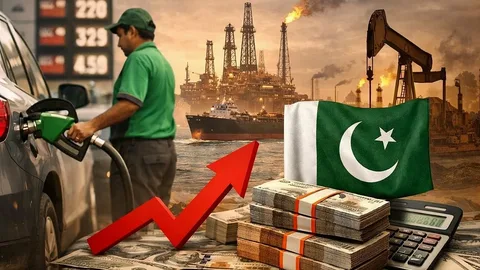

The petrol price in Pakistan today has become a major topic of discussion as global energy markets react to rising tensions in the Middle East. Investors, governments, and consumers are closely monitoring crude oil prices, which have shown volatility due to concerns about regional instability and potential disruptions to energy supplies.
At the same time, discussions surrounding an India aviation fuel price package and changing fuel policies across South Asia have increased interest in how oil market movements may affect transportation, inflation, and economic growth. While no immediate crisis has emerged, fuel markets remain sensitive to geopolitical developments.
Background
Energy prices often react quickly to geopolitical uncertainty. The Middle East remains one of the world’s most important oil-producing regions, and any conflict involving major regional powers can influence global supply expectations.
Recent tensions have renewed concerns about shipping routes, oil exports, and energy infrastructure. Even when physical supplies remain uninterrupted, fears of future disruptions can push traders to adjust prices. This reaction frequently affects petrol price today calculations in countries that rely heavily on imported fuel.
Pakistan imports a significant portion of its petroleum products. As a result, movements in international oil benchmarks are usually reflected in local fuel costs after regulatory reviews and pricing adjustments.
Why Crude Oil Prices Matter
The global economy depends heavily on oil. Transportation networks, industrial production, agriculture, and aviation all rely on petroleum products. When crude oil prices increase, businesses often face higher operating costs.
Airlines are particularly vulnerable because fuel represents one of their largest expenses. This is why policymakers and industry experts are paying attention to discussions regarding an India aviation fuel price package, which aims to manage fuel-related pressures in the aviation sector.
Higher crude prices can also contribute to inflation. Businesses may pass increased transportation and production costs to consumers, affecting the prices of everyday goods and services.
Pakistan’s Fuel Market and Current Concerns
The fuel price in Pakistan is influenced by several factors beyond international oil prices. Exchange rates, taxation policies, transportation costs, and regulatory decisions all play a role in determining retail fuel prices.
When global markets experience uncertainty, Pakistan faces additional challenges because fluctuations in oil prices can impact import bills and foreign exchange requirements. Policymakers must balance consumer affordability with fiscal realities.
Many consumers searching for Petrol News are particularly interested in whether international developments could lead to future price adjustments. While authorities continue monitoring market conditions, analysts emphasize that long-term trends are often more important than short-term volatility.
Impact on Transportation and Aviation
The transportation sector is often among the first to feel the effects of rising fuel costs. Trucking companies, public transport operators, and logistics firms closely track changes in fuel prices because fuel expenses directly affect profitability.
The aviation industry faces similar challenges. Airlines monitor international energy markets daily because even small changes in jet fuel prices can significantly influence operating budgets.
The discussion around an India aviation fuel price package highlights how governments across the region are exploring strategies to reduce pressure on airlines and maintain connectivity. Aviation experts argue that stable fuel pricing helps support tourism, trade, and economic activity.
Regional Implications for South Asia
South Asian economies are closely connected through trade and transportation networks. Changes in energy costs in one country can have indirect effects throughout the region.
India, Pakistan, Bangladesh, Nepal, and Sri Lanka all monitor international oil markets carefully. Rising crude oil prices may influence transportation expenses, manufacturing costs, and consumer prices across multiple sectors.Regional governments are therefore focusing on energy security, diversification of supply sources, and long-term strategies aimed at reducing vulnerability to external shocks.
Expert Views on Market Stability
Energy analysts note that oil markets often react strongly to uncertainty before eventually stabilizing. Historical experience suggests that short-term price spikes do not always translate into long-lasting increases.
Experts also point out that global oil inventories, production capacity, and shipping conditions play important roles in determining actual market outcomes. While geopolitical events attract significant attention, supply and demand fundamentals continue to shape long-term pricing trends.According to market observers, consumers should focus on official announcements regarding petrol price today rather than speculation circulating on social media or unofficial platforms.
What Consumers Should Watch
Consumers interested in the petrol price in Pakistan today should monitor several key indicators:
Global Oil Benchmarks
International crude prices remain the primary factor influencing future fuel adjustments. Significant increases or decreases often affect local markets over time.
Exchange Rate Movements
Currency fluctuations can alter the cost of imported petroleum products even when global oil prices remain stable.
Government Policies
Tax measures, subsidies, and regulatory decisions can influence the final retail price paid by consumers.
Regional Energy Developments
Initiatives such as the India aviation fuel price package and other energy-sector reforms may offer insights into broader regional trends.
Economic Impact on Households
Fuel prices affect more than transportation. Rising energy costs can influence food distribution, manufacturing, and service-sector operations. Households may experience indirect effects through higher prices for goods and services.
Businesses often adjust budgets when energy costs increase. Small enterprises, in particular, may face challenges if fuel expenses rise sharply over an extended period.
For this reason, the fuel price in Pakistan remains a closely watched economic indicator. It influences consumer confidence, business planning, and inflation expectations.
Looking Ahead
The outlook for global energy markets will depend on geopolitical developments, production decisions by major oil-producing countries, and broader economic conditions.
While uncertainty remains, energy experts believe that market fundamentals will continue to play a decisive role in determining future price movements. Governments across South Asia are expected to monitor developments closely and respond as needed to protect economic stability.
For consumers, businesses, and policymakers alike, the relationship between crude oil prices, regional energy policies, and the petrol price in Pakistan today will remain an important issue in the months ahead.
Conclusion
The ongoing focus on Petrol News reflects growing public interest in how global events influence local economies. Rising geopolitical tensions have once again highlighted the importance of energy security and stable fuel supplies.
Although uncertainty persists, market analysts stress that long-term outcomes will depend on actual supply conditions rather than speculation alone. As governments and industries adapt to changing circumstances, fuel prices will continue to be a critical economic indicator across South Asia.
FAQs
Will petrol prices increase in India due to war?
Petrol prices in India could face upward pressure if geopolitical tensions lead to sustained increases in global crude oil prices. However, actual retail prices depend on several factors, including government policies, taxation, exchange rates, and market conditions. Temporary spikes in oil prices do not always result in immediate increases at fuel stations.
Why is petrol costly in Pakistan?
Petrol can be expensive in Pakistan because the country imports a large share of its petroleum requirements. International crude oil prices, currency exchange rates, transportation expenses, taxes, and regulatory policies all contribute to the final price consumers pay. Changes in any of these factors can influence fuel costs.
Which country has the best petrol in the world?
There is no single country universally recognized as having the “best” petrol. Fuel quality is generally measured by factors such as refining standards, octane ratings, environmental regulations, and consistency. Countries with advanced refining industries and strict fuel-quality regulations are often regarded as producing high-quality petroleum products.