
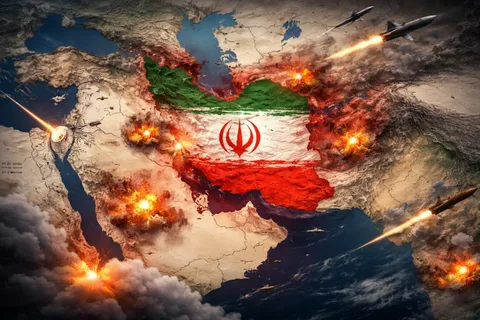
The Iran war 2026 updates continue to dominate global headlines as tensions between the United States and Iran remain dangerously high. Military strikes, drone attacks, and naval confrontations have raised fears of a broader regional conflict involving several Middle Eastern countries.
As governments around the world call for restraint, analysts are debating who started the war in Iran 2026, whether the fighting can be contained, and how long the conflict may continue. The crisis has already affected oil markets, regional security, and international diplomacy.
Background: How Did the Crisis Start?
Understanding who started the war in Iran 2026 requires looking at months of escalating tensions across the Middle East. Relations between Washington and Tehran had been strained for years over Iran’s nuclear activities, regional influence, and support for allied groups across the region.
The immediate crisis emerged after a series of incidents involving military assets, maritime security concerns, and allegations of attacks on strategic targets. Both sides accused each other of aggressive actions, while diplomatic efforts struggled to prevent further escalation.
As tensions increased, military deployments expanded throughout the Gulf region. International observers warned that a single miscalculation could trigger a larger confrontation between the two countries.
Iran-US War Start Date 2026
Many readers searching for the Iran US war start date 2026 are looking for a single moment when the conflict officially began. However, experts note that modern conflicts often develop gradually through a series of military and political events.
The current phase of fighting intensified in early June 2026 after a sequence of military exchanges between American and Iranian forces and their regional partners. Those exchanges transformed an already tense standoff into a direct military confrontation.
Since then, both countries have exchanged threats and military actions, while regional governments have attempted to prevent the conflict from spreading further.
US Attacks Iran Today: Latest Developments
Reports regarding US attacks Iran today remain among the most closely watched developments in international news. Military officials have stated that operations are aimed at protecting strategic interests, maintaining regional security, and responding to perceived threats.
Iranian authorities, meanwhile, have condemned the strikes and described them as violations of national sovereignty. Tehran has promised responses it considers proportionate to any military action against its territory.The ongoing cycle of action and reaction has complicated diplomatic efforts. International organizations continue to urge both sides to avoid steps that could widen the conflict.
Why Is the US at War With Iran?
One of the most common questions being asked globally is: why is the US at war with Iran?American officials argue that military actions are linked to security concerns, regional stability, and threats against US personnel and allies. Washington has repeatedly expressed concerns regarding Iran’s military activities and strategic ambitions.
Iran rejects these claims and argues that foreign military pressure has contributed to instability in the region. Iranian leaders maintain that the country has the right to defend itself and its interests.
The disagreement reflects decades of political, military, and diplomatic tensions between the two nations. Those tensions have periodically erupted into crises, though few have reached the intensity seen in 2026.
Who Is Winning the US-Iran War?
Questions about US-Iran war who is winning have become increasingly common as the conflict continues.Military experts caution that determining a clear winner is difficult. The United States possesses significant military capabilities, advanced technology, and a global defense network. Iran, however, maintains strategic advantages related to geography, regional influence, missile capabilities, and asymmetric warfare tactics.
Analysts note that victory in modern conflicts is not always measured solely by battlefield outcomes. Economic resilience, political stability, public support, and diplomatic positioning can be equally important factors.
At present, neither side appears close to achieving a decisive outcome. Instead, both continue to pursue objectives while attempting to manage the risks of a wider regional war.
Regional Impact Across the Middle East
The consequences of the conflict extend far beyond Iran and the United States. Countries throughout the Middle East are closely monitoring developments because the outcome could reshape regional power dynamics.
Security concerns have increased in several Gulf nations. Military installations, energy infrastructure, and maritime routes remain under heightened surveillance as governments prepare for potential spillover effects.The Strait of Hormuz remains a particular focus for international observers. Any disruption to shipping routes could affect global energy supplies and create economic consequences far beyond the region.
Impact on Global Energy Markets
Energy markets have reacted sharply to every major development in the conflict. Oil prices have experienced periods of volatility as traders assess potential risks to supply chains.
Many economists warn that prolonged instability could increase transportation costs, raise fuel prices, and contribute to inflation in multiple countries. Import-dependent economies may face additional pressure if energy supplies become disruptedGovernments worldwide are monitoring the situation closely because the economic effects of the conflict could extend well beyond the Middle East.
International Response
Major world powers have called for restraint and renewed diplomatic engagement. International organizations have emphasized the importance of dialogue and peaceful conflict resolution.
Several governments have offered to facilitate negotiations between Washington and Tehran. However, achieving meaningful progress remains difficult while military operations continue.
Diplomatic experts believe that sustained international pressure may eventually encourage both sides to return to negotiations, though the timing remains uncertain.
What Happens Next?
Predicting Iran war when will it end remains one of the most challenging questions facing analysts. Some believe diplomatic channels could eventually reduce tensions, while others warn that the conflict could continue for months if military exchanges persist.
Future developments will likely depend on several factors, including battlefield events, domestic political considerations, economic pressures, and international diplomatic efforts.For now, uncertainty remains the defining feature of the crisis. Governments, businesses, and citizens around the world continue to monitor developments closely as the situation evolves.
Conclusion
The Iran war 2026 updates illustrate how quickly regional tensions can escalate into a broader international crisis. While debates continue over who started the war in Iran 2026, the immediate challenge for world leaders is preventing further escalation.The conflict has already influenced regional security, global energy markets, and diplomatic relations. Whether the crisis moves toward negotiation or deeper confrontation will depend on decisions made by leaders in Washington, Tehran, and capitals across the world.
As military operations and diplomatic efforts continue simultaneously, the coming weeks may prove decisive in determining the future course of the conflict.
FAQs
What is the conflict between the US and Iran?
The conflict between the United States and Iran stems from decades of political disagreements, security concerns, regional rivalries, sanctions, and disputes over Iran’s military and nuclear programs. The 2026 crisis represents one of the most serious escalations in recent years, involving direct military actions and heightened regional tensions.
Has the US declared war?
As of now, the United States has conducted military operations and responded to perceived threats, but a formal declaration of war depends on constitutional and legal processes. Modern conflicts often involve military engagements without an official declaration of war.
Can the US withdraw from NATO?
The United States can theoretically withdraw from NATO through legal and political procedures. However, NATO remains a cornerstone of American foreign policy and collective defense strategy. Any withdrawal would require significant political decisions and would have major implications for global security and international alliances.