
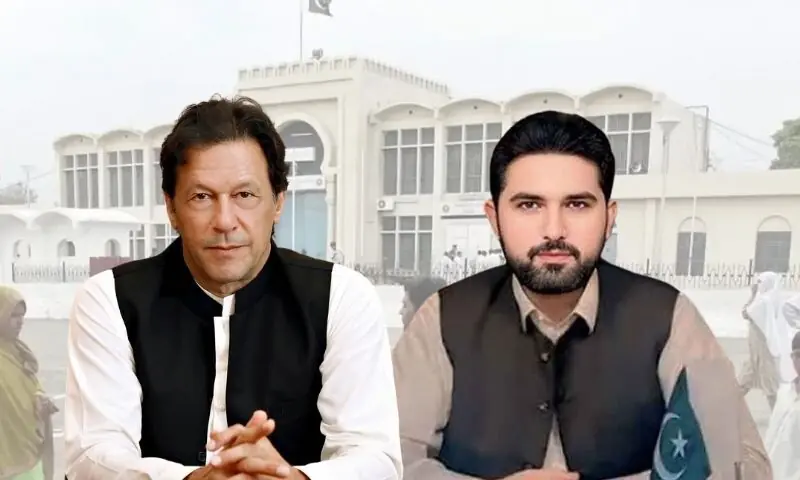

Khyber Pakhtunkhwa Chief Minister Sohail Afridi has become a central political figure in recent days after confirmed reports of a secret meeting with Interior Minister Mohsin Naqvi. Sohail Afridi visits PTI families and senior leaders have also grabbed national attention. His Karachi schedule, a reported letter to Maryam Nawaz, and questions about the legality of his Karachi visit are all part of one fast-moving political story.
Background: Who Is Sohail Afridi?
Sohail Afridi is the current Chief Minister of Khyber Pakhtunkhwa, representing Pakistan Tehreek-e-Insaf (PTI). He rose to the position after Ali Amin Gandapur and has since been seen as one of PTI’s more active executive leaders. He is known for maintaining direct contact with both party workers and government officials, even when such meetings raise eyebrows within PTI’s own ranks.
His recent public and private engagements have drawn widespread media coverage. From the KP CM Sohail Afridi Lahore visit to questions about his Karachi schedule, he has been in the spotlight for all the right and sometimes controversial reasons.
The Secret Meeting With Naqvi: What Happened?
PTI confirmed that KP Chief Minister Sohail Afridi and party chairperson Barrister Gohar Ali Khan held a meeting with Interior Minister Mohsin Naqvi.
PTI Information Secretary Sheikh Waqas Akram stated that the meeting was arranged to discuss the issue of terrorism in KP, particularly in Bannu, where two police personnel and civilians were killed while 25 militants were eliminated in clashes between security forces, a peace committee, and terrorists.
Akram confirmed that the interior minister focused the conversation largely on how terrorism in the region could be brought under control.
This was not just a routine security briefing. According to sources, broader political matters were also on the table including the detention conditions of PTI founder Imran Khan.
Sohail Afridi Visits Qureshi Rashid and PTI Families
Beyond his meeting with Naqvi, Sohail Afridi visits PTI families including those of jailed leaders have been widely reported. Senior PTI leaders such as Shah Mahmood Qureshi and Sheikh Rashid have remained in custody, and their families have been in contact with party leadership seeking updates on their conditions and legal status.
Sohail Afridi visits Qureshi Rashid family households as part of what appears to be a broader effort to maintain morale within the party and show solidarity with imprisoned leaders. These visits signal that PTI’s provincial government remains actively engaged with the welfare of the party’s political prisoners, even as official channels remain restricted.
Imran Khan’s Medical Treatment and Family Meetings
One of the key areas discussed during the Sohail Afridi–Naqvi meeting was Imran Khan’s situation inside Adiala Jail. A senior PTI leader, speaking anonymously, said that allowing Imran Khan to meet with his family and party members, as well as securing him proper medical treatment at a hospital, were among the main topics discussed.
The Islamabad High Court had previously ordered that Imran Khan be allowed meetings twice a week on Tuesdays and Thursdays with his family, lawyers, and associates. Despite this order, he had been denied meetings for several weeks.
PTI has also demanded that Imran be shifted to Shifa International Hospital in Islamabad for treatment of a right central retinal vein occlusion (CRVO), an eye condition that came to light in late January.
These are not minor concerns. They represent ongoing violations of court orders and a serious human rights matter for the former prime minister.
Sohail Afridi Letter Maryam: What Was Communicated?
Reports have circulated about a Sohail Afridi letter Maryam referring to correspondence directed toward Punjab Chief Minister Maryam Nawaz. While full details of the letter have not been officially disclosed, political analysts suggest the communication relates to inter-provincial coordination on law and order and possibly PTI’s detained leaders in Punjab.
The letter, if confirmed in its reported form, would represent a rare direct line of communication between PTI’s provincial government and PML-N’s Punjab leadership. It reflects the KP CM’s willingness to engage across party lines when the stakes involve the safety and rights of PTI workers and leaders.
Sohail Afridi Karachi Visit and Schedule
The Sohail Afridi Karachi visit has been a separately discussed matter. The KP CM’s Karachi schedule reportedly included meetings with local PTI leadership, coordination with Sindh-based workers, and outreach to PTI families in Karachi who have been affected by the ongoing crackdown on the party.
Questions have also been raised about the Sohail Afridi Karachi visit legality specifically whether a KP Chief Minister engaging in inter-provincial political activity falls within his constitutional mandate. Legal experts have noted that there is nothing legally barring a provincial chief minister from traveling to another province for political or humanitarian purposes, as long as it does not involve misuse of official resources.
The Sohail Afridi Karachi visit legality debate has largely been a political talking point rather than a genuine legal issue, though opposition voices have tried to frame it otherwise.
Aleema Khan Clarifies Her Absence
Imran Khan’s sister, Aleema Khan, clarified publicly that neither she nor any family member was part of the meeting between Sohail Afridi, Barrister Gohar, and Mohsin Naqvi.
PTI Information Secretary Akram also confirmed that Aleema Khan was not present at the meeting, stating that only the KP CM and Barrister Gohar attended.
This clarification came after social media posts incorrectly claimed she had participated in the discussions.
CM Afridi’s Own Statement
CM Afridi posted on X that the meeting with Naqvi was specifically regarding the terrorist incidents in Bannu and the overall law and order situation in the province, and he denied that any political discussions took place as being reported in some quarters.
However, sources told Dawn that the meeting actually took place on the night of May 14 at Barrister Gohar’s residence, and that Sohail Afridi arrived without a protocol vehicle, accompanied only by his driver.
The contrast between the official statement and the behind-the-scenes account has fueled further speculation about the true scope of the discussions.
Naqvi’s Message to Afridi
According to the senior PTI leader who spoke on condition of anonymity, Interior Minister Naqvi made it clear during the meeting that Sohail Afridi was not among his favorite people.This candid remark reflects the complicated relationship between the federal government and PTI’s provincial leadership. The KP CM’s meeting with Naqvi despite this tension shows that PTI is willing to engage even with those who are not sympathetic to the party, if the goal is securing relief for Imran Khan.
Impact: What Does This Mean Politically?
The broader impact of these developments is significant for Pakistan’s political landscape. Sohail Afridi’s willingness to meet federal government officials, write to Punjab’s chief minister, visit PTI families across provinces, and manage the Bannu terrorism crisis simultaneously shows that KP’s leadership is operating on multiple fronts at once.
The KP CM Sohail Afridi Lahore visits and his expanded outreach suggest PTI is trying to rebuild communication channels with the federal establishment, even as the party publicly maintains pressure for Imran Khan’s release. This dual strategy dialogue behind closed doors, resistance in public is becoming the defining feature of PTI’s political approach in 2026.
For ordinary PTI supporters and families of detained leaders, these visits and meetings offer some hope that their concerns are reaching the highest levels of government, even if concrete results remain delayed.
Conclusion: What Comes Next?
The political situation around Sohail Afridi is expected to intensify in the coming weeks. His Karachi schedule will likely be followed by further engagement with PTI workers in Sindh. The Sohail Afridi letter Maryam issue may prompt an official response from Punjab’s government. And pressure on the federal government to restore Imran Khan’s hospital visits and family meetings will continue to grow.
Whether these behind-the-scenes efforts produce results or remain symbolic gestures will determine much of PTI’s political trajectory heading into the second half of 2026.
FAQs
What is the history of PTI?
Pakistan Tehreek-e-Insaf (PTI) was founded in 1996 by former cricket captain Imran Khan. For its first 15 years, it remained a minor party. It gained massive popularity after 2011, riding a wave of anti-corruption sentiment and youth mobilization. PTI swept the 2018 general elections, bringing Imran Khan to power as Prime Minister. His government was ousted through a no-confidence vote in April 2022. Since then, PTI has faced a severe crackdown, with thousands of workers arrested and key leaders jailed. Despite this, the party performed strongly in the February 2024 elections, winning the most seats as an independent bloc. Imran Khan himself has remained imprisoned since August 2023 on various charges, which the party calls politically motivated.
Which PTI leaders are in jail?
As of May 2026, several senior PTI leaders remain behind bars. Imran Khan, the party founder, is imprisoned at Adiala Jail in Rawalpindi. Former Foreign Minister Shah Mahmood Qureshi has also been in custody for an extended period. Sheikh Rashid Ahmad, a longtime political ally of Imran Khan, is also detained. Several other provincial and national lawmakers, party organizers, and senior figures have faced arrest at various points during the ongoing crackdown. The PTI has consistently maintained that these detentions are politically driven and has demanded their immediate release.
Who is Attitude King in Pakistan?
In Pakistani street culture and social media, the phrase “Attitude King” has been associated with Imran Khan by his supporters, who admire his uncompromising stance against what PTI calls a politically motivated establishment. Imran Khan’s refusal to accept what he describes as an unjust system even while in prison has earned him this informal title among his loyal base. The phrase reflects his image as someone who maintains his position regardless of personal consequences, a quality his supporters see as rare in Pakistani politics.