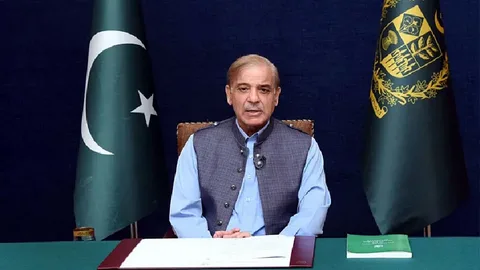
Prime Minister Shehbaz Sharif has articulated a bold new direction for Pakistan foreign policy, declaring the country a “net regional stabiliser” committed to peace and stability within the region and beyond. Speaking at the Command and Staff College in Quetta, the prime minister underscored the importance of military diplomacy and Pakistan’s contribution to regional peace and progression. His remarks represent one of the most definitive public statements on Pakistan’s strategic posture in recent years.
Background: Understanding Pakistan Foreign Policy
Pakistan foreign policy has long been shaped by geography, security imperatives, and complex regional dynamics. As studied extensively in Pakistan foreign policy CSS preparation materials and detailed in the widely read Pakistan foreign policy by Abdul Sattar a foundational text for students and policymakers alike Islamabad’s diplomacy has historically revolved around three core pillars: national security, economic interests, and ideological solidarity with Muslim nations.
The Pakistan foreign policy book by Abdul Sattar, available in both English and Pakistan foreign policy in Urdu editions, outlines how successive governments have navigated the country’s difficult neighbourhood bordered by India, Afghanistan, Iran, and China. Students preparing for competitive exams frequently rely on Pakistan foreign policy CSS notes and the Pakistan foreign policy by Abdul Sattar PDF to understand these foundational principles.
Now, in 2026, Prime Minister Shehbaz Sharif appears to be putting those principles into action with a renewed diplomatic assertiveness that analysts and commentators at Pakistan foreign policy Dawn have begun calling a significant strategic pivot.
Details: The Quetta Address and Its Policy Significance
PM Shehbaz made his remarks during an address to faculty members and student officers at the Command and Staff College in Quetta, where he highlighted Pakistan’s responsible conduct and escalation control against what he described as India’s unprovoked aggression.
The speech was broadcast on television and carried considerable weight given its audience the next generation of Pakistan’s military leadership. The prime minister’s framing of Pakistan foreign policy around the concept of a “net regional stabiliser” signals a deliberate shift from a defensive posture to one of proactive diplomatic engagement.
The premier stated that Pakistan’s peace offer to India was never a sign of weakness, but rather a demonstration of strength, and that on the diplomatic front, Pakistan’s narrative was fully vindicated while India’s was dismissed by the international community.
This framing aligns closely with the theoretical frameworks discussed in Pakistan foreign policy notes used across universities and in Pakistan foreign policy CSS syllabi, where the concept of strategic restraint combined with firm sovereignty defence is presented as a hallmark of mature statecraft.
Pakistan’s Position on Afghanistan and Terrorism
A significant portion of the PM’s address dealt with the Afghan dimension of Pakistan foreign policy a topic that features prominently in the Pakistan foreign policy by Abdul Sattar analysis and in Pakistan foreign policy Dawn editorials.
PM Shehbaz confirmed that Operation Ghazab-lil-Haq was continuing with full resolve to defend citizens against Afghan-based terrorist proxies and to target terrorist hideouts and support infrastructure.
He directly called on the Afghan government to take meaningful and credible actions against the Islamic State Khorasan Province, Tehreek-i-Taliban Pakistan, and the Balochistan Liberation Army, all of whom use Afghan soil to launch attacks against Pakistan.
This dual-track approach engaging diplomatically while maintaining military pressure is precisely the kind of strategy that Pakistan foreign policy CSS aspirants study in depth, particularly in the context of the Pakistan foreign policy book literature that traces Islamabad’s evolving doctrine on non-state actors.
Quotes: The PM’s Own Words
PM Shehbaz said during his speech: “The enemy falsely perceived itself as stronger than Pakistan. They rejected our sincere offer of dialogue to resolve differences and remove misunderstandings; instead, they chose the path of provocation, violence, and aggression.”
On the question of sovereignty, he reaffirmed Pakistan’s resolve “to defend sovereignty and territorial integrity against any misadventure at all costs.”
Speaking on Palestine, the PM said that Islamabad had “consistently advocated the right of the Palestinian people,” and that a just resolution required the establishment of an independent Palestinian state in accordance with the UN Charter.
These statements, consistent with the ideological foundations outlined in the Pakistan foreign policy by Abdul Sattar PDF, reflect Islamabad’s long-standing commitment to Muslim solidarity and international law as twin pillars of its diplomatic identity.
Impact: Regional and Global Implications
The redefinition of Pakistan foreign policy around the “net regional stabiliser” framework carries significant implications for the broader South Asian strategic environment. According to the analysis framework in Pakistan foreign policy notes for CSS candidates, a country that successfully positions itself as a stabilising force gains both diplomatic legitimacy and negotiating leverage.
The Balochistan Apex Committee meeting chaired by PM Shehbaz directed the deployment of Frontier Corps in the Rakhshan Division to establish a security corridor for mineral resources, underscoring that internal stability is now being directly linked to Pakistan’s foreign economic policy goals.
Pakistan foreign policy Dawn coverage has noted that the PM’s address also touched on CPEC-linked security measures, youth engagement programmes, and regional connectivity suggesting that Pakistan foreign policy is increasingly being viewed through an economic development lens, not just a security one. This approach echoes recommendations long made in Pakistan foreign policy books and academic literature, including the Pakistan foreign policy by Abdul Sattar framework that emphasises geo-economics alongside geopolitics.
For students preparing Pakistan foreign policy CSS notes, this moment represents a live case study in how theoretical frameworks translate into actual policy decisions at the highest levels of government.
Conclusion: What Comes Next for Pakistan’s Diplomacy
Pakistan’s foreign policy in 2026 appears to be at an inflection point. The “net regional stabiliser” doctrine, articulated clearly by PM Shehbaz, signals that Islamabad is moving towards a more confident, assertive, and economically grounded diplomatic identity. Whether this vision can be sustained depends on progress on multiple fronts managing the Afghan border, de-escalating tensions with India, securing CPEC investments, and building credibility with Western partners.
For those studying Pakistan foreign policy CSS, reading the Pakistan foreign policy by Abdul Sattar PDF, or following Pakistan foreign policy Dawn analyses, this period offers rich material. The foundational theories laid out in Pakistan foreign policy books are being tested in real time, and Islamabad’s ability to balance competing pressures will define its regional standing for years to come.
FAQs
What are the challenges faced by Pakistan foreign policy?
Pakistan foreign policy faces several major challenges in 2026. The most pressing include managing an unstable Afghan border where militant groups continue to launch cross-border attacks, navigating a tense relationship with India following recent military confrontations, sustaining the China-Pakistan Economic Corridor (CPEC) amid global economic uncertainty, and maintaining credibility with Western nations while balancing ties with China. Internally, economic instability limits Islamabad’s diplomatic leverage. As outlined in Pakistan foreign policy notes and the Pakistan foreign policy by Abdul Sattar framework, these structural constraints have historically shaped Islamabad’s reactive rather than proactive approach something PM Shehbaz is now attempting to change.
What are the 3 D’s of foreign policy?
The 3 D’s of foreign policy commonly refer to Diplomacy, Defence, and Development the three interconnected tools through which a state pursues its international objectives. In the context of Pakistan foreign policy CSS studies, these three pillars are central to understanding how Islamabad manages its relationships with neighbours and global powers. Diplomacy involves negotiation and alliance-building; Defence ensures sovereignty through military readiness; and Development leverages economic growth and trade partnerships to enhance geopolitical standing. PM Shehbaz’s Quetta address touched on all three, making it a textbook example of how Pakistan attempts to integrate these tools into a coherent national strategy.
Who is Pakistan’s biggest friend?
China is widely regarded as Pakistan’s closest and most strategically significant ally. The two countries share what officials describe as an “all-weather” partnership, anchored by the China-Pakistan Economic Corridor (CPEC), deep military cooperation, and consistent diplomatic backing at international forums including the United Nations. Saudi Arabia is also a historically close partner, providing financial support and hosting a large Pakistani diaspora. As analysed in Pakistan foreign policy by Abdul Sattar and discussed in Pakistan foreign policy CSS materials, Pakistan’s relationship with China has grown more central to its strategic posture since the early 2000s, while ties with the United States have become more transactional and episodic.