

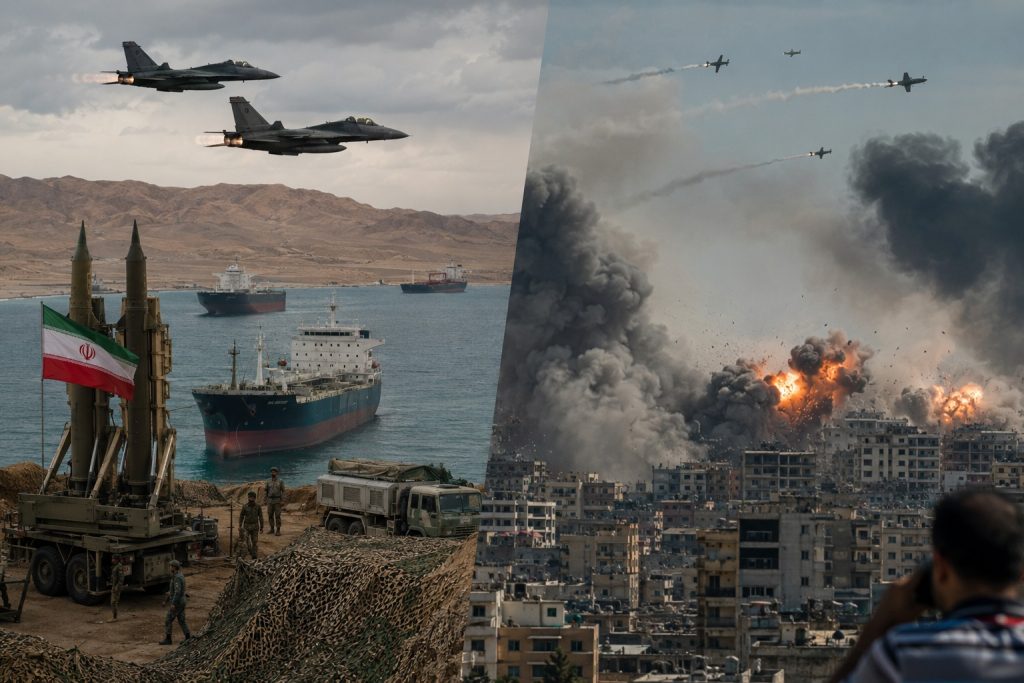

Tensions in the Middle East continue to rise as Iran announced plans to introduce a new toll system for vessels passing through the strategic Strait of Hormuz, while Israel carried out fresh airstrikes across southern Lebanon. The developments come on day 79 of the ongoing regional conflict that has already impacted global energy markets and diplomatic relations.
Iranian officials stated that the country is preparing a “professional mechanism” to manage maritime traffic through the Strait of Hormuz, one of the world’s most important oil shipping routes. According to reports, the proposed system may include transit fees and special navigation rules for commercial ships cooperating with Tehran.
The Strait of Hormuz remains a critical global trade route, with a significant portion of the world’s oil exports passing through the narrow waterway each day. Analysts warn that any restrictions or additional costs imposed by Iran could affect international oil prices and increase economic pressure on energy-importing countries.
At the same time, Israeli forces launched additional attacks in southern Lebanon, targeting multiple locations linked to Hezbollah operations. Lebanese officials reported continued air raids despite ongoing diplomatic efforts aimed at maintaining a fragile ceasefire in the region.
The escalating conflict has raised concerns among global powers, with several countries calling for urgent diplomatic negotiations to prevent a wider regional war. International observers fear that continued military action in Lebanon and rising tensions around the Strait of Hormuz could further destabilize the Middle East.
Meanwhile, political leaders in Washington and Tehran continue exchanging warnings over military operations, sanctions, and regional security. Experts believe the coming weeks could play a critical role in determining whether the crisis moves toward de-escalation or further confrontation.
Global markets are also closely monitoring the situation, as disruptions in the Strait of Hormuz could significantly affect oil supply chains and shipping operations worldwide. Energy analysts have already warned of possible increases in fuel prices if tensions continue to intensify