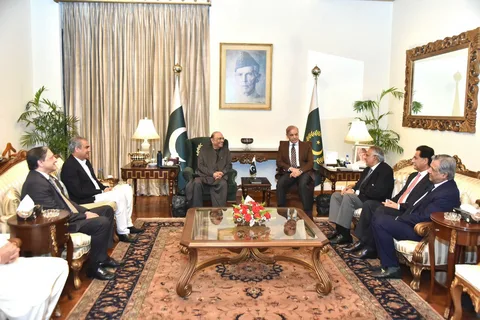
The austerity measures Government of Pakistan has extended its nationwide austerity drive until June 13, 2026. Prime Minister Shehbaz Sharif issued the directive through a formal austerity measures notification 2026 from the Cabinet Division. The extension comes as the Middle East war continues to drive a global oil crisis with serious economic consequences for Pakistan.
Breaking PM Shehbaz Extends Austerity Measures 2026
Prime Minister Shehbaz Sharif on Monday extended the countrywide austerity drive till June 13. This is the latest development in an ongoing series of austerity measures 2026 that the federal government has been implementing since March.
The austerity measures Cabinet Division issued a formal notification confirming the extension. The notification said: “The prime minister, on consideration of the recommendations of the committee for monitoring and implementation of fuel conservation and additional austerity measures, has been pleased to extend the applicability of the following additional austerity measures up till 13th June, 2026 with immediate effect.”
This austerity measures notification 2026 applies across all federal government departments. It reinforces the government’s commitment to cutting unnecessary state expenditure during a period of severe global economic pressure.
Background Why These Austerity Measures Were Imposed
The austerity measures Government of Pakistan were first introduced in response to the Middle East war. The Middle East war, which began with US-Israeli attacks on Iran on February 28, has given rise to a global oil crisis.
In order to deal with the situation, the government had announced unprecedented austerity measures on March 9. That original austerity measures notification March 2026 was the starting point of what has now become a prolonged economic emergency response by the austerity measures Federal government.
Pakistan is heavily dependent on fuel imports. When global oil prices spike due to regional conflict, the impact is felt immediately across transport, energy, and the cost of living. The austerity measures Finance Division designed these cuts to protect Pakistan’s foreign reserves and reduce the import bill during this critical period.
What the Austerity Measures Notification 2026 Actually Says
The austerity measures notification 2026 from the Cabinet Division covers several specific areas of government expenditure. These are not symbolic gestures they are hard cuts with direct financial consequences for government operations.
The measures extended include a 50 per cent reduction in fuel allowance for official vehicles, with the exemption of operational vehicles such as ambulances and public buses. This is one of the most visible aspects of the austerity measures Federal government has enforced.
Other steps included grounding 60 per cent of official vehicles and a complete ban on foreign visits by ministers and government officials, excluding those deemed essential for the country’s interests. The ban on foreign travel is particularly significant, as it directly targets the kind of discretionary spending that critics often highlight as wasteful.
The austerity measures Cabinet Division notification further clarified: “Other additional austerity and fuel conservation measures, as notified from time to time vide this Division’s notifications of even number, shall continue to remain in force over the periods specified in the respective notifications.”
Austerity Measures in Urdu Understanding the Policy for All Pakistanis
The austerity measures in Urdu,refer to the government’s policy of cutting its own spending to protect the national economy. In simple terms, austerity measures in Urdu means a reduction in government expenditure to manage a financial crisis.
For ordinary Pakistanis, austerity measures in Urdu terms mean that the state is trying to lead by example. The austerity measures Government of Pakistan are not asking citizens to suffer while officials travel abroad on taxpayer money or drive government vehicles for personal use. The policy is designed to show that the austerity measures Federal government applies first to itself.
Understanding austerity measures in Urdu is important because a large portion of Pakistan’s population follows government announcements in the national language. The austerity measures Cabinet Division and Finance Division should ensure that all official communications are made available in both English and Urdu for maximum public awareness and accountability.
Full List What Was Previously Announced Under Austerity Measures March 2026
The austerity measures notification March 2026 introduced a comprehensive set of restrictions that are still in effect. These were announced by the austerity measures Finance Division and the austerity measures Cabinet Division working jointly.
Among previously announced austerity measures, the working week for all government offices was reduced to four days Monday to Thursday. This step alone was designed to reduce electricity and fuel consumption across federal government offices nationwide.
Under the measures, the salary of parliamentarians was to be cut by 25 per cent, while employees of state-owned enterprises and government-supervised institutions were to see their salaries cut by 5 per cent to 30 per cent. These salary reductions represent one of the most direct forms of fiscal tightening in Pakistan’s recent history.
Expenses of government departments were reduced by 20 per cent, along with a ban on purchasing vehicles, furniture, air conditioners, and other items for government departments. This purchasing freeze affects the austerity measures Federal government across all ministries and attached departments.
Austerity Measures Cabinet Division Monitoring and Enforcement
The austerity measures Cabinet Division has not just issued notifications it has taken steps to ensure compliance. This is a critical difference from past austerity exercises where announcements were made but enforcement remained weak.
PM Shehbaz had tasked the Intelligence Bureau to carry out a third-party audit of the implementation of the austerity measures. This use of the IB for economic compliance monitoring is unprecedented. It signals that the austerity measures Government of Pakistan is serious about accountability.
The austerity measures Finance Division is also part of the enforcement structure, tracking departmental expenditures and ensuring that the austerity measures notification 2026 limits are being respected. If departments breach these limits, the Finance Division has the authority to flag violations and impose consequences.
Relief Alongside Restriction Government’s Balancing Act
The austerity measures 2026 have not been applied without consideration for the public. The government has recognized that while the austerity measures Federal government tightens its own belt, ordinary citizens especially low-income groups also need protection from rising fuel prices.
On April 30, the premier had also decided to extend fuel subsidies for motorcyclists, and public and goods transport by one month. This shows the government is trying to balance austerity at the top with targeted relief at the bottom.
The subsidies were part of the targeted relief measures announced for bikers, farmers, and transporters to cushion the impact of global oil price shocks amid the US-Israel war on Iran. This dual approach austerity measures Government of Pakistan for officials, subsidies for the vulnerable reflects an attempt to make the economic pain more equitable.
Austerity Measures Finance Division The Economic Logic
The austerity measures Finance Division developed these policies based on a clear economic rationale. Pakistan imports most of its fuel. When global oil prices rise sharply due to the Middle East war, Pakistan’s import bill increases dramatically, putting pressure on foreign exchange reserves.
By cutting government fuel consumption through the austerity measures notification 2026, the Finance Division reduces demand for imported fuel. By freezing salaries and cutting departmental budgets, the austerity measures Cabinet Division reduces the fiscal deficit. Both actions together help Pakistan maintain its IMF programme commitments.
The austerity measures 2026 also signal to international creditors and investors that Pakistan is willing to take difficult decisions. This kind of fiscal discipline captured in formal austerity measures notification documents is precisely what the IMF, World Bank, and bilateral lenders look for when evaluating Pakistan’s economic management.
Impact What This Means for Pakistan’s Economy and Region
The austerity measures Government of Pakistan have both domestic and regional significance. Domestically, they represent the most aggressive peacetime spending cuts Pakistan’s federal government has undertaken in recent memory.
The four-day working week, the grounding of 60 per cent of official vehicles, the 25 per cent salary cut for parliamentarians, and the 50 per cent fuel allowance reduction collectively signal a government under serious economic pressure. These are not routine belt-tightening measures they are emergency responses.
Regionally, the fact that Pakistan’s austerity measures 2026 were triggered by the Middle East war shows how deeply connected South Asian economies are to Gulf region stability. A conflict thousands of kilometres away is reshaping government policy, household budgets, and fuel availability in Pakistan. The austerity measures in Urdu announcements that reach rural and semi-urban audiences reflect just how wide the impact has spread.
Conclusion Will the Austerity Measures 2026 Be Enough?
The extension of the austerity measures Government of Pakistan to June 13 buys time, but it does not resolve the underlying problem. As long as the Middle East war continues to disrupt global oil supplies, Pakistan will remain vulnerable to price shocks.
The austerity measures notification 2026 is a necessary short-term response. But Pakistan also needs a medium-term energy strategy that reduces its dependence on imported fuel. The austerity measures Finance Division and the austerity measures Cabinet Division have handled the crisis management well the harder task is structural reform.
For now, the austerity measures Federal government will continue through June 13. Whether they are extended further will depend on how quickly the Middle East situation stabilizes and whether global oil prices return to manageable levels. Pakistan’s citizens and its economy are watching both fronts closely.
FAQs
What are the examples of government austerity?
Examples of government austerity measures include cutting public sector salaries, reducing fuel allowances for official vehicles, freezing government hiring, banning purchases of non-essential items, shortening the government working week, and limiting foreign travel by officials. In Pakistan’s austerity measures 2026, the government implemented all of these simultaneously reducing parliamentarian salaries by 25 per cent, grounding 60 per cent of official vehicles, and issuing a formal austerity measures notification March 2026 through the Cabinet Division and Finance Division.
What are imposed austerity measures?
Imposed austerity measures are government-mandated spending cuts and fiscal restrictions that are not voluntary but legally required through official notifications. The austerity measures Government of Pakistan issued through the austerity measures Cabinet Division are imposed measures meaning all federal departments, state-owned enterprises, and government institutions must comply. Non-compliance can be reported and audited, as seen when PM Shehbaz tasked the Intelligence Bureau to conduct a third-party audit of the austerity measures Federal government’s implementation.
How to explain austerity?
Austerity, or in austerity measures in Urdu means a government deliberately reducing its own spending to manage a financial crisis. It is a policy of fiscal tightening where the state cuts what it spends in order to stabilize its finances, reduce debt, or meet the conditions of international lenders. In Pakistan’s case, the austerity measures 2026 were introduced because the Middle East war caused a global oil price crisis that threatened Pakistan’s foreign exchange reserves and fiscal balance. The austerity measures Finance Division and austerity measures Cabinet Division coordinated this response through a series of formal austerity measures notification 2026 documents.