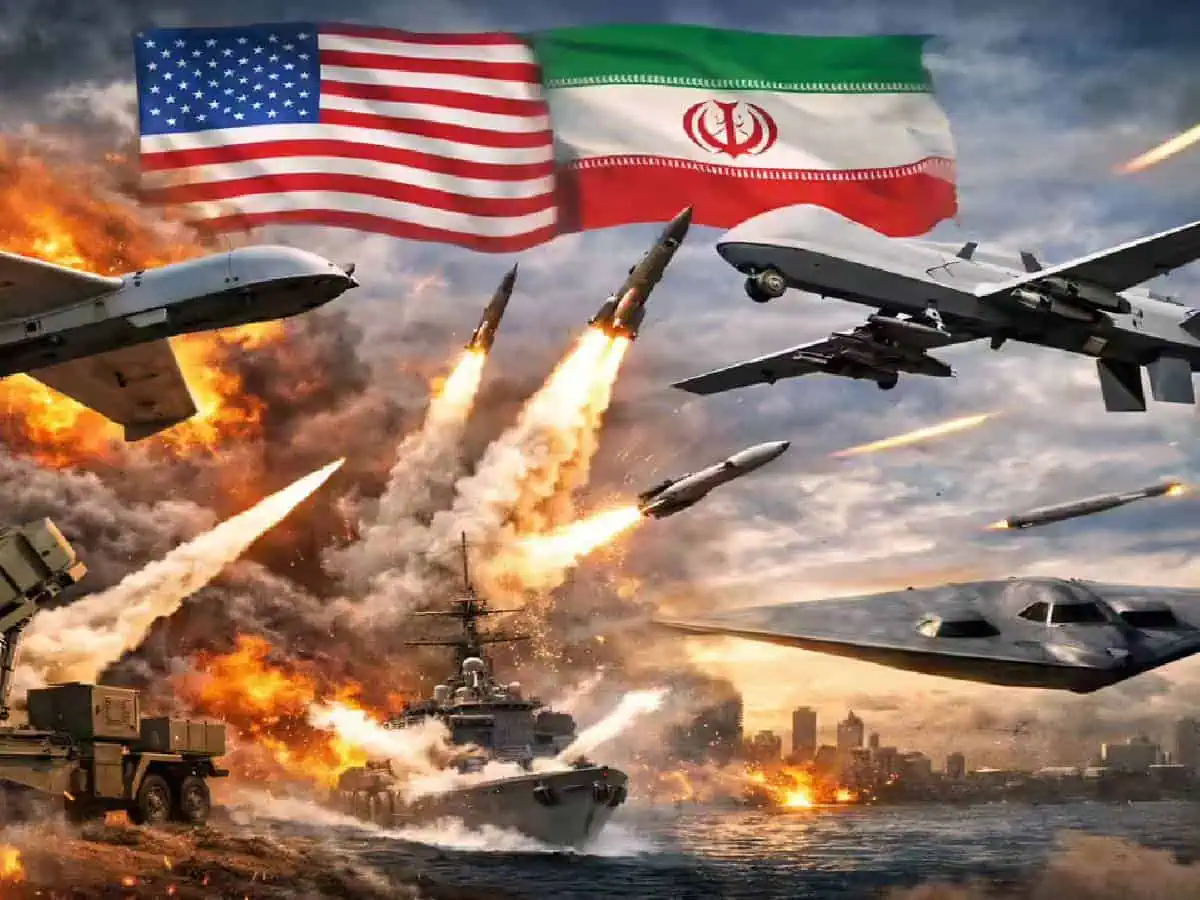
The United States has issued a stern warning to Iran, saying that any attack on commercial shipping in the Strait of Hormuz will be met with overwhelming military force even as the US-Iran ceasefire technically remains in place. The situation continues to draw global attention, with Iran war news live updates keeping the world on edge.
Background: How the US-Iran War Began
US and Israeli forces launched the war against Iran on February 28, after which the Islamic republic closed the Strait of Hormuz a vital route for oil and gas exports while American forces later launched a blockade of Iranian ports.
The Strait of Hormuz is one of the most critical shipping lanes in the world. Its closure triggered a global energy and trade crisis, sending shockwaves from the Gulf to Dubai, UAE, and markets worldwide. Iran war news has remained a top global concern ever since.
President Donald Trump indefinitely extended what was initially a two-week ceasefire, but the conflict and its widespread economic fallout remains unresolved.
Pentagon Press Conference: Key Statements
The United States is “not looking for a fight” over the Strait of Hormuz, and its ceasefire with Iran still holds, but any attack on commercial shipping will be met with a “devastating” response, Pentagon chief Pete Hegseth said on Tuesday.
This statement came as a direct response to growing tensions in the region. Iran war news update today confirms that the situation on the water remains volatile, even while diplomats insist the ceasefire is holding.
Hegseth told reporters: “Iran also cannot be allowed to block innocent countries and their goods from an international waterway. If you attack American troops or innocent commercial shipping, you will face overwhelming and devastating American firepower.”
The Pentagon chief further announced a protective corridor for global trade. Washington is promising security for commercial vessels with a “red, white and blue dome” over the Strait of Hormuz, with US destroyers on station providing overwatch for commercial shipping, in conjunction with combat and surveillance aircraft.
US Military Readiness: Generals Speak Out
Chairman of the Joint Chiefs of Staff General Dan Caine said US forces are ready to resume major combat operations against Iran if ordered to do so.
General Caine’s words carried a strong message for Tehran. He stated clearly that America’s current restraint should not be misread. “No adversary should mistake our current restraint with a lack of resolve,” said Gen Caine, flanked by Hegseth.
This is a critical point in the Iran US war latest news cycle. While diplomacy is ongoing, the US military is visibly positioned for any escalation.
Iran Hits US Ships and Seizes Vessels: What Really Happened
Contrary to the official ceasefire narrative, actual hostilities have continued below a formal threshold. This is a key piece of Iran war news live that many observers are tracking closely.
General Caine confirmed: “Since the ceasefire was announced, Iran has fired at commercial vessels nine times and seized two container ships, and they have attacked US forces more than 10 times, all below the threshold of restarting major combat operations at this time.”
So while the US-Iran ceasefire officially holds, Iran hit US ship and vessel incidents have continued repeatedly. The Pentagon is choosing to classify these as “low harassing fire” rather than full combat actions for now.
Admiral Brad Cooper, the commander responsible for US troops in the Middle East, said Washington’s forces had intercepted missiles and drones fired by Iran and also destroyed six small Iranian boats that threatened shipping.
Iran War UAE and Dubai: Regional ImpactThe Iran war UAE situation has significantly alarmed Gulf nations. The Fujairah oil zone a critical hub in the UAE was reportedly struck by a drone attack, while the UAE confirmed it intercepted Iranian missiles. Iran war Dubai fears have pushed Gulf financial markets into uncertainty.
The UAE, which maintains strong trade and diplomatic relationships with both the West and Iran, finds itself navigating a dangerous situation. Dubai, as a major global trading and logistics hub, is directly vulnerable to any disruption in shipping through the Strait of Hormuz. Iran UAE news continues to dominate regional headlines as officials there work to de-escalate.
The broader concern across the Arabian Gulf is significant. There are currently “22,500 mariners embarked on more than 1,550 commercial vessels trapped in the Arabian Gulf, unable to transit,” according to General Caine.
This figure represents the real human and economic cost of the ongoing Iran war news update today. Ships carrying food, fuel, and essential goods remain stranded.
Project Freedom: US Reopens the Strait
The United States has launched a military escort and safety operation to reopen shipping lanes. The warning came on the second day of a US effort, dubbed ‘Project Freedom’, to facilitate the transit of commercial ships through the Strait of Hormuz, which Iran had closed in response to the US-Israeli war on the Islamic republic.
However, Hegseth made it clear this is not a permanent commitment. “We’re stabilising the situation so commerce can flow again, but we expect the world to step up. At the appropriate time, and soon, we will hand responsibility back to you,” he said.This suggests the US is looking for international partners including European navies and regional powers to eventually share the burden of keeping the Strait open.
Hinglaj Mata Temple: Recently Seen in News Where Is It Located?
Amid the heavy geopolitical news, another story has captured public attention across South Asia: the Hinglaj Mata Temple, recently seen in news for its massive annual pilgrimage.
Hinglaj Mata is a Hindu temple in Hinglaj, a town on the Makran coast in the Lasbela district of Balochistan, Pakistan. It lies in the middle of the Hingol National Park.
The three-day annual festival of the historic Hinglaj Mata temple recently concluded in remote Hingol Park in Balochistan, with an estimated over 300,000 people visiting the shrine.
Hinglaj Yatra, attended by around 300,000 people during the spring, is the largest Hindu pilgrimage in Pakistan. The temple is one of the 51 sacred Shakti Peethas in Hinduism and holds deep spiritual significance for devotees across the subcontinent.
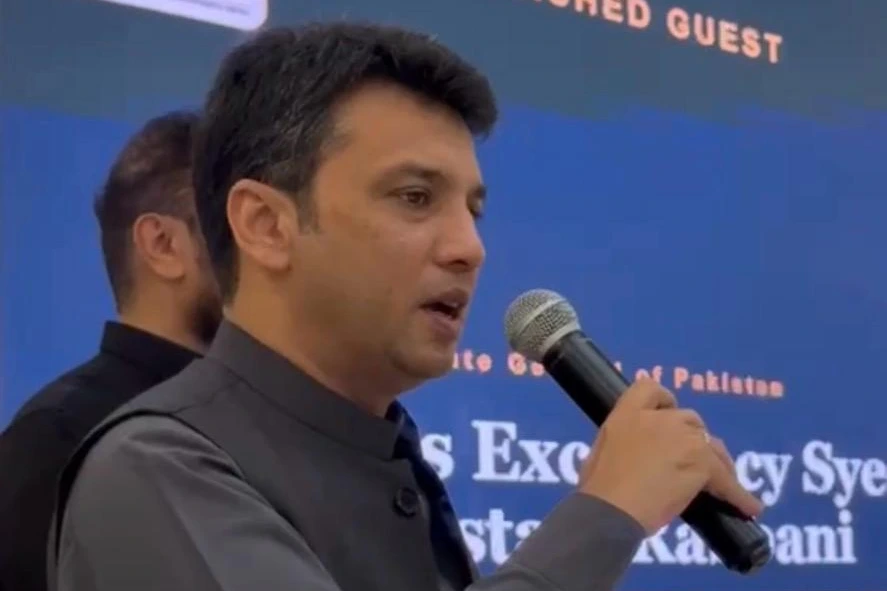
Senator Danesh Kumar noted that following India and Nepal, Pakistan hosts one of the world’s largest Hindu pilgrimages at Hinglaj Mata Mandir, with nearly one million devotees visiting the temple throughout the year.
The Balochistan government has invested significantly in infrastructure around the temple site, and this year’s pilgrimage was widely celebrated as a symbol of interfaith harmony in Pakistan.
Global Impact of the Iran War
The US-Iran ceasefire fragile as it is has massive implications for global trade, energy prices, and regional stability. Oil markets remain jittery. Every Iran war news live update moves crude prices. Nations dependent on Gulf oil imports, including Pakistan and India, are watching events closely.
The Iran UAE news dimension adds another layer. Gulf states are caught between their dependence on the US security umbrella and the economic reality of living next door to Iran. For countries like the UAE, which hosts millions of expatriates and trillions in trade, any escalation in Iran war Dubai or Fujairah could be catastrophic.
Diplomatically, Iran has shown no signs of fully backing down. Tehran continues to assert its right to control navigation in nearby waters, and its forces have carried out repeated low-level provocations since the ceasefire began.
Conclusion: What Comes Next?
The US-Iran ceasefire is holding but just barely. Both sides are probing limits. The US is building a coalition of nations to maintain open shipping lanes, while Iran continues what analysts call “gray zone” harassment of vessels.
Iran war news update today points to a situation that could either stabilize through diplomacy or spiral into renewed full-scale conflict. The world is watching. Commerce, energy security, and regional peace all hang in the balance as long as the Strait of Hormuz remains a flashpoint.
FAQs
Why is there tension between Iran and the USA?
The current tensions stem from the US-Israeli military campaign launched against Iran in February 2026. Iran responded by closing the Strait of Hormuz, a critical global oil and shipping lane, and the two sides reached an uneasy ceasefire. Longer-term tensions relate to Iran’s nuclear program, US sanctions, and decades of geopolitical rivalry in the Middle East.
How many ships are stuck in the Strait of Hormuz?
According to US military officials, over 1,550 commercial vessels carrying approximately 22,500 mariners are currently trapped in the Arabian Gulf and unable to transit through the Strait of Hormuz. The US has launched “Project Freedom” to try to open safe corridors for these ships.
Is Iran’s military stronger than the USA?
No. The United States maintains the world’s most powerful military by virtually every measure budget, technology, naval strength, and global reach. However, Iran has significant asymmetric capabilities including drones, ballistic missiles, naval mines, and proxy forces across the Middle East. This means Iran can cause serious disruption and harm even without matching US conventional power. The current conflict reflects this asymmetry, with Iran using low-level harassment tactics while avoiding direct confrontation that could trigger a devastating American response.