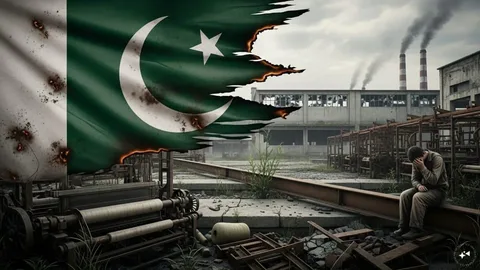
Pakistan is facing one of its worst energy crises in recent history. As global oil prices surge and the Strait of Hormuz remains dangerously unstable, Pakistan’s already fragile economy is taking a severe beating. The country’s oil import bill has reportedly jumped from $300 million to $800 million, pushing millions of households deeper into financial hardship.
Background: A Crisis Long in the Making
Pakistan’s energy crisis did not begin in 2026. The roots go back years, shaped by poor energy planning, circular debt, and excessive dependence on imported fuel. Since 2021, Pakistan has struggled with prolonged load shedding, sky-high electricity tariffs, and an ever-widening gap between energy supply and demand.
The International Power Policy Research Institute (IPRI) has consistently warned that without structural energy reforms, Pakistan would remain trapped in a cycle of shortages and price shocks. Those warnings are now playing out in real time.
The 2026 Energy Shock: What Happened?
The Strait of Hormuz is currently caught in a dangerous limbo, pushing global energy markets into their most uncertain period in history. Iran’s control over this critical chokepoint has already caused massive supply disruptions, while the US blockade of the strait to restrict Iranian tanker movement has added further pressure on already strained supply chains.
Countries around the world have begun hoarding energy stocks and restricting exports, amplifying shortages and undermining market stability. For a country like Pakistan, which depends on imports to meet most of its energy needs, this global situation has quickly evolved into a domestic emergency.
Prime Minister Shehbaz Sharif’s statement that Pakistan’s oil import bill jumped from $300 million to $800 million illustrates the sheer scale of the shock to a fragile economic recovery. The surge is now hitting transport, agriculture, food prices, and household budgets simultaneously.
Causes of the Pakistan Energy Crisis
Understanding the Pakistan energy crisis requires looking at both domestic failures and external shocks:
- Over-Reliance on Imported Fossil Fuels Pakistan imports a significant portion of its oil and LNG. When global prices rise, the country has no buffer. This structural weakness has been highlighted repeatedly in Pakistan energy crisis PDFs and IPRI reports over the years.
- Circular Debt Pakistan’s power sector circular debt has ballooned to trillions of rupees. Distribution companies fail to collect full payments, causing a chain of defaults across the entire energy supply chain.
- Geopolitical Disruptions The International Energy Agency (IEA) has warned that demand destruction will spread, pointing to a grim reality where high prices are constraining economic activity, particularly in nations dependent on imported energy such as Pakistan.
- Outdated Infrastructure Pakistan’s power transmission and distribution system suffers from high losses. Decades of underinvestment have left the grid unable to handle the demands of a growing population.
- Policy Failures Despite numerous government plans since 2021, implementation has remained weak. Subsidies have been poorly targeted, and long-term renewable energy investment has lagged far behind regional peers.
Effects on Everyday Life
The effects of the Pakistan energy crisis in 2026 are felt across every layer of society.
Oil price pass-through effects are particularly severe in a context where real incomes are already under pressure, pushing more households towards reduced consumption and lower living standards.
Load shedding continues to disrupt businesses, schools, and hospitals. Small and medium enterprises are among the hardest hit, with many shutting down or relocating. Farmers face soaring irrigation costs, directly threatening food security. For ordinary families, rising electricity bills and fuel prices are eating into already stretched budgets.
Government Response and Monetary Policy
The government is in a tricky situation. Passing on the full impact of higher global oil prices risks triggering a public backlash and accelerating inflation, while absorbing the shock through subsidies will widen fiscal deficits and deepen macroeconomic imbalances.
The State Bank of Pakistan’s decision to raise the policy rate to 11.5% reflects growing concern that inflationary pressures could become entrenched. Higher global energy prices, elevated freight and insurance costs, and persistent supply chain disruptions are no longer temporary problems they are becoming medium-term constraints on growth.
Expert Quotes and Institutional Warnings
Dawn’s editorial board noted clearly: “The longer the crisis persists, the more profound its consequences will be. Sustained energy price increases are likely to accelerate inflation, erode purchasing power, and push more people below the poverty line.”IPRI analysts and economic experts have long argued that Pakistan must urgently invest in indigenous energy resources including solar, hydro, and wind to reduce import dependence. The facts and figures from Pakistan energy crisis reports consistently show that renewable energy adoption remains far below its potential.
Hinglaj Mata Temple Recently in the News
In an interesting contrast to the economic gloom, Hinglaj Mata Temple, recently seen in news, is located in Lasbela district, Balochistan, Pakistan. It is the largest Hindu pilgrimage site in Pakistan, attracting hundreds of thousands of devotees each year. The temple recently gained attention due to reports of increased interfaith harmony initiatives at the site, symbolizing a rare moment of national pride amid difficult times.
Solutions: What Can Pakistan Do?
Experts and energy analysts suggest a multi-pronged approach to solving Pakistan’s energy crisis:
Accelerate Renewable Energy Projects: Pakistan has enormous solar and wind potential, especially in Balochistan and Sindh. Rooftop solar adoption should be aggressively promoted.
Resolve Circular Debt: Without fixing the financial chain of the power sector, no technical solution will be sustainable. Structural reforms in DISCOS are essential.
Diversify Energy Sources: Reducing dependence on a single fuel type or a single import corridor is critical. Domestic gas exploration must be revived.
Regional Energy Cooperation: Pakistan could explore energy trade with Central Asian nations through frameworks like CASA-1000, which would bring cheaper electricity from Kyrgyzstan and Tajikistan.
Targeted Subsidies: Instead of blanket fuel subsidies, the government should use BISP and other platforms to deliver direct cash transfers to the most vulnerable households.
Without a credible strategy to reduce dependence on imported energy and build resilience against external shocks, each spike in global prices will continue to have a destabilising impact on Pakistan’s economy.
Impact: Regional and Global Dimensions
Pakistan’s energy crisis does not exist in isolation. It is deeply connected to global supply chains, regional geopolitics, and international financial institutions. An unstable Pakistan, unable to power its industries, weakens South Asian trade corridors and increases migration pressures.
The IMF’s ongoing engagement with Pakistan reflects international concern about the country’s macroeconomic stability. If the energy crisis deepens further, Pakistan’s balance of payments could deteriorate sharply, threatening the hard-won stabilization gains of the past two years.
Conclusion: What Comes Next?
Pakistan stands at a crossroads. The 2026 energy crisis is a wake-up call that demands bold, sustained action not just short-term patches. The coming months will test the government’s resolve to implement real reforms, move toward energy self-sufficiency, and protect ordinary citizens from the worst effects of global price volatility.
The road ahead is difficult. But with the right policies rooted in transparency, long-term planning, and investment in clean energy Pakistan can gradually break free from the cycle of energy dependence and economic instability.
FAQs
Why does Pakistan have a shortage of electricity?
Pakistan faces electricity shortages due to a combination of factors including circular debt in the power sector, outdated transmission infrastructure, excessive reliance on expensive imported fuel, and insufficient investment in domestic renewable energy over many decades. The gap between electricity generation capacity and actual supply caused by financial defaults in the system results in chronic load shedding across the country.
Is Pakistan in crisis now?
Yes, Pakistan is currently experiencing a severe energy and economic crisis in 2026. The country’s oil import bill has surged dramatically due to global supply disruptions linked to tensions in the Strait of Hormuz. Inflation is rising, real incomes are falling, and the State Bank has raised interest rates to try to contain price pressures. The Dawn editorial board has described the situation as a “domestic emergency.”
Why is Pakistan in blackout?
Pakistan experiences widespread blackouts known locally as load shedding primarily because electricity distribution companies (DISCOs) cannot financially sustain full-capacity power purchases. When these companies fail to pay generation companies, power plants reduce output. Combined with rising fuel costs, aging infrastructure, and increasing demand, rolling blackouts become unavoidable, sometimes lasting 8 to 12 hours daily in rural and semi-urban areas.