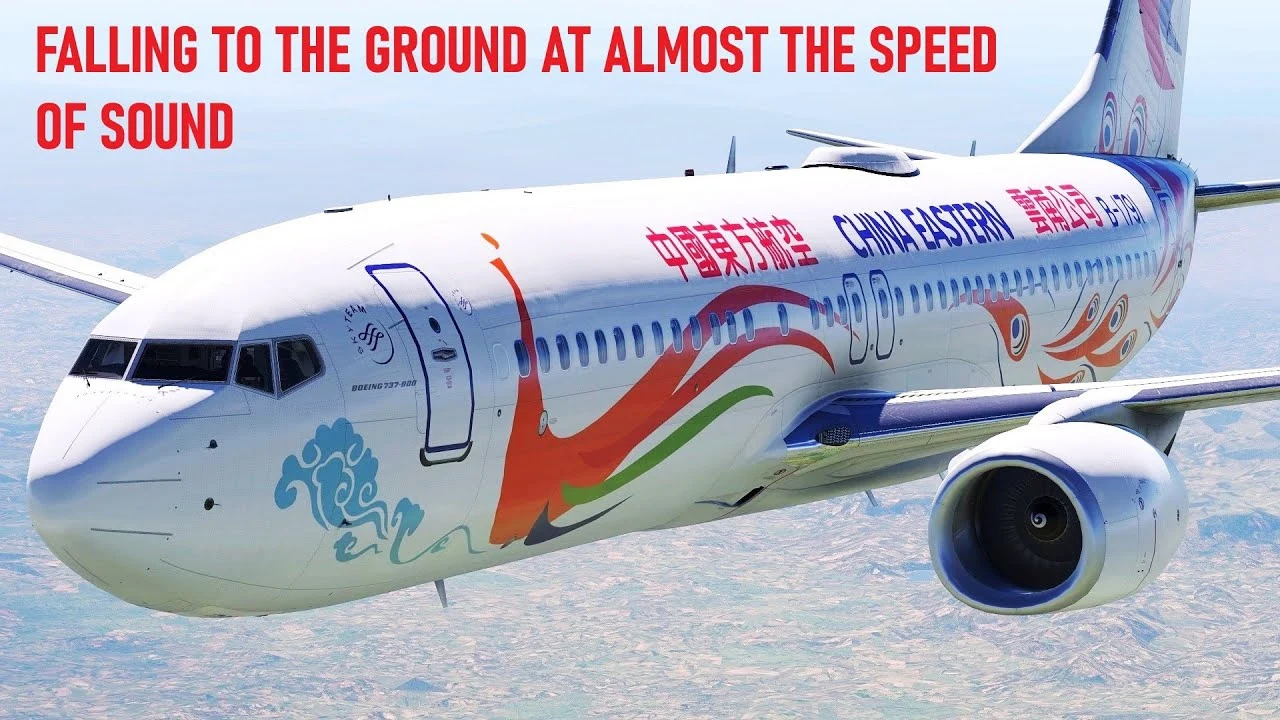
New NTSB data has reignited debate over what brought down China Eastern Airlines Flight 5735 in 2022 and why China still hasn’t told the world the truth.
Data from China Eastern Airlines Flight 5735’s flight data recorder has revealed that deliberate cockpit actions caused the Boeing 737-800 to plunge into a mountainside in southern China on March 21, 2022, killing all 132 people on board. More than four years later, no official final report has been published, and the mystery surrounding one of aviation’s most disturbing disasters remains unsolved. This article covers the full China Eastern Airlines crash history, the Flight 5735 cause, comparisons with China Southern Airlines and Air China crash records, and whether flying with Chinese carriers or British Airways is considered safe today.
Background: China Eastern Airlines Crash History
China Eastern Airlines is one of China’s three major state-owned carriers, serving hundreds of domestic and international routes. While it has generally maintained a competitive safety profile, its crash history includes several notable incidents over the decades.
In May 2002, a China Northern Airlines MD-82 crashed in the Yellow Sea just short of its destination, the coastal city of Dalian, killing 112 people. The crash was blamed on sabotage caused by a passenger who set a fire using gasoline in a soft drink can. China Northern was later merged into China Southern Airlines.
The crash of Flight MU5735 in 2022 was the third-deadliest aviation accident in China’s history, after China Southern Airlines Flight 3943 in 1992 and China Northwest Airlines Flight 2303 in 1994. Each of these disasters left deep marks on Chinese aviation and prompted national reviews of safety procedures.
Before Flight 5735, Chinese carriers had amassed more than 100 million hours of safe flying, giving China a world-record aviation safety run that the crash abruptly ended.
China Eastern Airlines Flight 5735: What Happened
China Eastern Airlines Flight 5735 (MU5735) was a domestic passenger flight from Kunming Changshui International Airport to Guangzhou Baiyun International Airport. At 14:23 China Standard Time on 21 March 2022, the Boeing 737-800 aircraft descended steeply mid-flight and struck the ground at high speed in Teng County, Wuzhou, Guangxi, killing all 132 passengers and crew on board.
The flight reached a cruising altitude of 29,100 feet at 05:27 UTC. The flight continued normally until 06:20 UTC when the aircraft began a rapid descent to 7,425 ft before briefly recovering to 8,600 ft. The aircraft then descended rapidly again, and the last ADS-B message received was at an altitude of 3,225 ft.
According to an aeronautics professor at the Massachusetts Institute of Technology, preliminary data indicated the aircraft traveled close to the speed of sound when it crashed. The aircraft’s impact created a crater 100 ft wide and 66 ft deep, where most of the wreckage was discovered.
China Eastern Airlines Flight 5735 Cause: What the Data Shows
This is the question the world has been asking for over four years and new evidence released in May 2026 has brought it back into sharp focus.
The National Transportation Safety Board (NTSB) released flight data recorder documents on May 1, following a Freedom of Information Act request made by a Chinese citizen. According to the FDR data, 23 seconds before recording ceased, the fuel control switches for both engines were simultaneously moved to the cut-off position, effectively shutting both engines down. The autopilot was immediately disengaged. Approximately three seconds later, one of the cockpit’s yokes was violently pushed forward.
CNN aviation safety analyst David Soucie stated that the data clearly shows the fuel switches were manually placed in the off position just prior to the crash, and that there was no indication the switches were placed back to the on position meaning there was no attempt to restart the engines.
However, experts urge caution. Aviation expert Tony Stanton of Australian consultancy Strategic Air cautioned that the NTSB document should not be treated as a final accident report, noting that the released material does not by itself prove motive, intent, or who moved the switches. He added, however, that the sequence of events is very difficult to reconcile with a conventional dual-engine mechanical failure.
The Civil Aviation Administration of China (CAAC) is responsible for the investigation. As of 2026, the CAAC has not released a final report, nor has it published a required update since 2024, drawing international criticism.
China’s Lack of Transparency: A Growing Controversy
The Chinese government, citing national security concerns, has refused to release information about the investigation into the March 2022 China Eastern Airlines Flight 5735 crash. Despite initial promises of transparency and collaboration with international investigators, the CAAC has provided minimal updates and rejected a public information request, citing “potential risks to national security and social stability.”
The International Civil Aviation Organization (ICAO) convention requires the country conducting an air accident investigation to publish the final investigation report within 12 months. If this is not done, the investigating authority must publish an annual update each year. Instead of a final report, the CAAC released brief updates in 2023 and 2024, disclosing no new information.
This silence has angered victims’ families and drawn criticism from international aviation bodies. A family member of one of the crash victims told the South China Morning Post that they had not been told how the investigation was progressing, only learning about the annual briefing from the news.
China Southern Airlines Crash History
China Southern Airlines has also experienced serious accidents in its long history. In May 1997, a China Southern Airlines Boeing 737 crashed in bad weather conditions at Shenzhen Airport in southern China, killing 35 people and injuring 35 others. China Southern Flight 3943, which crashed in 1992, remains one of the deadliest accidents in Chinese aviation history.
Despite these incidents, China Southern has significantly improved its safety record in recent decades and is today considered one of Asia’s larger, more operationally reliable carriers. Like most major Chinese airlines, it operates under strict regulations from the CAAC.
Air China Crash History
Air China, the country’s flag carrier, has also had incidents in its history. Regulatory reviews have periodically followed operational concerns. However, in recent years Air China has maintained a solid operational record. It is a member of the Star Alliance and is rated among the top carriers for long-haul routes out of China.
When comparing the China Eastern Airlines crash history, Air China crash history, and China Southern Airlines crash history, it is important to note that all three carriers have vastly improved their safety standards since the 1990s, when Chinese aviation was in a more turbulent period.
Is China Eastern Airlines Safe?
The Boeing 737-800 model involved in the Flight 5735 disaster has a solid safety record overall, with only 11 previous fatal accidents out of more than 7,000 planes delivered since 1997. The aircraft type itself is not inherently unsafe it is one of the most commonly flown jets in the world.
As for China Eastern Airlines specifically, the airline grounded its 737-800 fleet for inspection immediately after the 2022 crash and resumed operations in April 2022 after checks were completed. The airline continues to fly millions of passengers each year without major incident.
Aviation safety experts generally consider Chinese carriers to be safe by international standards. However, the unresolved nature of the China Eastern Airlines flight 5735 cause and the ongoing lack of transparency from Chinese authorities remain legitimate concerns for passengers and regulators alike. Travelers should monitor ICAO and IATA safety ratings and consult their national aviation authority’s advisories before flying.
British Airways Crash History
For context, British Airways one of the world’s most recognized carriers has also experienced serious incidents throughout its history. The most notable was the 2008 British Airways Flight 38 crash at London Heathrow, where a Boeing 777 crash-landed short of the runway due to fuel system ice blockages. Remarkably, no one was killed, though dozens were injured.
British Airways’ overall safety record is considered excellent. The airline is consistently rated among the safest in the world by aviation safety monitoring organizations. When compared to China Eastern Airlines crash history, British Airways has had fewer fatal incidents in recent decades and has generally been more transparent in cooperating with investigation authorities.
Global Impact of Flight 5735
The crash of China Eastern Airlines Flight 5735 sent shockwaves through the global aviation industry. On United States stock markets, Boeing shares initially fell by 7.8 percent and China Eastern shares by 8.2 percent after the incident. On the Hong Kong Stock Exchange, China Eastern shares dropped by 6.5 percent.
In India, the Directorate General of Civil Aviation placed all Boeing 737 aircraft flown by Indian carriers under enhanced surveillance. Regulatory bodies around the world scrambled to review their own Boeing 737-800 fleets in the days following the disaster.
The release of NTSB data in May 2026 has once again placed global pressure on China to be transparent and provide answers to a grieving public and an anxious international aviation community.
Conclusion
The China Eastern Airlines crash history, and Flight 5735 in particular, represents one of the most deeply troubling and unresolved aviation disasters of the modern era. More than four years after the Boeing 737-800 plunged 29,000 feet and crashed into a mountain in southern China, killing all 132 people on board, the CAAC has not addressed the crucial question of what prompted the deadly nosedive.
New NTSB data points strongly toward deliberate human action in the cockpit, but without a final official report, the families of the 132 victims remain without justice or closure. The international aviation community, passengers, and regulatory bodies will continue to demand answers. Whether China will finally provide them remains to be seen.
Frequently Asked Questions (FAQs)
Why did flight 236 run out of fuel?
Air Transat Flight 236 ran out of fuel in 2001 due to a fuel leak caused by an incorrectly installed hydraulic pump part, which allowed fuel to transfer from one tank to another and then leak overboard. A series of maintenance errors and crew decision-making factors contributed to the complete fuel exhaustion mid-flight over the Atlantic Ocean.
How did someone survive a 33,000 foot fall?
The most famous case is that of Vesna Vulović, a flight attendant who survived a 33,000-foot fall in 1972 when JAT Yugoslav Airlines Flight 367 broke apart mid-air. Investigators believe she survived because she was trapped in a section of the fuselage that acted as a buffer when it hit the snow-covered mountainside, slowing the impact. The compressed snow and the position of her body in the wreckage are credited with saving her life.
How much fuel was there in the plane crash?
In the case of China Eastern Airlines Flight 5735, fuel was not a cause of the crash. According to newly released NTSB flight data recorder information, the fuel control switches for both engines were moved to the cut-off position from within the cockpit, intentionally shutting off the fuel supply. The aircraft had adequate fuel on board for the scheduled flight from Kunming to Guangzhou. The engines did not fail due to fuel exhaustion they were shut down. This is a key detail that distinguishes Flight 5735 from fuel-related disasters such as Air Transat Flight 236.