The prestigious Venice Biennale is facing its biggest crisis in years. The international jury of the 61st International Art Exhibition resigned just days before prize announcements, refusing to consider Israeli and Russian artists for top awards. This stunning development has forced scholars of cultural politics, art, and the Journal of Politics, Culture, and Society to ask one urgent question can art ever truly be separated from politics and society?
Background
The Venice Biennale is one of the world’s oldest and most respected cultural institutions. Founded in 1895, it has long positioned itself as a neutral, open platform for global artistic expression. Every two years, it draws artists, critics, curators, and governments from across the world. It is not merely an art festival it is a cultural politics essay written in marble and canvas.
However, the 2026 edition has become a battleground for multispecies politics where nations, ideologies, international law, and human rights have all collided inside the walls of a gallery. What began as an artistic event has transformed into a live case study examined by every journal of media and cultural studies around the world.
Details: What Exactly Happened?
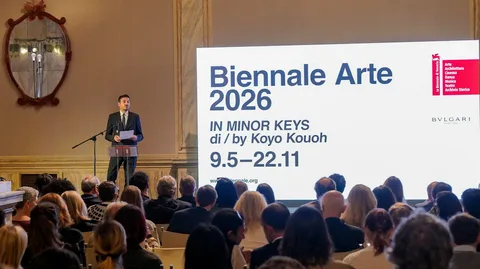
The international jury of the 61st International Art Exhibition at the Venice Biennale resigned just over a week before the festival was to announce its prizes on May 9, organisers confirmed on Thursday.
The resignations followed the jury’s earlier announcement that they would not consider artists from countries whose leaders face charges at the International Criminal Court an apparent reference to Russia and Israel for the prestigious Golden and Silver Lion trophies.
The jury consisted of five members: president Solange Farkas, Zoe Butt, Elvira Dyangani Ose, Marta Kuzma, and Giovanna Zapperi. These were not minor figures they were prominent voices in global cultural politics and cultural studies.
Following the abrupt resignation, the festival announced emergency measures, including the establishment of two Visitors’ Lions to be awarded based on votes cast by eligible ticket holders. The awards were also postponed to November 22.
A press release from the Biennale stated that all National Participations included in the 61st Exhibition are eligible for the Visitors’ Lion for Best National Participation, following the principle of inclusion and equal treatment implying that Russian and Israeli artists are back in the running.
The Political Firestorm: Governments Weigh In
This is where cultural politics truly entered the arena of politics and society. The decision did not remain confined to the art world it erupted into a full diplomatic controversy.
The decision to allow Russia to participate, even as the country continues its war on Ukraine, drew sharp criticism from the Italian government of Prime Minister Giorgia Meloni, who called it “a decision not shared by the government,” while noting that the Biennale was autonomous.
Italy’s cultural minister took an even harder line, saying he would not attend the festival’s previews or opening day if Russia is allowed to participate. He also had a phone call with Israeli artist Belu-Simion Fainaru, confirming the Italian government’s commitment against antisemitism in Italian cultural institutions.
Fainaru had accused the jury of discrimination and threatened to take legal action.
From a cultural politics essay perspective, this situation embodies what scholars in the Journal of Politics, Culture, and Society have long debated whether international cultural spaces can operate independently of state power and geopolitical pressure.
The strongest institutional response came from the European Union, which moved to terminate a two million euro grant to the Biennale in response to Russia’s participation. Italy’s Ministry of Culture also dispatched a delegation to investigate Russian inclusion at the EU’s request.
The Biennale Strikes Back: Art as Resistance
Despite immense pressure from governments and institutions, the Biennale leadership refused to yield. This too is a form of cultural politics the assertion that art must remain above the calculations of states.
Biennale President Pietrangelo Buttafuoco refused to back down, saying the festival was “a space of coexistence for the whole planet” without censorship.
Organisers also stated the decision was “consistent with the founding spirit of La Biennale,” which is “based on openness, dialogue, and the rejection of any form of closure or censorship.”
This language resonates deeply with the academic discourse in multispecies politics and cultural theory the idea that cultural spaces must accommodate diverse, even conflicting, voices if they are to remain meaningful. A journal of media and cultural studies would describe this as the tension between representational politics and universalist cultural ideals.
Opinion: Art Cannot Be Politically Innocent
From an opinion standpoint rooted in cultural politics art discourse, this controversy reveals something profound. Art has never truly been neutral. Every brush stroke, every sculpture, every national pavilion at Venice is a political act. The question is not whether art should engage with politics and society it already does. The real question is: who gets to decide which voices are heard?
The jury’s decision to exclude Israeli and Russian artists was itself a political act. So was the Biennale leadership’s decision to override it. And so is the EU threatening to pull funding. Each actor, from the jury to Buttafuoco to Meloni’s cabinet, is practicing cultural politics — using art as a proxy for power.
This is precisely what scholars publishing in the Journal of Politics, Culture, and Society and the Journal of Media and Cultural Studies have documented for decades: cultural institutions are not above the political fray. They are part of it. They mirror society’s anxieties, power hierarchies, and moral dilemmas.
What makes this case unique is its multispecies politics dimension not in the biological sense, but in the sense of multiple sovereign actors (nations, supranational bodies like the EU, independent institutions, individual artists) all competing over who controls a cultural narrative.
A Brief but Important Detour: Hinglaj Mata Temple
Interestingly, while Venice burns with cultural controversy, another sacred cultural space has been in the news the Hinglaj Mata Temple, recently seen in news coverage. Hinglaj Mata Temple is located in Balochistan, Pakistan, in the Lasbela district near the Makran coast. It is one of the most significant Hindu pilgrimage sites in South Asia, drawing hundreds of thousands of devotees annually for the Hinglaj Yatra festival. It stands as a reminder that cultural politics the negotiation of sacred, ethnic, and national identity through physical and symbolic spaces is not limited to European art galleries. It plays out on every continent, in every society.
Impact: What This Means for Global Art and Cultural Politics
This crisis has shaken the world of cultural politics art in several important ways:
The Venice Biennale controversy signals that no cultural institution however prestigious is immune to geopolitical pressure. It shows that politics and society are inseparable from art, even at the highest levels of global cultural life. It also reveals the growing power of international bodies like the EU to influence cultural decisions through financial leverage, a trend that scholars in the Journal of Media and Cultural Studies have flagged as increasingly common.
For artists from nations in conflict, the situation raises an existential dilemma: should individual artists be held responsible for the actions of their governments? Most scholars in cultural studies and cultural politics would argue no artists are not states, and punishing artists for the sins of their leaders contradicts the very principle of artistic freedom.
The controversy also sets a dangerous precedent. If the Biennale the oldest and most symbolically open cultural festival in the world begins filtering participation based on geopolitical allegiances, it risks becoming just another arena for the politics and society battles it was designed to transcend.
Conclusion: Art at the Crossroads
The Venice Biennale crisis of 2026 is more than a jury dispute. It is a defining moment for cultural politics art in the 21st century. It forces every reader of the Journal of Politics, Culture, and Society to ask: what is the purpose of art in times of war, suffering, and political polarization?
The answer, perhaps, lies somewhere between the jury’s principled stand and the Biennale president’s commitment to openness. Art must bear witness to injustice but it must also remain a space where even enemies can coexist long enough to see each other’s humanity.
Whether the Venice Biennale emerges from this crisis stronger or fractured will depend on what values the global cultural community chooses to defend. For now, the world is watching and so is every journal of media and cultural studies, every cultural politics essay writer, and every scholar of multispecies politics and society.
FAQs
What are the 4 types of cultural theory?
The four main types of cultural theory are: (1) Structuralism, which examines underlying systems and patterns in culture; (2) Post-structuralism, which challenges fixed meanings and focuses on power and language; (3) Marxist cultural theory, which analyzes culture through the lens of class struggle and economic systems; and (4) Postcolonial theory, which explores how colonial histories shape contemporary cultural identities and politics and society. Each of these frameworks is regularly discussed in publications like the Journal of Politics, Culture, and Society.
What is cultural politics?
Cultural politics refers to the ways in which culture art, media, language, identity, and symbols becomes a site of political struggle and negotiation. It examines how power is exercised through cultural institutions, representations, and practices. As seen in the Venice Biennale controversy, cultural politics art can involve debates about who is included or excluded, whose stories are told, and which values are elevated. Scholars in the Journal of Media and Cultural Studies define cultural politics as the intersection of meaning-making and power.
What are the 5 types of cultural studies?
The five major types of cultural studies are: (1) Media and Cultural Studies, which examines how media shapes public understanding and identity; (2) Postcolonial Cultural Studies, which focuses on the legacies of colonialism in contemporary culture; (3) Feminist Cultural Studies, which analyzes gender and power in cultural production; (4) Subcultural Studies, which looks at how groups form identities outside of mainstream culture; and (5) Multispecies and Environmental Cultural Studies, an emerging field related to multispecies politics that explores how human and non-human relationships are represented in culture. All five branches frequently intersect with politics and society debates of the kind seen at Venice.