Pakistan’s privatization agenda has reached a historic milestone in 2025-26. The Arif Habib-led consortium has completed the acquisition of all shares in Pakistan International Airlines (PIA), concluding the privatization process of the national carrier.Now, the government is pushing forward aggressively with DISCO privatization, including FESCO privatization news, as part of a sweeping business divestment plan tied directly to IMF loan conditions.
Background: Why Pakistan Is Divesting State Enterprises
Pakistan has been struggling for years under the weight of loss-making state-owned enterprises (SOEs). SOEs had reported losses of Rs905 billion in 2023, Rs851 billion in 2024, and Rs832 billion in 2025.These numbers have drained public finances and made structural reforms unavoidable.
Revitalizing the privatization agenda is a cornerstone of Pakistan’s $7.0 billion IMF-backed reform program. The IMF has conditioned its support on Pakistan reducing its footprint in commercially unviable enterprises and improving governance.As a result, the government reactivated the Privatization Commission and launched what analysts are calling the most aggressive business divestment drive in decades.
The government has set an ambitious target to raise PKR 87 billion in privatization proceeds during fiscal year 2026 the largest such increase in decadesThis is not just about selling assets. It is about reshaping Pakistan’s entire economic structure.
PIA Privatization Latest News: 100% Now in Private Hands
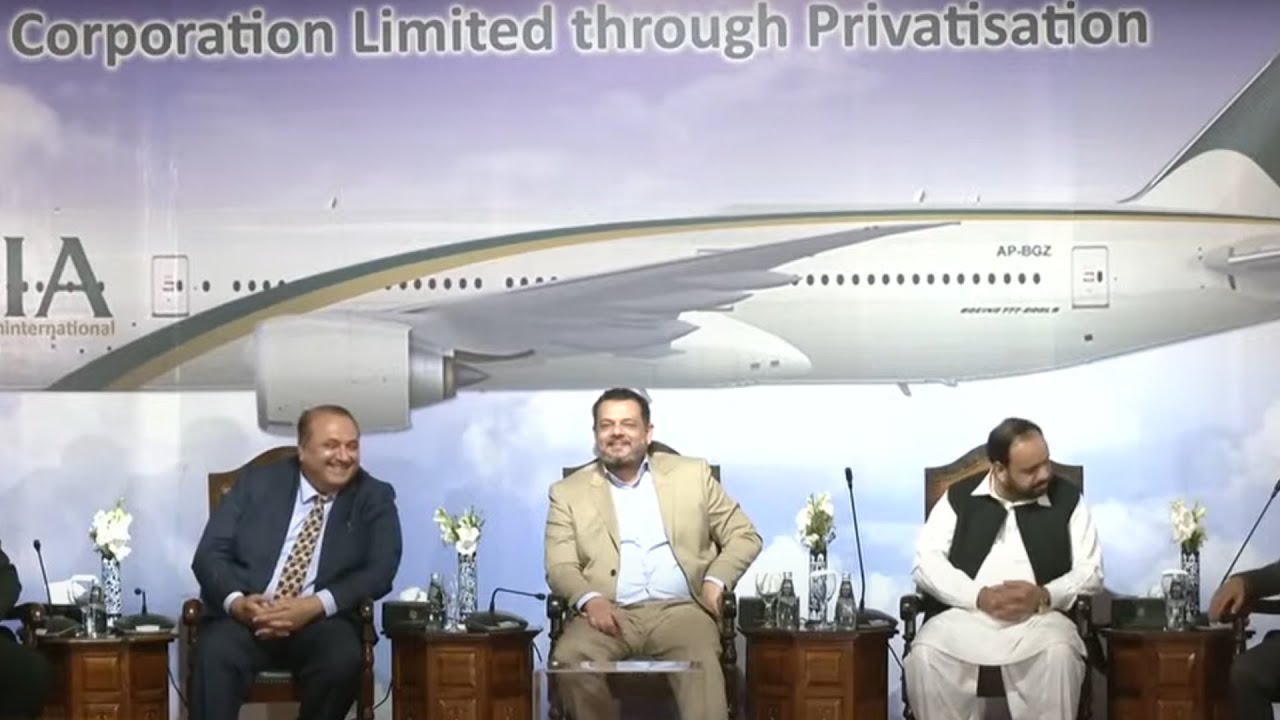
The most high-profile transaction in Pakistan’s privatization list has been the sale of Pakistan International Airlines. The Arif Habib Corporation Limited-led consortium acquired a majority stake in PIA with the highest bid of Rs135 billion in a publicly televised auction.
The sale marked Pakistan’s most aggressive attempt in decades to reform the debt-ridden carrier, which had accumulated more than $2.8 billion in financial losses.The PIA privatization latest news shows that the process has now moved even further.
The Arif Habib-led consortium submitted a standby letter of credit and a bank guarantee to the Privatization Commission for the purchase of the government’s remaining 25 percent shareholding in PIA, with April 28 fixed as the last date. The consortium had already acquired a 75 percent stake for Rs135 billion, and under the transaction structure, the remaining 25 percent stake is priced at Rs45 billion.
The amount for the purchase of the remaining 25 percent shares was deposited, along with a bank guarantee of Rs45 billion deposited in line with the agreement. The consortium is expected to take over the national flag carrier in May.
This marks a clean and complete exit of the Pakistani government from the airline sector a major development in Pakistan’s privatization history.
DISCO Privatization: FESCO, GEPCO, and IESCO on the Block
Following the PIA sale, the government has turned its full attention to the DISCO privatization of power distribution companies. This is the next major chapter in Pakistan’s business divestment story.
Pakistan has appointed financial advisers and launched sell-side due diligence for the privatization of five electricity distribution companies IESCO, FESCO, GEPCO, HESCO and SEPCO which supply electricity to tens of millions of customers and have long been a major source of financial losses for the state.
FESCO privatization news has been particularly active. The federal government revised its privatization plan for power distribution companies, deciding to offer Gujranwala Electric Power Company for outright privatization, while IESCO and FESCO will be offered on a concession model.
The Privatization Commission is targeting foreign investors, particularly from the Middle East and Turkey, to participate in the process. Pakistan’s power sector has placed severe strain on public finances, with annual subsidies exceeding PKR 1.2 trillion in fiscal year 2025.
The phased plan for DISCO privatization is clearly laid out. The first phase will include IESCO, GEPCO, and FESCO, followed by Hyderabad Electric Supply Company and Sukkur Electric Power Company in the second batch.A third phase covering LESCO, MEPCO, and HESCO will follow later.
Pakistan Privatization List: What Else Is Being Sold?
The privatization list Pakistan covers far more than just PIA and DISCOs. The scope of this business divestment wave is sweeping.
First Women Bank was privatized in October 2025, when the Government of Pakistan sold its majority stake to UAE-based International Holding Company through a government-to-government transactionThis was one of the early successes in the current privatization cycle.
Two large state-owned thermal generation companies the Guddu and Nandipur power plants are also up for privatization, with the timeline for their divestment set for the second quarter of next year.
In July 2025, Pakistan Railways decided to hand over the commercial management of 11 trains to the private sector to improve travel facilities and increase revenue.Among the trains involved are Hazara Express, Millat Express, and Subak Kharam Express.
On HBL privatization it is worth noting historically that Habib Bank Limited was one of the landmark privatizations in Pakistan’s history, along with United Bank Limited and PTCL, forming the foundation of the country’s earlier divestment waves.The current HBL privatization discussion centers on further dilution of any remaining government stake rather than a full new sale.
Company Funding News: What Investors Are Saying
The company funding news from the investment community is broadly positive, but cautious. At a news conference, Muhammad Ali, the government’s adviser on privatization, said 92.5 percent of the winning bid, amounting to about $446 million, would be reinvested into PIA itself. The remaining $36 million would go to the government.
Arif Habib, CEO of Arif Habib Group, plans to invest about $400 million in PIA to sustain its initial losses and fund overhauling that he aims to complete in the next seven years. In the first phase, the airline would induct 38 four-to-seven-year-old narrow and wide-body aircraft.
On the DISCO privatization funding front, Pakistani officials said the government expected Turkish companies to show interest, noting that a Financial Advisory Services Agreement was signed with Raiffeisen Investment Finansal Danismanlik Hizmetleri Limited Sirketi.Turkey’s experience in private-sector power distribution makes it a natural partner for this phase of Pakistan’s business divestment.
Quotes: Officials on Pakistan’s Privatization Drive
Finance Minister Muhammad Aurangzeb, speaking at the PIA auction, said: “All the bidders today are from Pakistan, which is a significant milestone. The country’s largest and most seasoned business groups are competing for the national airline, which will be led by experienced Pakistani investors.”
The Finance Minister also confirmed: “We will not stop at 26 SOEs. We will also gradually hand over other state institutions to the Privatization Commission.”
The Chairman of the Privatization Commission, Muhammad Ali, said regarding DISCO privatization: “The tariff increase has to be according to a certain formula. It cannot be at the whims of an investor.”This statement was aimed directly at calming consumer fears about price hikes after private takeover.
Impact: What Pakistan’s Business Divestment Means for the Economy
The scale of this business divestment program carries profound implications for Pakistan’s economy, both locally and globally.
SOEs collectively posted PKR 342 billion in losses during the first half of fiscal year 2025, while authorities provided PKR 1.4 trillion in subsidies during fiscal year 2024, most of which were directed at these state-run firms. Divestment directly reduces this fiscal bleeding.
Pakistan’s power sector has accumulated more than Rs2.6 trillion in circular debt as of mid-2025, driven largely by distribution losses, electricity theft, and weak bill recovery.FESCO privatization news and the broader DISCO privatization are central to fixing this structural problem.
Internationally, the latest news about privatization in Pakistan is being watched closely by the IMF, World Bank, and foreign investor communities. A successful privatization cycle would unlock further credit and investment flows into the country a critical signal for a nation rebuilding its economic credibility.
Conclusion: What Comes Next for Pakistan’s Privatization List?
The momentum behind Pakistan’s privatization list shows no signs of slowing. Finance Minister Aurangzeb confirmed that 26 state-owned entities have been handed over to the Privatization Commission, with plans to expand this further.
A second phase of DISCO privatization will follow, covering additional power distributors including Hyderabad Electric Supply Company and Sukkur Electric Power Company.GENCOs and Zarai Taraqiati Bank Limited are also on the near-term privatization list Pakistan.
The full takeover of PIA by the Arif Habib consortium in May, combined with live DISCO privatization proceedings, makes 2026 a defining year for Pakistan’s business divestment ambitions. If executed successfully, this wave of latest news about privatization in Pakistan could set the foundation for years of stronger fiscal management and private-sector-led growth.
FAQs
What is a business divestment?
A business divestment refers to the process by which a company or government sells off assets, subsidiaries, or shareholding stakes to another party. In Pakistan’s context, business divestment means the state selling its ownership in entities like PIA, DISCOs, and banks to private investors to reduce losses and improve efficiency.
What are the 4 types of divestiture?
The four main types of divestiture are: (1) Sell-off outright sale of a business unit or shares, as seen in PIA privatization; (2) Spin-off creating an independent entity from a parent company; (3) Equity carve-out selling a partial stake via an IPO; and (4) Liquidation winding down a business and selling its assets. Pakistan’s current privatization list primarily uses the sell-off and concession-model approaches for DISCOs.
What is an example of divesting?
A clear example of divesting is Pakistan’s sale of a 75 percent stake in PIA for Rs135 billion to a consortium comprised of Arif Habib Corporation Limited, Fatima Fertilizer Company Limited, City Schools, and Lake City Holdings.This is a textbook business divestment the government exiting ownership of a loss-making enterprise and transferring control to private investors.