

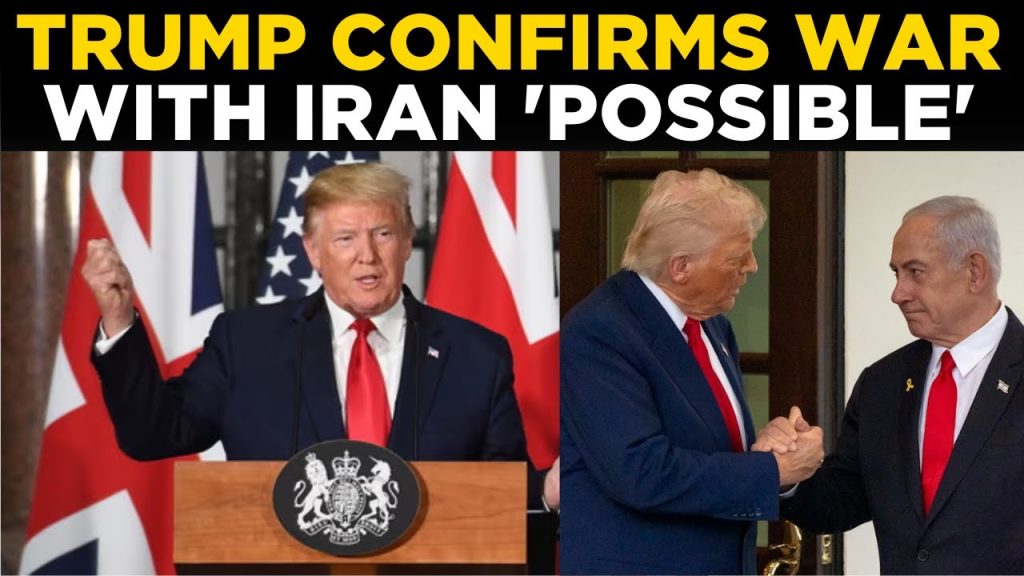

The Iran war update today brings major diplomatic turbulence. Iranian Foreign Minister Abbas Araghchi has flown to Russia to meet President Vladimir Putin, as US-Iran talks stall dangerously. Trump canceled his envoys’ Pakistan visit and told Iran to simply “call” if they want to talk. Meanwhile, Israel attacks continue in Lebanon, killing at least 14 people on Sunday alone.
Background: How the US Iran War Started
The US Iran war erupted on February 28, 2026, when the United States and Israel launched coordinated airstrikes on Iran targeting military and government infrastructure. The surprise attacks were launched during negotiations between Iran and the US regarding Iran’s nuclear program, catching Tehran off guard through months of deliberate strategic deception.
Iran responded with missile and drone strikes against Israel, US bases, and US-allied Arab countries across the Middle East, and closed the Strait of Hormuz, disrupting global trade.The Iran war news update today shows that conflict is far from resolution, with diplomacy on the edge of collapse.
Iran War Update Today: Araghchi Meets Putin in Russia
In the most significant Iran war live update of Monday, April 27, Iranian Foreign Minister Araghchi arrived in Saint Petersburg for direct talks with Russian President Putin. Araghchi will consult with Russian officials on the latest status of the negotiations, the ceasefire, and surrounding developments, according to Iran’s semi-official news agency.
Russia has remained a critical diplomatic ally for Iran throughout the war with the US, and has offered to take custody of Iran’s enriched uranium, proposing to store or reprocess it on Russian soil. This Iran news today live development signals Tehran is actively seeking powerful backers as talks with Washington remain frozen.
Moscow’s TASS news agency confirmed that Putin plans to meet Araghchi, citing Kremlin spokesman Dmitry Peskov. The meeting is being closely watched by global powers tracking Iran war news update today.
Trump Cancels Envoy Trip Tells Iran to “Call”
In a dramatic twist in the US Iran war update, President Trump scrapped a planned visit by special envoys Steve Witkoff and Jared Kushner to Pakistan, where they were supposed to hold talks with Iranian officials. Trump told reporters he canceled the trip because “we’re not going to spend 15 hours in airplanes all the time going back and forth to be giving a document that was not good enough,” and said Iran could “call us anytime they want.”
Trump also repeated prior claims suggesting uncertainty about Iran’s leadership, which he argued was complicating talks. He still insisted the war could “come to an end very soon,” adding the US is “going to be very victorious” a familiar Trump news talking point even as the conflict drags on.
Republican Senator Lindsey Graham praised Trump’s decision, calling it “very wise” and adding that resumption of military operations may be required to establish firm control over the Strait of Hormuz.
Iran’s New Proposal: Hormuz Deal Without Nuclear Talks
A major piece of Iran news today live: Tehran sent a new offer to Washington through Pakistani mediators. Iran proposed a deal with the United States to reach an agreement on reopening the Strait of Hormuz and ending the war, while delaying negotiations on Tehran’s nuclear program to a later stage.
Iran’s ISNA news agency reported that Tehran transmitted “written messages” to the US via Pakistani mediators, which addressed some of the red lines of the Islamic Republic, including nuclear issues and the Strait of Hormuz. However, Tehran emphasized the messages were not formal negotiations.
Araghchi described his earlier Pakistan trip as “very fruitful” but signaled skepticism over Washington’s intentions, insisting he had “yet to see if the US is truly serious about diplomacy.”
Iran Attack on Israel Today Update: Lebanon Under Fire
The breaking news Israel attacks Iran front today centers on Lebanon. Israeli forces continued to bombard southern Lebanon despite a US-brokered ceasefire, killing at least 14 people, including two children, on Sunday.
Israeli Prime Minister Benjamin Netanyahu ordered strikes on Hezbollah in Lebanon, accusing the Iran-backed group of violating the ceasefire agreement, saying “it must be understood that Hezbollah’s violations are, in practice, dismantling the ceasefire.”
Hezbollah said it would respond to Israel’s ceasefire violations and its “continued occupation of Lebanese territory.” The Lebanon conflict has now claimed over 2,500 lives since March 2, making it a central part of the Iran attack on Israel today update.
US Naval Blockade Tightens on Iran
The US Iran war update also includes an escalating economic stranglehold. The two-week-old US blockade has prevented 38 ships from entering or leaving Iranian ports, according to US Central Command.
Tehran warned that the Strait of Hormuz would “under no circumstances” return to its previous state after the weeks-long Iranian blockade that has sent oil prices soaring and piled pressure onto the global economy.
US President Donald Trump and UK Prime Minister Keir Starmer discussed on Sunday the “urgent need to get shipping moving again” in the Strait of Hormuz, as thousands of seafarers remain trapped in the Gulf.
Key Quotes
Trump said: “We’re not going to spend 15 hours in airplanes all the time going back and forth to be giving a document that was not good enough.”
Iran’s President Masoud Pezeshkian stated Tehran will not enter into “forced negotiations” with the United States while facing pressure and threats.
Araghchi said after his Pakistan visit that he had “yet to see if the US is truly serious about diplomacy.”
Global Impact
The Iran war news update today reverberates far beyond the Middle East. Oil markets remain volatile as the Strait of Hormuz through which nearly 20% of global oil flows remains disputed. UK Prime Minister Starmer warned of “severe consequences on the global economy and the cost of living of people in the UK.”
Pakistan has emerged as a key neutral diplomatic hub, while Russia is now openly backing Tehran. The Iran war update shows an increasingly multipolar diplomatic landscape, with every Trump news statement shifting market sentiment overnight.
Conclusion: What Comes Next?
The Iran war live update today points to a conflict entering a fragile but critical diplomatic phase. Araghchi’s Moscow meeting with Putin could reshape Iran’s negotiating position. Trump’s phone-based diplomacy approach is unorthodox, but markets remain cautiously optimistic that a deal is possible.
Iran news today live suggests both sides are testing each other’s limits before committing to serious talks. The next 48–72 hours especially the outcome of the Araghchi-Putin meeting will likely define whether the Iran war update moves toward peace or deeper escalation.
FAQs
Is war still on in Iran?
Yes. The US Iran war is ongoing as of April 27, 2026. Active military operations, a US naval blockade, and Israeli strikes on Lebanon continue, even as both sides explore diplomatic channels. The Iran war news update today confirms no formal ceasefire has been reached between the US and Iran.
Who is stronger, Iran or Israel?
By conventional military metrics, Israel holds an edge in air power, intelligence, and precision-strike capability, especially with direct US military support in the current conflict. Israel successfully eliminated multiple Iranian commanders on the war’s first day. However, Iran’s strength lies in its missile arsenal, drone technology, and a network of regional proxy forces including Hezbollah, the Houthis, and Iraqi militias, making the Iran attack on Israel today a multi-front challenge for Israeli defense forces.
Who is backing Iran in the war?
Russia is Iran’s most significant diplomatic backer, offering to store Iran’s enriched uranium and providing political support at the UN. China has also expressed opposition to unilateral US military action. Iran’s regional proxies Hezbollah in Lebanon, Houthi forces in Yemen, and militia groups in Iraq are actively engaged. The Iran war update today confirms Araghchi’s Moscow visit is central to strengthening this Russia-Iran axis during the conflict.