

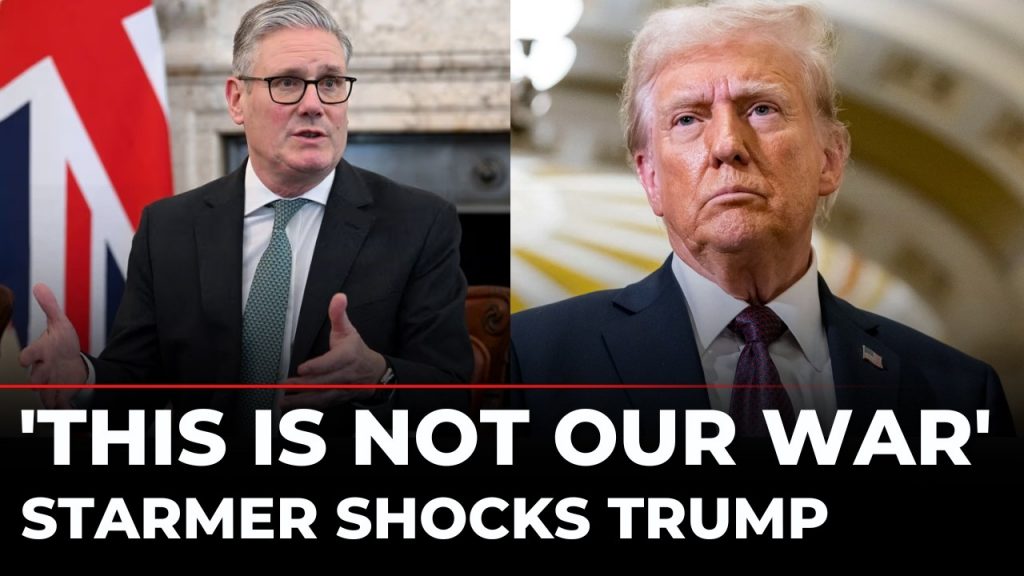

The United Kingdom is no longer fully supporting Trump on the Iran war, and the fallout has been dramatic. From base denials to rejected aircraft carriers, Trump and UK Prime Minister Keir Starmer are openly clashing. The question echoing across the world is clear is the UK supporting Trump, or has it walked away from Washington?
Background: A Once “Special” Relationship
For decades, the US-UK alliance has been called the “Special Relationship.” The two nations have stood together through World War II, the Cold War, Iraq, and Afghanistan. When Trump returned to the White House in January 2025, early signs suggested the partnership would hold. Starmer visited the White House, presented Trump with a letter from King Charles III, and the two leaders signed a billion-dollar Tech Prosperity Deal.
The two nations also reached a trade agreement that softened the impact of US-imposed tariffs following Trump’s “Liberation Day” announcement of global trade charges in April 2025.At that point, the UK was clearly trying to stay on Trump’s good side.
But everything changed when the Iran war began.
Details: The Iran War Breaks the Bond
On February 28, 2026, the United States and Israel launched airstrikes on Iran. Before the strikes, Trump’s team wanted to use UK military bases including the joint US-UK base at Diego Garcia in the Chagos Islands for the operation.
Starmer initially refused to allow the US military to use the base to send offensive missiles to Iran, citing concerns about the situation spiralling further. He later reversed that decision, framing the reversal as the “best way to eliminate the urgent threat.”
But for Trump, that reversal came too late. The delay caused real logistical problems, and Trump made no effort to hide his frustration.
Trump complained that it took “three or four days” to work out where US planes could land, saying it would have been “much more convenient” to use the UK base instead of “flying many extra hours.”
Trump also attacked the UK’s earlier decision to return the Chagos Islands’ sovereignty to Mauritius a move that affected the Diego Garcia base lease. He called it an “act of great stupidity.”
Trump Rejects UK Aircraft Carriers
As the Iran war continued, the UK Ministry of Defence placed its flagship carrier, HMS Prince of Wales, on “high readiness” for a possible Middle East deployment.
Trump rejected the offer publicly, posting on Truth Social that the US no longer needed British support. “That’s OK, Prime Minister Starmer, we don’t need them any longer But we will remember,” he wrote, adding that the US didn’t need people who “join Wars after we’ve already won.”
Trump rejects UK carriers that phrase quickly spread across global headlines. But the story grew more complicated.
Downing Street pushed back against Trump’s claims, with sources telling HuffPost UK that the US had never actually made a formal request for aircraft carriers, and that the UK had not officially offered to send any.
Trump also dismissed British carriers as “toys” compared to US vessels,deepening the rift between the two governments.
Quotes: What Trump and Starmer Said
Trump’s frustration with the UK became very public and very personal. In an Oval Office briefing alongside German Chancellor Friedrich Merz, he launched a sharp attack on Starmer’s leadership.
“The UK has been very, very uncooperative with that stupid island that they have,” Trump said, referencing the Chagos Islands base. He then added, “This is not Winston Churchill that we’re dealing with,” a pointed insult aimed at Starmer.
Starmer, for his part, defended his stance firmly in Parliament.
He told UK lawmakers, “We are not joining the US and Israeli offensive strikes,” citing the need to protect “Britain’s national interest” and “British lives.”
The contrast between the two leaders could not be starker. Trump on UK policy was blunt and dismissive. Starmer’s tone remained measured, but the message was firm the UK says no to Trump when it comes to full military involvement.
Impact: A Global Alliance Under Strain
The fallout between Trump and Starmer is being watched closely around the world. The US-UK relationship has long been the anchor of Western security alliances, including NATO. If it weakens significantly, the ripple effects could reshape how Europe coordinates with Washington on military and trade matters.
The Iran war itself has caused widespread concern. An estimated 1,332 people have been killed in Iran, and the US confirmed the deaths of seven of its service members. Retaliatory strikes from Tehran have also struck US allies including Lebanon, Kuwait, the UAE, and Iraq.
A Survation poll conducted in the UK found that 43 percent of British adults said the war was not justifiable, and 56 percent approved of Starmer’s initial decision not to allow the US to use UK bases.
This shows that UK public opinion is largely not supporting Trump on Iran and Starmer is reading that room carefully.
Meanwhile, Trump’s own standing at home is also weakening. As of April 23, 2026, only 39 percent of Americans approve of the job Trump is doing, while 57.7 percent disapprove a second-term low, sitting around where his net approval stood after January 6th.
UK’s Limited Involvement: A Middle Path
Despite the tensions, the UK has not completely walked away. The UK Defence Ministry confirmed that Starmer’s government allowed the US to use its military bases including RAF Fairford in Gloucestershire and Diego Garcia for what it described as “limited defensive purposes.”
The UK and its allies also issued a joint statement saying they were prepared to enable “necessary and proportionate defensive action” to reduce Iran’s ability to fire missiles and drones. This shows that the UK is trying to walk a careful middle linestaying allied with the US without getting pulled into what it considers an offensive war.
But Trump on UK policy appears unwilling to accept half-measures. His public statements suggest he sees anything short of full commitment as betrayal.
Conclusion: What Comes Next
The crack in the US-UK alliance is real, but it may not be permanent. Both countries still share deep intelligence ties, trade links, and NATO obligations. However, the personal relationship between Trump and Starmer has clearly suffered serious damage.
The UK says no to Trump on full military involvement in Iran but it has not said no to the alliance altogether. Whether Trump accepts that distinction, or continues to punish Britain diplomatically and economically, will shape global politics in the months ahead.
With Trump’s approval ratings falling and public opinion in the UK firmly against the Iran war, both leaders face domestic pressure. The next major test will be whether the two governments can find common ground before the Iran conflict escalates further or whether this historic partnership continues to fracture under the weight of one divisive war.
FAQs
Is the UK still friends with the USA?
Yes, the UK and USA remain formal allies through NATO and shared intelligence agreements. However, the relationship between Prime Minister Keir Starmer and President Donald Trump has become seriously strained in 2026 due to disagreements over the Iran war. The UK has limited its military support, which has angered Trump publicly.
What did Donald Trump do in the UK?
Trump visited the UK in 2025 during his second term and signed a major Tech Prosperity Deal with Starmer at Chequers. He was also invited for a state visit through a letter from King Charles III. However, Trump has since grown hostile toward the UK government over Iran war disagreements, publicly criticising Starmer and rejecting UK offers of military support.
Which country is the best friend of the UK?
Historically, the United States has been considered the UK’s closest ally known as the “Special Relationship.” However, with current US-UK tensions over Iran, the UK has also strengthened ties with European partners, including Germany and France. Australia and Canada, fellow members of the Five Eyes intelligence alliance, remain among the UK’s most trusted partners as well.