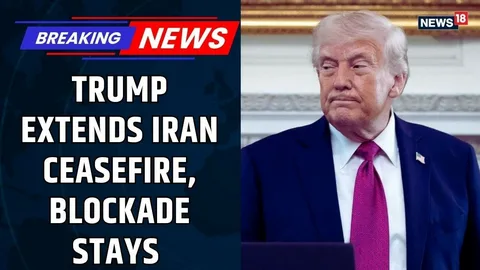
Markets got what they were waiting for — a ceasefire extension — but the relief was modest. Oil prices dip Iran ceasefire headlines moved markets only slightly, because the naval blockade on Iranian ports remains fully in place and the Strait of Hormuz is still far from normal.
Brent oil price and WTI both edged lower on Wednesday after Trump’s announcement, but traders are not celebrating. The risk has not been removed — it has simply been postponed.
What Happened to Oil Prices Today
The oil prices dip Iran ceasefire move was real but limited. Brent crude declined 0.59% to $97.91 per barrel while US West Texas Intermediate fell 0.95% to $88.82 per barrel in early Wednesday trading. The dip followed Trump’s announcement that the ceasefire would be extended indefinitely — removing the Wednesday deadline that had kept markets on edge. Earlier on Tuesday, Brent had briefly surged past $101 per barrel after reports that Vice President JD Vance had called off his Islamabad trip, before retreating once the extension was confirmed. The oil price per barrel today remains well above pre-war levels of around $73 for Brent.
Why the Dip Is Small — Blockade Still in Place
The oil prices dip Iran ceasefire reaction was shallow for one key reason: the US naval blockade of Iranian ports is still running. Traders know that a ceasefire without a blockade removal does not mean oil flows are back to normal. Shipping traffic through the Strait of Hormuz — which normally handles around 20% of global oil and gas supplies — remained broadly halted on Tuesday, with only three ships passing through. As of last week, 187 tankers carrying 172 million barrels of crude and refined products were still stranded inside the Gulf. That backlog will not clear overnight, keeping upward pressure on the Brent oil price even as diplomatic news improves.
Oil Price Per Barrel — The Full Journey Since February
To understand where crude oil price today stands, the journey matters. When the US and Israel launched airstrikes on Iran on February 28, Brent was trading at around $73 per barrel. By early March it had surged to $83. By April 6 it hit $115 per barrel — the highest level since 2022. When the initial two-week ceasefire was agreed on April 8, crude oil price today plunged more than 16% in a single session — the biggest one-day drop since April 2020. Since then, markets have swung violently with each development. The current level near $95 to $98 represents a market that has partially calmed but remains deeply uncertain about supply.
Strait of Hormuz — The Key to the Oil Prices Forecast
The single most important variable in any oil prices forecast is the Strait of Hormuz. The International Energy Agency described the closure as the “largest supply disruption in the history of the global oil market.” In early April, shipments through the strait averaged just 3.8 million barrels per day — down from more than 20 million barrels per day before the war began. Global oil supply plummeted by 10.1 million barrels per day in March alone. The oil prices forecast from the US Energy Information Administration projects Brent will peak at around $115 per barrel in Q2 2026 before easing below $90 in Q4, and averaging $76 in 2027 — but that is heavily dependent on how quickly the Strait reopens.
Heating Oil Prices Today — Consumers Feeling the Pain
The heating oil prices today and retail fuel costs are where ordinary people feel this crisis. US gasoline reached a national average of $4.11 per gallon — up 38% since the war began. Diesel climbed to $5.62 per gallon, a 49% increase. The heating oil prices today picture is similarly grim for households in Europe and Asia, where energy dependence on the Middle East is even higher. The European Central Bank postponed planned interest rate reductions in March, raising its 2026 inflation forecast and warning that energy-intensive economies face recession risk if the maritime blockade persists through the summer. Economists now widely cite an increased risk of stagflation driven directly by oil prices dip Iran ceasefire volatility.
What Markets Are Watching Now
Oil traders are not reacting to promises — they are watching four concrete signals. First, whether Iran confirms it will send a delegation to Islamabad for talks. Second, whether the US adjusts or lifts its naval blockade. Third, actual shipping activity through the Strait of Hormuz. Fourth, any unexpected military or enforcement actions in the Gulf. The oil prices forecast community is split between those who see prices drifting toward the low $90s if talks gain traction, and those warning of a fast move toward $100 if tensions resurface. As one analyst put it: “The ceasefire has not removed risk. It has redistributed it across time.” The Brent oil price is entering a waiting game — and in geopolitically driven markets, waiting rarely lasts long.
Global Demand Also Under Pressure
The oil prices dip Iran ceasefire story is not only about supply. The International Energy Agency’s April report projects global oil demand will contract by 80,000 barrels per day in 2026 — compared to expected growth of 730,000 barrels per day before the war. The sharpest demand cuts have come from the Middle East and Asia Pacific, particularly for naphtha, LPG, and jet fuel. The Philippines declared a national energy emergency in March. India is rationing LPG and shifting households to coal power. If the ceasefire holds and the Strait reopens, the oil prices forecast eases significantly. If it collapses, $120 per barrel or higher becomes realistic within days.
Frequently Asked Questions
Oil price today and Brent oil price — where are they right now?
As of April 22, Brent oil price is trading around $97.91 per barrel and US WTI crude is near $88.82 per barrel. Both dipped slightly after Trump extended the Iran ceasefire, but prices remain well above pre-war levels of $73 for Brent and $67 for WTI recorded on February 27 before hostilities began.
Oil prices forecast — when will prices come down?
The US Energy Information Administration projects Brent will peak near $115 per barrel in Q2 2026 before falling below $90 in Q4 and averaging $76 in 2027. The key condition is a resumption of normal Strait of Hormuz traffic by mid-year. If the blockade continues or the war resumes, analysts warn prices could push above $120 per barrel rapidly.
Heating oil prices today — how much have fuel costs risen since the war started?
US gasoline is up 38% since February 28, reaching a national average of $4.11 per gallon. Diesel has risen 49% to $5.62 per gallon. Heating oil prices today in Europe and Asia have followed a similar trajectory, with LNG spot prices in Asia more than doubling in early March. Fuel shortages have been reported across South and Southeast Asia, with several countries rationing supply.