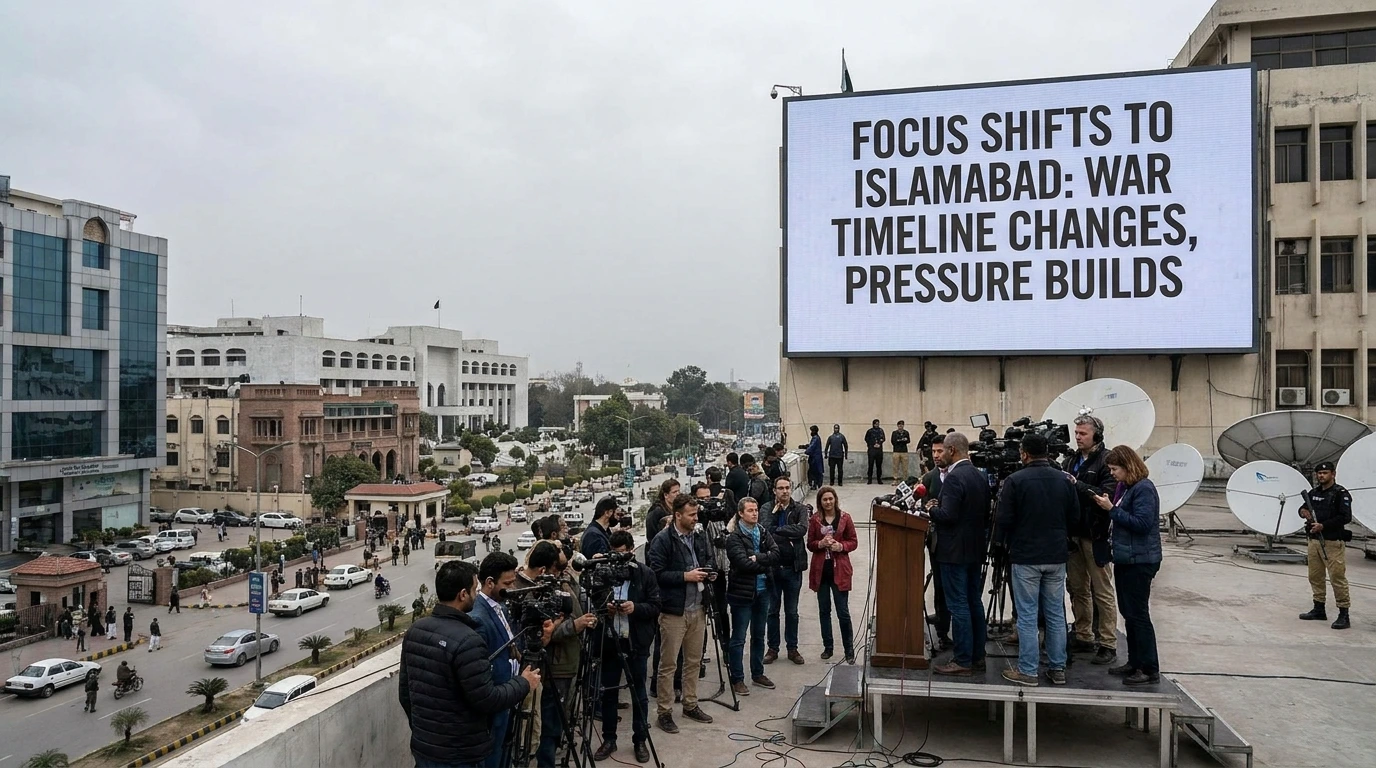
Islamabad is no longer just a capital it has become the centre of one of the most consequential diplomatic moments of 2026. With global war pressures converging on Pakistan, the city is locked down, the stakes are high, and the clock is running.
Pakistan finds itself at the crossroads of multiple conflicts at once. The Islamabad war pressure is no longer abstract it is visible on the streets, in sealed roads, and in helicopters circling the Red Zone.

How Islamabad Became the World’s Diplomatic Hotspot
Pakistan played a central role in brokering a two-week ceasefire between the United States and Iran on April 8, 2026, and then hosted high-level peace talks in Islamabad on April 11 and 12. The talks brought a 300-member US delegation led by Vice President JD Vance and a 70-member Iranian team — with Pakistan’s own Prime Minister Shehbaz Sharif and Field Marshal Asim Munir leading mediation. After 21 hours of negotiations across three rounds, both sides left without a deal, with Iran’s nuclear program and the Strait of Hormuz remaining the core unresolved issues.
Second Round Imminent — Islamabad Prepares Again
US Vice President JD Vance is expected to travel to Islamabad for a second round of talks with Iran, currently planned for Wednesday, though officials cautioned the situation remains fluid amid heated rhetoric from both sides. Iran has publicly signalled reluctance, accusing Washington of shifting positions. However, Pakistani sources suggest Tehran’s stance could be tactical posturing aimed at extracting maximum advantage before the second round begins.
Red Zone Sealed, City on High Alert
Islamabad’s Red Zone has been completely sealed, with all ministries, schools, and government offices shifted to work-from-home. Around 18,000 security personnel — including reinforcements from Punjab — have been deployed, with elite commandos, snipers, and rapid response units placed on standby. Popular hiking trails including Trail 2, 3, 4 and 5 and routes behind Saidpur village have also been closed to the public until further notice. The Serena Hotel, located inside the heavily secured Red Zone, was again requisitioned to host incoming delegations.
Areas to Avoid in Islamabad Right Now
The Red Zone and Extended Red Zone remain completely sealed, with all offices and educational institutions directed to operate remotely. The Red Metro Bus Service from Saddar Station in Rawalpindi to Pak Secretariat Station in Islamabad has been fully suspended, and all heavy and public transport across the twin cities of Islamabad and Rawalpindi has been halted until further notice. Residents have been advised to avoid government areas, diplomatic zones, and main arterial roads near the city centre during VVIP convoys.
The Afghanistan Front — Another War at Pakistan’s Door
While Islamabad manages the Iran war diplomacy, it is simultaneously waging its own military conflict. On February 27, 2026, Pakistan’s Defence Minister declared “open war” against Afghanistan’s Taliban government, following a week of escalating cross-border strikes that began on February 22 in response to a string of terror attacks inside Pakistan including a suicide bombing at a Shia mosque in Islamabad that killed 36 people. Pakistan struck Kabul, Kandahar, and Bagram airbase, prompting retaliatory attacks on Pakistani military facilities by Taliban forces, with thousands displaced on both sides of the border.
Why Iran and Pakistan Are Involved
Pakistan is not at war with Iran — rather, it is mediating. The 2026 Iran war began on February 28, 2026, when Israel and the United States launched airstrikes on Iran, killing its Supreme Leader and destroying key military infrastructure. Iran responded with missile strikes across the region and closed the Strait of Hormuz, disrupting global trade. For Pakistan, the conflict created an immediate economic crisis — rising oil prices, energy shortages, and inflation that fuelled public anger and put enormous pressure on the government.
Pakistan’s Three Major Pressure Points
The Islamabad war pressure is not coming from one direction — it is coming from three. First, the Afghanistan conflict along the Durand Line, which has drawn the military deep into open cross-border operations. Second, the US-Iran war, which has hit Pakistan’s economy through rising fuel costs and squeezed its already strained public finances. Third, the India-Pakistan airspace standoff — now over a year old — which continues to cost billions in diplomatic and aviation losses. Each of these pressures feeds the others, making Islamabad’s balancing act extraordinarily fragile.
What Comes Next
As of April 20, it remains unclear whether Iran’s delegation will participate in the next round of talks. Iran’s foreign minister indicated a preference for speaking with European partners first, while the US ceasefire clock continues to count down. Pakistan is pushing hard to keep both sides at the table and frame the process as an ongoing “Islamabad process” rather than a failed one-off attempt. Whether Islamabad can sustain that role while managing its own wars will define its place in global diplomacy for years to come.
Frequently Asked Questions
What is the cause of the war in Pakistan?
Pakistan is not currently in a single war but faces two simultaneous conflicts. The Afghanistan-Pakistan war began after repeated terror attacks inside Pakistan including a mosque bombing in Islamabad which Islamabad blamed on militant networks operating from Afghan soil. Pakistan launched airstrikes in February 2026, and Taliban forces responded with cross-border attacks.
What areas to avoid in Islamabad now?
The Red Zone and Extended Red Zone are fully sealed. This includes areas around the National Assembly, federal ministries, foreign embassies, the Serena Hotel, and main government boulevards. Hiking trails in the Margalla Hills near Saidpur have also been closed. Public transport across Islamabad and Rawalpindi has been suspended and the Metro Bus Service is not operating.
What are the three major problems in the country of Pakistan?
Pakistan currently faces three major crises simultaneously: an active cross-border war with Afghanistan’s Taliban government; severe economic pressure caused by the US-Iran war’s impact on oil prices and trade routes; and an ongoing military-diplomatic standoff with India, including a year-long airspace ban that has cost the region billions.