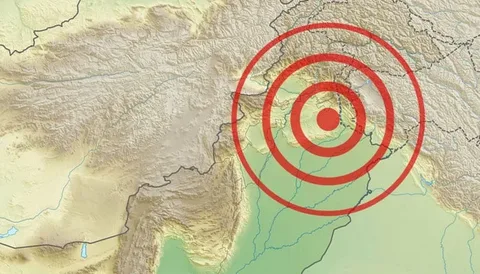
Islamabad earthquake 6.1 struck parts of Pakistan, including the capital city and Khyber Pakhtunkhwa (KP), sending shockwaves across densely populated areas and causing widespread panic. Residents rushed out of homes, offices, and commercial buildings as the tremor was felt strongly in multiple regions. Initial reports suggest no major casualties, but authorities are closely monitoring Islamabad earthquake damage and conducting safety inspections.
The Islamabad earthquake 6.1 has once again highlighted the country’s vulnerability to seismic activity. Many citizens described the tremor as intense and prolonged, raising concerns about Islamabad earthquake risk and the preparedness of infrastructure in urban areas. The incident has sparked fresh discussions on disaster readiness and emergency response mechanisms.
Background: Why Islamabad Faces Earthquake Risk
Pakistan lies on a major fault line where the Indian and Eurasian tectonic plates collide, making it prone to earthquakes. Islamabad earthquake 6.1 is part of a recurring pattern of seismic activity in the region, especially in northern Pakistan and KP. These areas frequently experience tremors due to their geological positioning.
Experts have long warned that Islamabad earthquake risk is significant due to rapid urban expansion and mixed construction quality. While modern buildings may be designed to withstand earthquakes, older structures often lack the resilience needed during strong tremors. This creates a potential risk of severe Islamabad earthquake damage in future events.
The recent Islamabad earthquake 6.1 has reminded authorities and the public alike that preparedness is essential. Despite improvements in building codes and awareness campaigns, consistent enforcement remains a challenge in many areas.
Details: What Happened During the Earthquake
The Islamabad earthquake 6.1 occurred during active hours, allowing people to react quickly and evacuate buildings. Tremors were felt not only in Islamabad but also across KP and nearby regions. Many residents initially assumed it was a 6.2 earthquake Islamabad event due to the intensity of shaking.
Reports of Islamabad earthquake damage include cracks in walls, fallen objects, and temporary disruptions in daily activities. While no major infrastructure collapse has been confirmed, authorities are conducting inspections to ensure safety. Emergency services were placed on high alert, and hospitals were prepared for any possible casualties.
Seismological departments confirmed the magnitude and advised citizens to remain cautious due to the possibility of aftershocks. The Islamabad earthquake 6.1 has once again demonstrated how even moderate earthquakes can create fear and disruption in urban centers.
Quotes from Experts and Authorities
Seismologists and disaster management experts have stressed the importance of preparedness following the Islamabad earthquake 6.1. “Pakistan lies in a highly active seismic zone, and events like this are reminders that preparedness should never be ignored,” said an official from the National Seismic Monitoring Centre. Another expert noted, “Although this was not as strong as a 6.2 earthquake Islamabad scenario, the shaking was enough to expose vulnerabilities in infrastructure.” Authorities also emphasized that “reducing Islamabad earthquake damage depends on strict building regulations and public awareness.” These expert views highlight the ongoing Islamabad earthquake risk and the need for long-term safety planning.
Impact: What This Means for the Region
The Islamabad earthquake 6.1 has had both immediate and long-term implications. While physical Islamabad earthquake damage appears limited, the psychological impact on residents has been significant. Many people reported fear and anxiety, especially those living in high-rise buildings.
Islamabad earthquake risk continues to be a major concern for policymakers and urban planners. Rapid population growth and construction without strict adherence to safety standards increase the potential for future disasters. Experts warn that a stronger earthquake could result in far more severe Islamabad earthquake damage if preventive measures are not strengthened.
The event has also reignited discussions about emergency preparedness. Authorities are now focusing on improving early warning systems, conducting safety drills, and ensuring that rescue teams are well-equipped. Regional coordination between Islamabad and KP is also being emphasized to handle future seismic events more effectively.
Conclusion
Islamabad earthquake 6.1 serves as a wake-up call for both authorities and citizens. While the recent tremor did not result in major destruction, it highlights the ongoing Islamabad earthquake risk and the importance of preparedness.
Improving infrastructure, enforcing building codes, and raising public awareness are essential steps to reduce Islamabad earthquake damage in the future. As seismic activity remains unpredictable, proactive measures will be key to protecting lives and property. The Islamabad earthquake 6.1 may have been moderate, but its message is clear: preparedness cannot be ignored.
Frequently Asked Questions
Has there been a 10.0 earthquake?
No, a 10.0 magnitude earthquake has never been recorded. The strongest earthquake in history was the 9.5 magnitude Valdivia earthquake in Chile in 1960. Scientists believe earthquakes above magnitude 10 are extremely unlikely due to geological limitations of tectonic plate movement.
What earthquake killed 830,000 people?
The 1556 Shaanxi earthquake in China is considered the deadliest in recorded history, with an estimated death toll of around 830,000 people. The high number of casualties was mainly due to poor construction and densely populated areas, showing how dangerous earthquakes can be when infrastructure is weak.
What was the 7.8 earthquake in Pakistan?
Pakistan experienced a powerful 7.8 magnitude earthquake in 2013 in the Balochistan region. It caused significant destruction, loss of life, and even created a temporary island in the Arabian Sea. Events like these highlight the ongoing Islamabad earthquake risk and the need for strong disaster management systems.