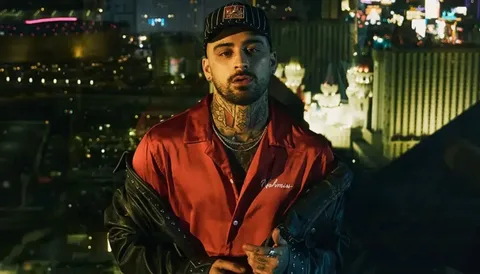
Konnakol album has arrived as Zayn Malik’s most explicitly and most ambitiously South Asian musical statement — with the former One Direction member and solo artist declaring in his pre-release communications that KONNAKOL represents a deliberate and deeply personal embrace of the South Asian musical heritage that has always existed within his creative identity but that no previous album in his solo career has engaged with this directly this comprehensively or this unapologetically.
Konnakol album name itself signals the depth of Zayn’s South Asian musical engagement — with konnakol being the ancient South Indian vocal percussion tradition of Carnatic music in which complex rhythmic patterns are articulated through specific syllables and vocalisations that have been practised and refined across centuries of classical musical tradition in the Indian subcontinent. The choice of this specific word as an album title communicates that KONNAKOL is not a superficial incorporation of South Asian aesthetic signifiers but a genuine engagement with the region’s classical musical foundations.
Konnakol Zayn connection reflects a career arc that has been moving toward this moment — with Zayn’s post-One Direction solo catalogue having gradually incorporated more complex production greater musical ambition and increasing willingness to draw on the South Asian and Pakistani cultural heritage that his Bradford upbringing and family background gave him but that the commercial demands of mainstream pop had previously pushed to the margins of his public artistic identity.
Background: Zayn’s South Asian Identity
Who Zayn Is and Where He Comes From
Konnakol album must be understood against the background of Zayn Malik’s specific identity — a Bradford-born British Pakistani whose father Yaser Malik is of Pakistani heritage and whose mother Tricia is of English and Irish descent making Zayn one of the most globally prominent figures of South Asian diaspora background in contemporary popular culture.
Konnakol album South Asian identity dimension is not a sudden discovery but the culmination of a gradual artistic journey — with Zayn having spoken in interviews throughout his solo career about the tension between his British Pakistani heritage and the mainstream Western pop identity that his One Direction career required him to present as his primary public self.
Konnakol album Bradford context is important — with Bradford being one of the UK’s most significant Pakistani diaspora communities whose cultural richness musical traditions and complex negotiation of British Pakistani identity provided Zayn with a specific South Asian cultural immersion that superficial diaspora exposure cannot replicate. Growing up in Bradford meant growing up surrounded by the specific sounds foods languages and cultural practices of Pakistani community life in ways that shaped Zayn’s sensory and cultural formation at the most fundamental level.
Konnakol album previous hints include several moments in Zayn’s solo career that in retrospect appear as steps toward the more explicit South Asian musical engagement that KONNAKOL represents — including production choices that incorporated specific rhythmic and tonal elements from South Asian musical traditions melodic lines that echoed Pakistani classical and film musical sensibilities and the visual and lyrical content of specific singles that touched on themes of cultural hybridity and identity negotiation.
Zayn’s Solo Career Context
Konnakol album arrives in the context of a solo career that has been marked by creative ambition commercial complexity and the specific challenge of an artist working to define an artistic identity that is genuinely his own after years in which his identity was defined by membership of the most commercially successful boy band of his generation.
Konnakol album predecessors include Mind of Mine — Zayn’s debut solo album whose deliberately experimental R&B production and explicit lyrical content signalled his departure from One Direction’s pop conventions. Icarus Falls — his second album whose double album ambition and genre-crossing production demonstrated the creative scope he was reaching for. Nobody Is Listening — his third album whose stripped-back emotional honesty brought critical reassessment of his artistic voice. Each of these albums moved incrementally toward the creative authenticity that Konnakol album appears to represent in its most complete form.
Konnakol Album — What Zayn Said
His Own Words About KONNAKOL
Konnakol album Zayn’s own statements about the record represent the most direct and revealing account of his artistic intentions — with the artist having spoken about KONNAKOL in a way that combines intellectual articulation of the musical concepts he is engaging with and deeply personal expression of the cultural identity the album represents.
Konnakol album most South Asian statement reflects Zayn’s recognition that his previous albums had incorporated South Asian influences as elements within a broader musical identity rather than making South Asian musical traditions the foundation on which the entire album was built. KONNAKOL inverts this hierarchy — with South Asian classical musical frameworks including konnakol rhythmic traditions Carnatic melodic structures and Pakistani classical musical elements providing the fundamental architecture on which contemporary production and Zayn’s distinctive vocal identity are built.
Konnakol album Bradford statement — in which Zayn has spoken about the album as a return to the sounds and cultural experiences of his Bradford childhood — is the most emotionally resonant dimension of his KONNAKOL communications. The album is not conceived as a world music exercise or a strategic market positioning toward South Asian audiences but as a deeply personal act of homecoming — the musical articulation of an identity that Bradford shaped and that commercial pop had required him to suppress.
Konnakol album Pakistani heritage dimension is the most specifically personal component of Zayn’s most South Asian statement — with the album drawing on the specific musical traditions of Pakistani classical music Sufi devotional music and the melodic and rhythmic language of Pakistani film music that provided the soundtrack of his family’s cultural life in Bradford.
Konnakol album religious dimension has been addressed by Zayn with the same complexity that has characterised his public engagement with Islam throughout his career — acknowledging the spiritual dimensions of the music he is drawing on particularly Sufi devotional traditions without making the album a specifically religious statement that would reduce its universality.
Konnakol Zayn — Musical Influences
The Specific South Asian Musical Traditions in KONNAKOL
Konnakol Zayn musical influences span 3 primary South Asian musical traditions that together constitute the album’s foundational musical architecture — with Carnatic classical music from South India Pakistani classical and Sufi traditions and the melodic sensibility of Bollywood and Lollywood film music each contributing specific elements to the KONNAKOL sound.
Konnakol Zayn Carnatic tradition influence is most directly expressed in the album title itself — with the konnakol practice of South Indian classical vocal percussion providing the rhythmic foundation for the album’s most distinctive production choices. Carnatic rhythmic cycles — talas — are extraordinarily complex mathematical structures that create the specific kind of rhythmic sophistication that Western pop music’s 4/4 time signature cannot approach and that gives KONNAKOL’s production a rhythmic depth that immediately distinguishes it from anything in Zayn’s previous catalogue.
Konnakol Zayn Pakistani classical influence draws primarily on the Hindustani classical tradition that dominates North Indian and Pakistani classical music — with raga-based melodic structures providing the tonal framework for vocal melodies that move through scales and ornaments completely foreign to Western pop convention. The specific use of Hindustani classical vocal techniques including meend — gliding between notes — and gamak — a specific form of rapid oscillation — gives Konnakol Zayn’s vocal performances a distinctively South Asian quality that his previous work had not attempted.
Konnakol Zayn Sufi influence draws on the qawwali tradition — the devotional music associated with the Sufi orders of Pakistan and North India — whose call-and-response structures communal rhythmic building and spiritual intensity provide the emotional architecture of the album’s most ambitious tracks. The qawwali influence in KONNAKOL connects the album to the specific musical heritage of Pakistani cultural and spiritual life that Zayn’s family background gave him access to.
Konnakol Tracklist — What to Expect
KONNAKOL Track by Track
Konnakol tracklist represents Zayn’s most ambitious sequencing of a solo album — with the track order designed as a deliberate journey through different dimensions of South Asian musical tradition rather than the conventional pop sequencing of singles and album tracks.
Konnakol tracklist opening tracks establish the album’s foundational musical grammar — with the konnakol vocal percussion tradition introduced in the album’s opening moments as the rhythmic language within which everything that follows is contextualised. The opening sequence communicates immediately that KONNAKOL is not a pop album with South Asian elements but a South Asian musical statement that incorporates Zayn’s pop identity.
Konnakol tracklist middle section develops the album’s melodic and emotional core — with the Hindustani classical raga influences most fully expressed in tracks that give Zayn’s voice the space to move through the modal melodic structures that classical South Asian music employs rather than the chord-based melodic conventions of Western pop.
Konnakol tracklist Sufi section provides the album’s emotional climax — with qawwali-influenced tracks whose communal energy and spiritual intensity represent the most ambitious musical territory Zayn has ever attempted and whose success or failure will be the most consequential dimension of critical response to KONNAKOL.
Konnakol tracklist closing sequence integrates the album’s diverse influences into a unified musical statement — with the final tracks demonstrating that the South Asian classical foundations and contemporary pop production are not contradictory but complementary elements of a genuinely original sound.
Zayn Konnakol Album Cover — Visual Identity
The Visual Statement
Zayn Konnakol album cover has generated the kind of discussion that only a genuinely striking piece of visual art produces — with the cover being as deliberate a statement of cultural identity and artistic intent as the music it represents.
Zayn Konnakol album cover visual language draws explicitly on South Asian artistic traditions — incorporating elements of Mughal miniature painting Islamic geometric art and contemporary South Asian graphic design in a composition that immediately communicates the album’s cultural territory before a single note has been heard.
Zayn Konnakol album cover Zayn’s own visual representation reflects the cultural identity statement the album makes musically — with styling that draws on South Asian sartorial traditions in ways that his previous album artwork had not attempted and that communicate his ownership of the cultural heritage KONNAKOL engages with.
Zayn Konnakol album cover colour palette draws on the specific chromatic language of South Asian visual culture — with the rich jewel tones of Pakistani embroidery and Mughal artistic tradition providing the visual equivalent of the musical richness that KONNAKOL’s South Asian influences bring to its sonic palette.
Zayn Konnakol album cover typography has been designed by a South Asian graphic artist whose work brings the specific calligraphic traditions of Urdu and Sanskrit lettering into dialogue with contemporary typographic design — creating a visual presentation of the KONNAKOL name that honours the classical tradition the word comes from while making it legible and compelling to contemporary global audiences.
What Konnakol Means — The Word and Its Significance
Konnakol — The Ancient Art
Konnakol meaning for those encountering the word for the first time requires some context — with the term being specific to the Carnatic classical music tradition of South India and referring to the practice of vocal percussion in which complex rhythmic patterns are articulated through specific syllables.
Konnakol in Carnatic music is the system by which students and practitioners of the classical tradition learn and perform rhythmic cycles — using specific syllables like ta ka di mi ta ka jonu to represent drum strokes that would be played on the mridangam the primary percussion instrument of Carnatic music. A konnakol performer can replicate the complete rhythmic complexity of classical Carnatic percussion using only their voice — demonstrating a mastery of rhythmic language that has parallels to the Western tradition of scat singing in jazz but whose mathematical complexity and classical depth go significantly beyond what Western vocal percussion traditions have developed.
Konnakol significance as an album title choice communicates several things simultaneously. It signals genuine engagement with South Asian classical musical tradition rather than superficial borrowing of aesthetic signifiers. It specifically references the vocal dimension of South Asian musical practice — appropriate for a vocalist whose instrument is his primary musical identity. It connects the album to one of the oldest living musical traditions in the world — giving KONNAKOL a depth of historical reference that pop album titles rarely claim.
Konnakol meaning in Zayn’s hands extends beyond the musicological to the personal — with the word representing his claim to the South Asian musical heritage that his family background gave him access to and that KONNAKOL translates into a contemporary global artistic statement.
Is Zayn Part Pakistani — Heritage and Identity
Zayn’s Pakistani Background
Is Zayn part Pakistani is one of the most frequently asked questions about the artist among audiences encountering his music — with the answer being yes in ways that go beyond simple ancestry to encompass a lived cultural identity that KONNAKOL represents the most complete artistic expression of.
Zayn’s Pakistani heritage comes through his father Yaser Malik who is of Pakistani descent — making Zayn half-Pakistani on his father’s side alongside his English and Irish heritage from his mother Tricia. This specific heritage places Zayn within the British Pakistani diaspora community whose cultural negotiation of dual identity — simultaneously deeply rooted in Pakistani cultural traditions and shaped by British experience — has produced some of contemporary culture’s most interesting artistic voices.
Is Zayn part Pakistani answer extends beyond DNA to cultural formation — with Zayn having grown up in Bradford’s Pakistani community attending a school with significant Pakistani student population spending time with Pakistani grandparents and absorbing the specific cultural sensory landscape of British Pakistani life in ways that shape artistic identity more profoundly than ancestral percentage alone.
Is Zayn part Pakistani Islam dimension adds a further layer — with Zayn having been raised Muslim and having spoken about the complex relationship between his Muslim identity the expectations placed on Muslim celebrities and his personal faith in ways that the Sufi dimension of KONNAKOL’s musical influences connects to.
Zayn’s Pakistani identity has been a source of both specific pride and specific difficulty throughout his career — with his Muslim Pakistani background making him a target for racist abuse particularly in the early post-One Direction years and his public identity as a successful global star of Pakistani heritage making him an important cultural figure for the Pakistani diaspora worldwide.
Quotes on Konnakol Album
Zayn Malik stated in his most extensive KONNAKOL pre-release interview that making this album felt like the first time he had been completely honest in his music — adding that every previous album had elements of what other people expected him to be and that KONNAKOL was the first time he had made something entirely from the inside of who he actually is including the parts that grew up in Bradford surrounded by Pakistani music culture and faith.
Zayn described the konnakol tradition specifically — stating that when he first heard a konnakol master perform he felt he was hearing something that had been living in his body as a kind of unspoken musical language that he had absorbed from South Asian music around him growing up without ever having a name for it and that naming the album KONNAKOL was his way of finally naming that inheritance.
Music producer Malay Ho who collaborated on earlier Zayn projects described the KONNAKOL creative direction as the most creatively brave decision Zayn had made in his solo career — stating that he had always felt the South Asian musical depth was present in Zayn’s voice in ways that mainstream pop production never gave it room to express and that KONNAKOL sounded like an artist finally operating at full capacity.
British Pakistani journalist Sarfraz Manzoor writing about KONNAKOL stated that the album felt like a significant cultural moment — not just for Zayn but for the entire generation of British Pakistanis who had grown up watching a man who looked like them and came from a place like theirs become one of the most famous people in the world while rarely being able to see that identity fully reflected in his music.
Classical Carnatic musician Sikkil Gurucharan who was involved in the KONNAKOL recording sessions described working with Zayn as an experience of genuine artistic exchange — stating that Zayn approached the konnakol tradition with the humility of a student and the instincts of an artist who had been hearing these rhythmic patterns in some form his entire life.
Impact: What Konnakol Album Means
For Zayn’s Career
Konnakol album represents the most significant artistic risk and potentially the most significant artistic achievement of Zayn’s solo career — with the album’s departure from the R&B pop framework of his previous work constituting a genuine creative gamble whose commercial consequences are genuinely uncertain but whose artistic significance is already evident.
Konnakol album commercial prospects are more complex than previous Zayn releases — with the South Asian classical musical foundations creating both a potentially massive engaged audience among South Asian diaspora listeners worldwide and a potential barrier for listeners whose relationship with Zayn has been formed through his more conventionally Western pop-oriented previous work.
Konnakol album long-term career significance may ultimately be determined less by its initial commercial performance than by whether it is recognised as the moment when one of the most famous artists of South Asian heritage in the world used that platform to make South Asian classical musical tradition the explicit subject and foundation of a major global artistic statement.
For South Asian Music Globally
Konnakol album contribution to South Asian music’s global visibility is potentially significant — with a major Western pop star making the konnakol tradition the title and organising concept of a major release bringing a word and a practice that most global audiences have never encountered into mainstream cultural circulation.
Konnakol album Carnatic tradition exposure through Zayn’s global platform could stimulate interest in South Asian classical music among audiences who would never have encountered it through conventional classical music channels — with the album potentially functioning as an entry point for a new generation of listeners whose curiosity about konnakol leads them toward the broader classical tradition from which it comes.
Frequently Asked Questions
What Is the Meaning of Konnakol Zayn?
Konnakol Zayn refers to Zayn Malik’s album titled KONNAKOL — his most South Asian record yet in which the former One Direction member embraces his Pakistani heritage and South Asian musical traditions more explicitly and comprehensively than any previous album in his solo career. The konnakol in KONNAKOL refers to the ancient South Indian Carnatic classical vocal percussion tradition — in which complex rhythmic patterns are articulated through specific syllables — whose rhythmic philosophy provides the foundational musical architecture of the album. For Zayn specifically konnakol meaning is both musicological and personal — representing the naming of a South Asian musical inheritance that his Bradford Pakistani upbringing gave him and that KONNAKOL translates into a contemporary global artistic statement. Konnakol Zayn together therefore means an album in which one of the world’s most famous South Asian diaspora artists uses the most ancient and complex South Asian musical tradition he could access as the organising principle of his most personally authentic artistic statement.
What Does Konnakol Mean?
Konnakol is a term from South Indian Carnatic classical music referring to the practice of vocal percussion — the system by which complex rhythmic patterns are articulated using specific syllables rather than instruments. In the Carnatic tradition konnakol serves as both a pedagogical tool for learning rhythmic cycles called talas and a performance art in its own right — with skilled konnakol practitioners able to replicate the full rhythmic complexity of classical Carnatic percussion using only their voice. The specific syllables used in konnakol — ta ka di mi ta ka jonu and others — represent different drum strokes that would be played on the mridangam the primary Carnatic percussion instrument. Konnakol meaning therefore encompasses both a specific musical technique and a broader philosophy of rhythmic language that is one of the most sophisticated rhythm systems ever developed in any musical tradition. Zayn’s choice of konnakol as an album title communicates his engagement with this depth of South Asian classical musical tradition and his claim to the cultural heritage that the word represents.
Is Zayn Part Pakistani?
Yes — Zayn Malik is part Pakistani through his father Yaser Malik who is of Pakistani heritage. Zayn was born in Bradford England in 1993 to Yaser Malik and Tricia — making him half-Pakistani and half-English-Irish in ancestral terms. Beyond ancestry Zayn grew up within Bradford’s significant Pakistani diaspora community — one of the UK’s most culturally rich and historically established Pakistani communities — absorbing the specific cultural sounds tastes languages and traditions of British Pakistani life in ways that shaped his artistic sensibility at the most fundamental level. Zayn was raised Muslim — his father’s faith — and has spoken about the complex relationship between his Muslim Pakistani identity the expectations placed on Muslim celebrities and his personal experience of navigating dual cultural identity as a British Pakistani. KONNAKOL represents the most complete artistic expression of this Pakistani heritage in Zayn’s career — with the album drawing explicitly on Pakistani classical Sufi and cultural musical traditions that his Bradford upbringing gave him access to and that he is now claiming as the foundation of his most ambitious artistic statement.
Conclusion
Konnakol album is the album that Zayn Malik’s entire career has been moving toward — the moment when the most globally famous artist of Pakistani heritage in the world used that platform to say this is where I come from and this is what that sounds like when I make it fully my own.
Konnakol Zayn is not a world music album. It is not a strategic play for South Asian market share. It is not a PR exercise in identity reclamation. It is an artist finally making the music that has been living inside him since Bradford — since the sounds of his father’s culture his grandparents’ music his community’s devotional practice and the specific British Pakistani cultural world that made him who he is before One Direction made him famous.
Konnakol tracklist zayn Konnakol album cover and the ancient konnakol tradition that gives the album its name together constitute a statement of artistic and cultural identity that will define this chapter of Zayn’s career — and potentially define the broader cultural moment of what it means to be South Asian diaspora and famous in 2026.
The Strait of Hormuz may be partially open. The Iran war may be in its operational pause. The world may be counting the cost of a conflict whose resolution is still weeks away. But somewhere in the space between Bradford and Carnatic classical tradition between qawwali and contemporary pop between the artist One Direction made and the artist KONNAKOL reveals Zayn Malik has finally arrived at himself.