
(Publish from Houston Texas USA)
(By Asim Siddiqui, Washington DC)
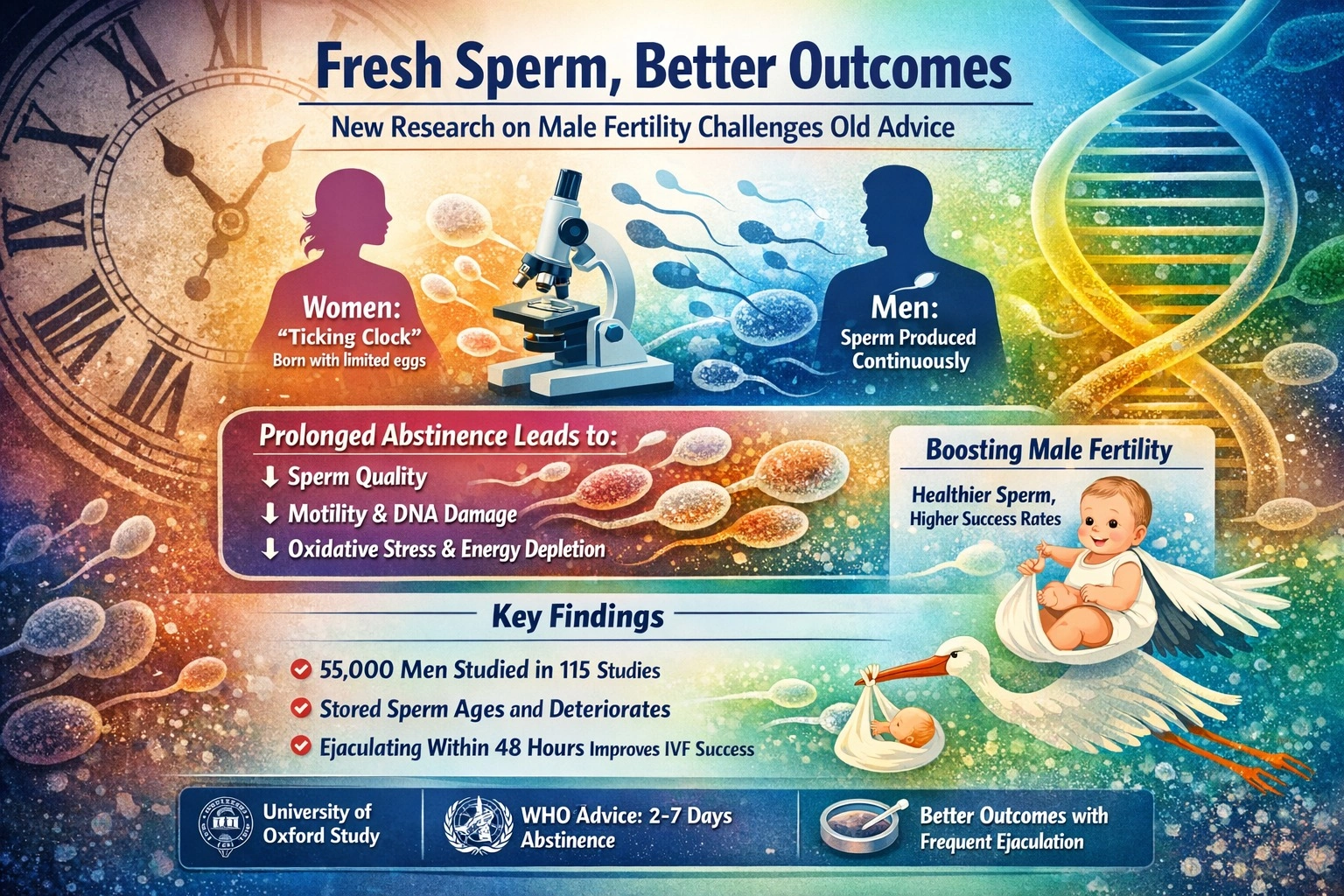
In a groundbreaking shift in reproductive science, emerging studies are challenging long-standing beliefs about male fertility. The concept of Fresh Sperm Better Outcomes is gaining strong scientific backing, suggesting that sperm quality is highly time-sensitive and significantly influenced by how long sperm are stored before ejaculation.
Fresh sperm better outcomes as new research highlights shorter abstinence for improved fertility
For decades, fertility discussions have largely focused on women’s biological clock. However, new research—particularly findings associated with the University of Oxford—indicates that men also face biological limitations when it comes to reproductive health. The idea that male fertility remains constant over time is increasingly being questioned. Men produce sperm continuously from puberty onward, unlike women who are born with a finite number of eggs. Yet, this continuous production does not guarantee consistent quality. In fact, recent evidence strongly supports the notion that Fresh Sperm Better Outcomes are linked to shorter periods of abstinence, as prolonged storage can negatively affect sperm health.
A comprehensive analysis of 115 studies involving nearly 55,000 men provides compelling insights. The findings reveal that while longer abstinence periods may increase sperm count, they simultaneously reduce critical factors such as motility, viability, and DNA integrity. This means that having more sperm does not necessarily translate into better fertility outcomes.
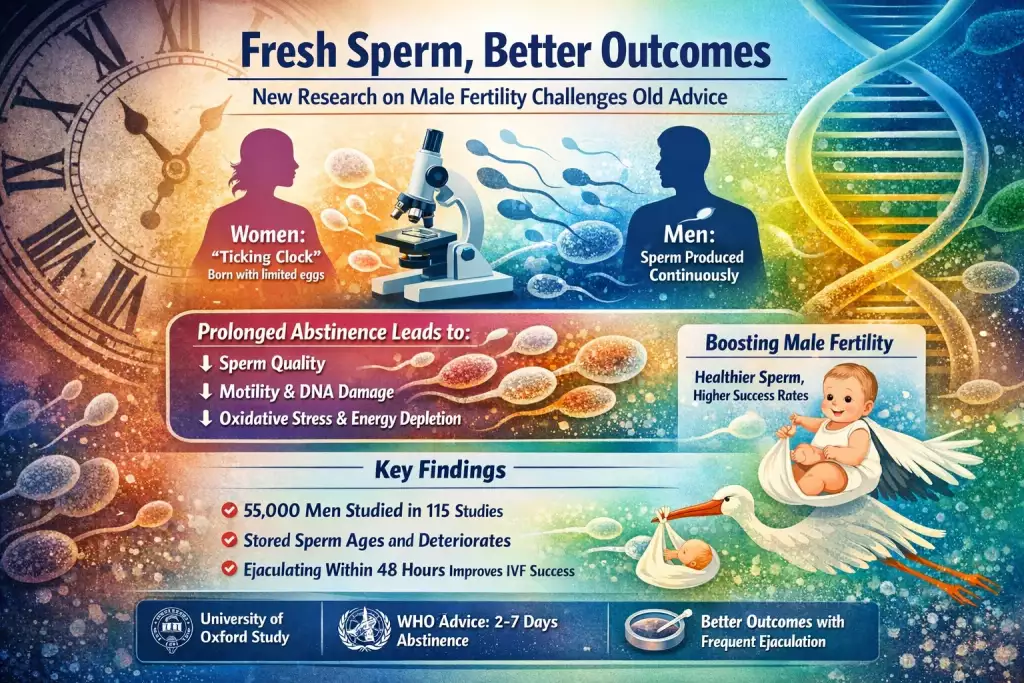
The principle of Fresh Sperm Better Outcomes becomes clear when examining the biological mechanisms behind sperm deterioration. Scientists highlight two key factors responsible for this decline. The first is oxidative stress, often described as a form of internal “rust,” which damages sperm cells over time. The second is energy depletion. Sperm are highly active cells that require energy to function effectively, and prolonged storage reduces their vitality and performance. Traditionally, the World Health Organization has recommended abstinence periods of two to seven days before providing sperm samples for fertility treatments such as in vitro fertilization (IVF). However, new research suggests that these guidelines may need revision. Evidence indicates that shorter abstinence intervals—particularly ejaculation within 24 to 48 hours—align more closely with the concept of Fresh Sperm Better Outcomes and may significantly improve IVF success rates.
This emerging perspective is also supported by evolutionary biology. In primates, frequent ejaculation appears to be a natural mechanism for maintaining sperm quality. By regularly releasing older sperm, the body replaces them with newer, healthier cells, reinforcing the idea that Fresh Sperm Better Outcomes are biologically advantageous.
The implications of this research extend far beyond laboratory findings. In modern society, trends such as delayed parenthood, sedentary lifestyles, and declining sexual activity are contributing to fertility challenges worldwide. Understanding and applying the principle of Fresh Sperm Better Outcomes could play a crucial role in addressing these issues. One of the most significant aspects of this discovery is its practicality. Many factors affecting fertility—such as genetics, environmental toxins, and stress—are difficult to control. However, the timing of ejaculation is a manageable factor. Adjusting abstinence periods is a simple yet potentially powerful step toward improving reproductive outcomes.
Furthermore, this research underscores the importance of redefining male fertility awareness. For too long, reproductive health conversations have overlooked the male contribution. The concept of Fresh Sperm Better Outcomes shifts the narrative, emphasizing that men also play a dynamic and critical role in successful conception. Medical experts are now encouraging further research to refine fertility guidelines and provide evidence-based recommendations for couples trying to conceive. As awareness grows, healthcare providers may begin advising shorter abstinence periods as part of fertility planning and treatment protocols.
In conclusion, the emerging evidence clearly supports the idea that Fresh Sperm Better Outcomes are not just a theory but a scientifically grounded reality. By challenging traditional assumptions and offering practical solutions, this research opens new possibilities for improving fertility outcomes worldwide.

References:
University of Oxford research findings
World Health Organization
Multi-study analysis (115 studies, ~55,000 participants)
For more reading please visit our Articles.