

(Publish from Houston Texas USA)
China’s Yuxing-3 06 Satellite Successfully Tests Flexible Robotic Arm for Orbital Refueling and Spacecraft Servicing
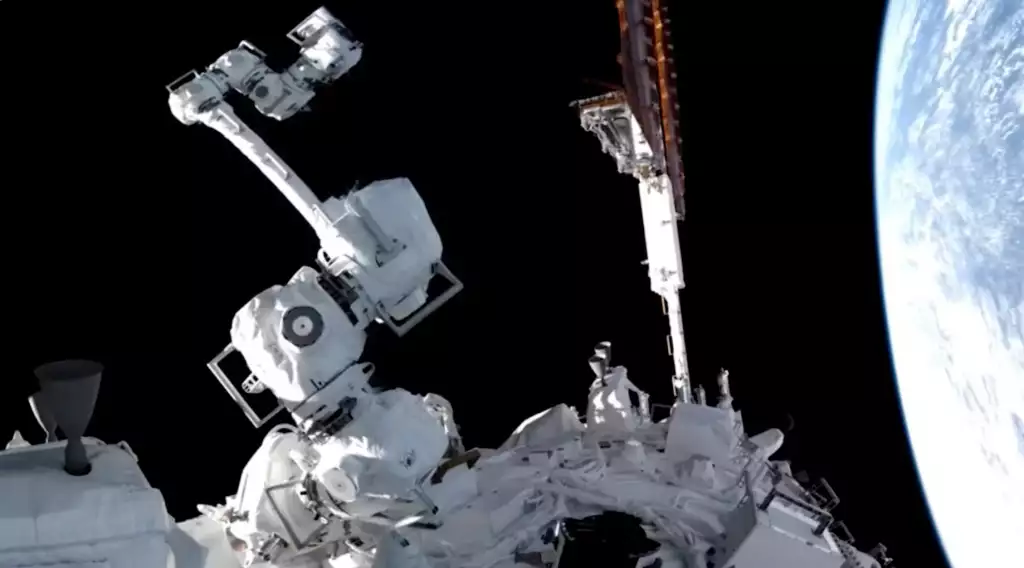
China has achieved a major milestone in its commercial space program with the successful demonstration of a flexible robotic arm aboard the Yuxing-3 06 satellite. The breakthrough advances orbital refueling technology and lays the groundwork for extending spacecraft lifespans.
Launched on March 16 aboard a Kuaizhou-11 rocket from the Jiuquan Satellite Launch Center, the Yuxing-3 06 satellite carried a state-of-the-art flexible robotic arm designed to perform complex operations in orbit. The manipulator completed simulations of autonomous programmed refueling, ground-controlled refueling, and vision-guided servo refueling, showcasing unprecedented precision in space robotics. Developed by a team led by Tsinghua University’s Shenzhen International Graduate School, the flexible robotic arm features a continuum hollow design with rear-mounted cable drive transmission. Unlike traditional rigid arms, this flexible device can curl, twist, and coil like an elephant’s trunk, allowing it to operate in confined or complex spaces with ease.
“This demonstration marks a historic achievement for China’s commercial space industry,” said Wang Xueqian, the research team leader at Tsinghua University. “The flexible robotic arm can perform extravehicular operations, refuel satellites, repair spacecraft, and even clear space debris, revolutionizing in-orbit servicing.”
China has been steadily advancing satellite refueling technologies, having launched the Shijian-25 test satellite in January 2025 to verify systems for fuel replenishment and life extension services. The Yuxing-3 06 satellite now represents a leap forward, integrating robotics, autonomous operations, and precision maneuvering in orbit. The success of the flexible robotic arm demonstrates China’s growing capabilities in commercial space innovation, potentially opening the door for advanced orbital services, satellite maintenance, and extended mission lifespans for future spacecraft.
For more information please visit our SCIENCE & TECHNNOLOGY News